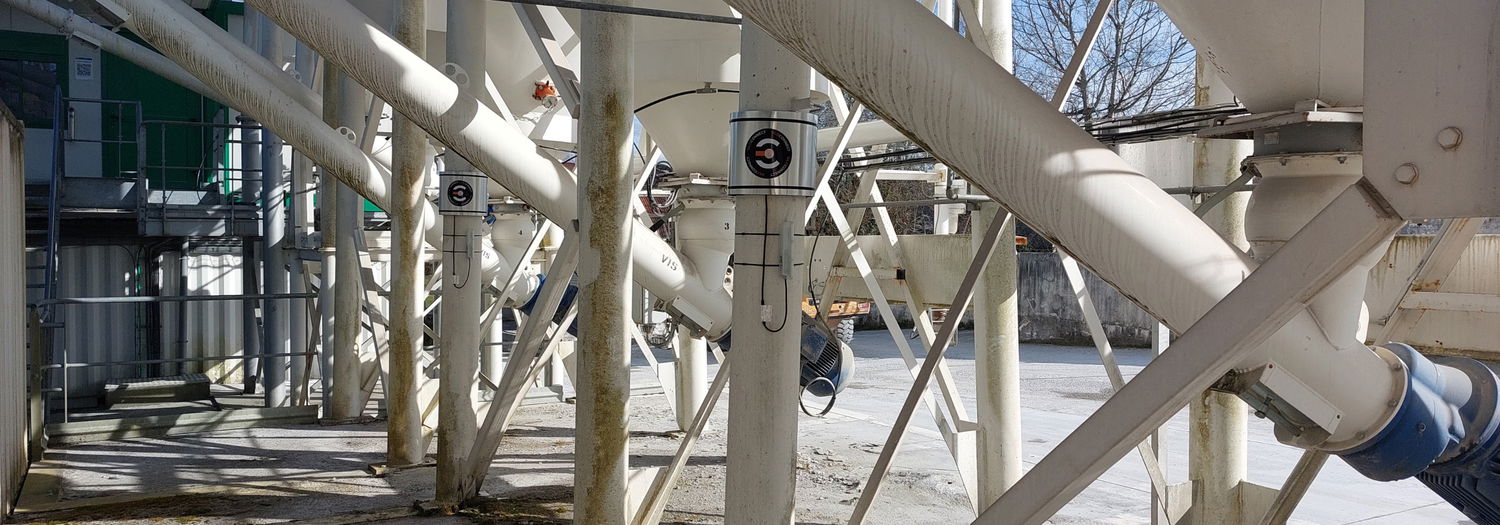
Cement producers face increasing pressure to streamline logistics while maintaining high levels of service and responsiveness. Yet one critical area often overlooked in this equation is silo inventory visibility. Poorly monitored silos can lead to dispatch errors, last-minute orders, or delivery trucks waiting on site unnecessarily — simply because silo levels were misjudged or unknown at the time of loading.
SiloConnect® introduces a new approach: a smart, AI-powered system that digitalises silo monitoring to provide reliable, autonomous, 24/7 insight into inventory levels. Already deployed across multiple continents, it enables cement producers to make better-informed decisions without disrupting their infrastructure or operations.
Overcoming logistics blind spots in silo operations
Managing multiple silos across production plants, terminals and customer sites creates logistical challenges such as:
- difficult or unsafe access for manual level checks
- lack of visibility leads to missed opportunities and lost business
- emergency refills driven by undetected shortages
- trucks immobilised at delivery points because silos are already full or not yet empty
- fragmented, unreliable data shared between teams.
SiloConnect responds with a non-intrusive, self-powered sensor that delivers reliable silo status insight regardless of environmental variations, ensuring dispatch teams know what’s happening on-site before the truck is even on the road.
AI calibration: adapting to silo-specific mechanical behaviour
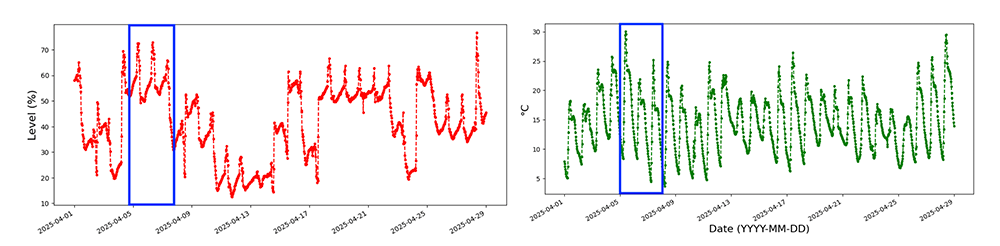
Each silo has its own physical "signature." Environmental conditions such as ambient temperature or sun exposure, combined with structural factors like load distribution or material ageing, cause each silo to respond differently to filling cycles. These variations create challenges for systems using mechanical deformation as a sensing method — especially when no detailed technical drawings are available, and when full or empty silos cannot be used for calibration.
SiloConnect addresses this by integrating a patented AI calibration engine that learns from real-world data how each silo behaves over time. Installed on the silo leg, the sensor continuously analyses how deformation evolves, automatically adjusting to changes in conditions without any need for human recalibration or interruption to operations.
→ No need for field recalibration. No dependency on silo specs. No interruption to production.
Figure 1 Raw deformation signal vs ambient temperature
Thermal compensation: filtering noise for actionable data
Environmental factors (especially heat) introduce noise into the raw signal. Once AI-based thermal learning is applied, SiloConnect produces a stable, stepwise signal that reflects actual filling and consumption cycles.
Figure 2 Before vs After automatic thermal calibration
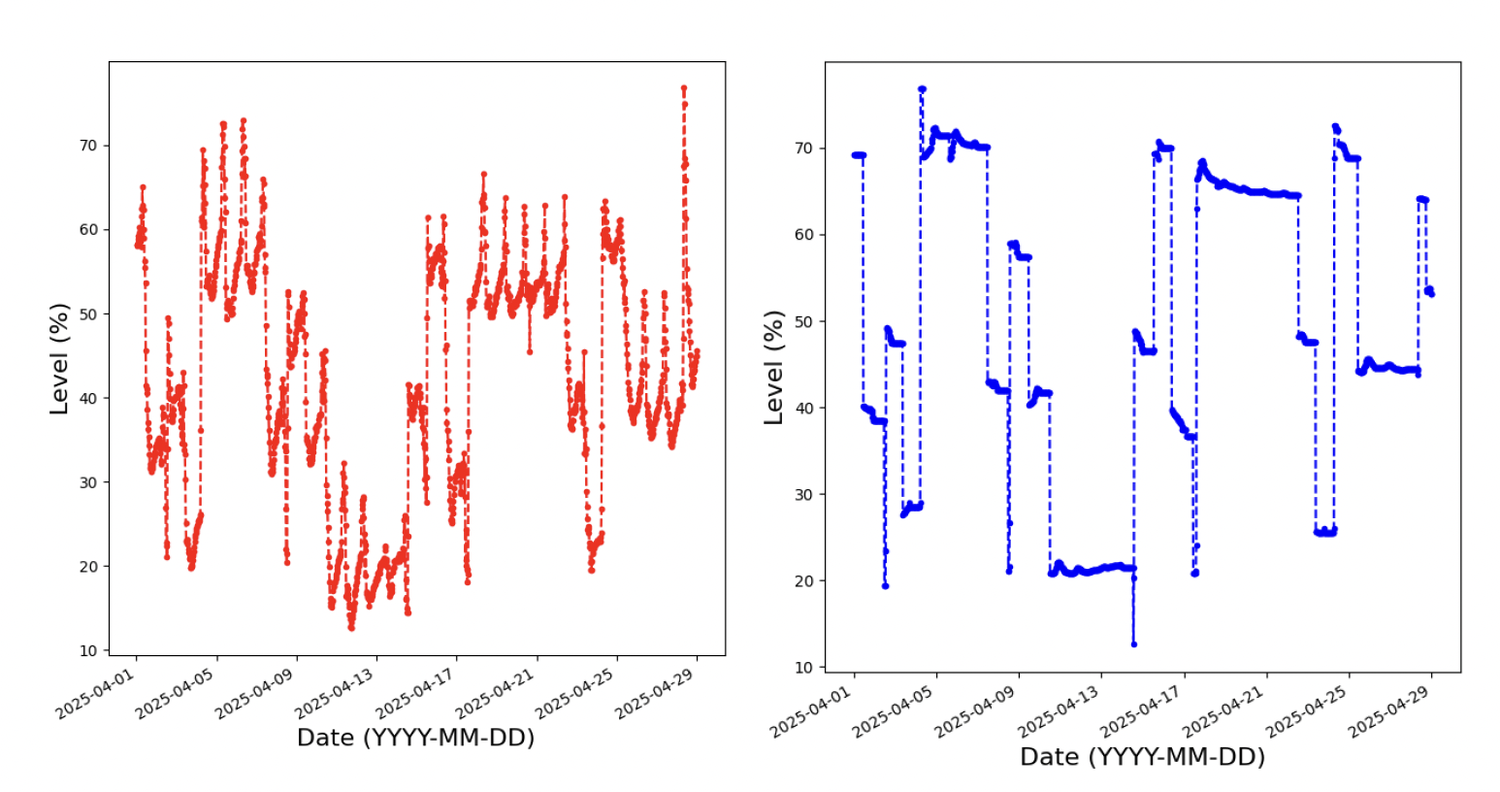
This improved clarity supports:
- better planning of grouped deliveries
- avoidance of unnecessary visits to customer sites
- smoother coordination between production and transport.
Transmission intelligence for extended autonomy
Many silo locations rely on battery-powered sensors. Conventional systems transmit data at fixed intervals, even when nothing is happening. This leads to unnecessary energy use and early battery depletion.
SiloConnect includes a machine learning-based transmission strategy that adapts frequency to usage patterns:
- less frequent updates during idle phases
- more frequent transmissions when filling or consumption is detected.
This Smart-AI approach ensures:
- better energy efficiency
- longer battery life
- reduced data overhead across networks.
Preparing for predictive logistics
Looking forward, SiloConnect is being enhanced with predictive inventory management capabilities. These tools aim to combine historical consumption, production planning, and delivery data to forecast when silos need to be refilled. For cement logistics teams, this will mean:
- anticipating refills before they become urgent
- reducing last-minute dispatch stress
- avoiding service interruptions at remote or customer sites.
It’s a step beyond visibility toward proactive logistics planning.
Field-tested across the industry
SiloConnect is already trusted by major cement producers across Europe, Latin America and the Middle East. Deployed at both internal and customer sites, the system performs reliably across various climates and use cases, and can be installed without requiring retrofitting of existing silos.
Key benefits at a glance
- continuous, AI-based calibration without manual input
- reliable 24/7 insight, even with temperature and structural variation
- smarter data transmission for energy savings
- ready for predictive logistics planning
- proven in the field, scalable across cement networks.