
CemNet Logo
  • Cemtech ASIA 2026
  • International Cement Review
  • Plant Data
Subscribe Login
  • Publications
    • International Cement Review (ICR)
    • The Cement Plant Operations Handbook 7th Edition
    • The Global Cement Report 16th Edition
    • Global Cement Market Outlook (2022A-2027F)
    • Cement Plant Environmental Handbook 3rd Edition
  • Events
    • Cemtech ASIA 2026 14-17 June 2026, Bangkok, Thailand
    • Cemtech Live Webinar: Carbon Capture 13 May 2026, Zoom
    • Cemtech Live Webinar Series 2026
    • Diary Dates
    • Videos
  • News
    • International
    • Trading
    • Freight Markets
    • Corporate
    • Environmental
    • Recent Orders
    • ICR Editor's Blog
    • The Building Bulletin
  • Magazine Articles
    • Event Reports
    • Market Reports
    • Corporate Analysis
    • Tech Forum
    • Manufacturing Technology
    • Case Studies
    • Environment
    • Interviews
    • Partner Content
    • ICR Back Issues
  • Online Training
    • Cement Manufacturing Technology
    • Calcined Clay Cement
    • Grinding and Milling Systems
    • Cement Kiln Process Chemistry
    • Cement Kiln Refractories
    • Cement Factory Maintenance
    • Cement Factory Quality Control
    • White Cement Manufacturing Technology
    • Cement Kiln Pyroprocessing
    • Fly Ash Cements
    • Alternative fuels for firing cement kilns
    • Decarbonising Cement Manufacture
    • Cement CCUS
  • Data & Statistics
    • The Global Cement Report15th Edition
    • Facilities – Cement Plants
    • Regions
    • Countries
    • Data export
    Global Cement Market OutlookForecast (2022A-2027F)
    • Overview
    • Regions
    • Countries
    • Data export
  • More
    • Suppliers Directory

Articles / Case Studies

Collaborative labelling: unlocking next-gen process control

16 April 2026

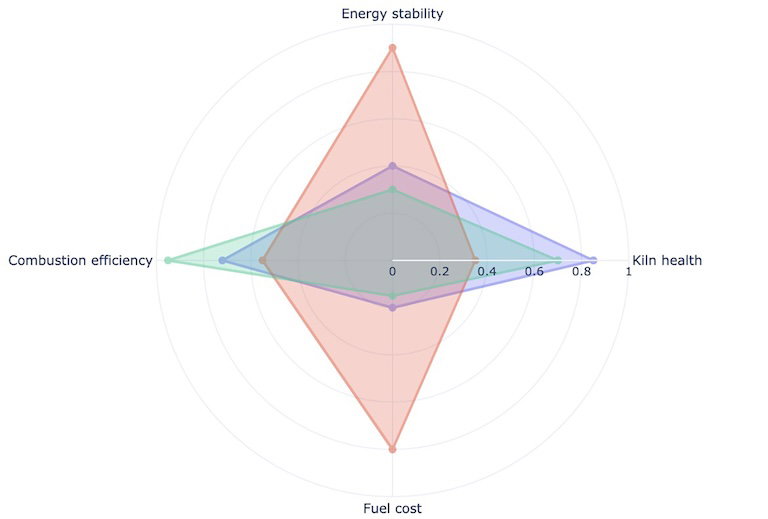
Modern cement kilns are far more efficient and sustainable than their predecessors, but this progress has come at the cost of increased operational complexity and tighter trade-offs between key performance indicators. As alternative fuel use rises and processes become more interdependent, traditional control strategies struggle to adapt, creating a growing need for control systems that can balance competing objectives while remaining trusted by operators. By Buffy Price, Carbon Re, UK

Advertisement

Articles are for subscribers only.
Subscribe now or sign-in

◦ 12 Issues of ICR print edition ◦ Digital edition each month ◦ Membership to CemNet.com ◦ Choice of Free Handbook ◦ Discounts on publications
Subscribe now

GBP£220 / USD$315 / EUR€260 annually

Handpicked stories, in your inbox

Our editors pick the top news delivered to your inbox. Sign-up today!
Ecocem’s blueprint for low-carbon cement

Case Studies 12 May 2026

Low-carbon binders, particularly those that reduce clinker reliance, are emerging as one of the m...

HPC-based CO2 capture: flue gas testing at Dotternhausen

In an industry where deep decarbonisation has long been discussed more than demonstrated, the sum...

Case Studies 07 May 2026

Engineering for a 50% clinker future

The real challenge of lower-clinker cements lies in producing them consistently, economically and...

Manufacturing Technology 20 Apr 2026

Collaborative labelling: unlocking next-gen process control

Modern cement kilns are far more efficient and sustainable than their predecessors, but this prog...

Case Studies 16 Apr 2026

most read
  • 01 Driving cement decarbonisation at CalPortland
  • 02 Engineering for a 50% clinker future
  • 03 USA: disrupting industry dynamics
  • 04 Collaborative labelling: unlocking next-gen process control
  • 05 USA: an economy and cement market at a crossroads

Subscribe

  • International Cement Review
  • Newsletter Sign-Up

Useful Links

  • ICR Back Issues
  • News

CemNet.com

  • About
  • Contact
  • Privacy Policy
  • Cookie Policy
  • Advertising & Media Planning

Tradeship Publications Ltd © 1988-2026 | No part of this website may be reproduced without prior written consent from the publisher.