Alpacem has highlighted high energy prices, electricity infrastructure and regulatory certainty as key requirements for further decarbonisation of Austria’s cement and concrete industry.
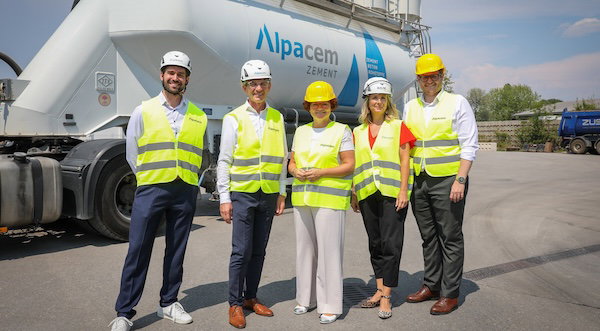
The issues were discussed during a visit by Austrian State Secretary Elisabeth Zehetner to Alpacem’s Klagenfurt operations on 6 August. Discussions with Alpacem Managing Director Lutz Weber focused on the company’s decarbonisation strategy and the increasing electricity requirements expected as industry adopts lower-carbon production technologies.
Alpacem is reducing emissions through measures including lower-CO2 raw materials and fuels and greater use of circular economy solutions. The company also expects carbon capture, utilisation and storage technologies to play an important longer-term role in meeting European climate targets.
However, Alpacem warned that many decarbonisation measures will increase electricity consumption at a time when energy-intensive industries are already facing high energy costs. It called for secure supplies of sustainable electricity, sufficient grid capacity, competitive energy prices and predictable regulatory frameworks to support investment in new technologies.
“The decarbonisation of our industry is a long-term task that requires considerable investment and cooperation between companies, policymakers and public authorities,” said Mr Weber. “We need not only a high-performance energy infrastructure, but also clear, reliable and forward-looking framework conditions for the use of new technologies.”
Ms Zehetner said industrial transformation would succeed when innovation, climate protection and competitiveness to be addressed together, adding that Alpacem’s investments demonstrated how decarbonisation and circular economy measures could be implemented in practice.
Handpicked stories, in your inbox
Our editors pick the top news delivered to your inbox. Sign-up today!