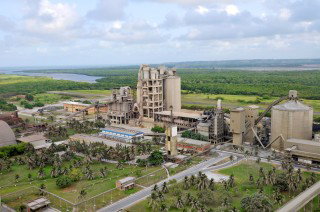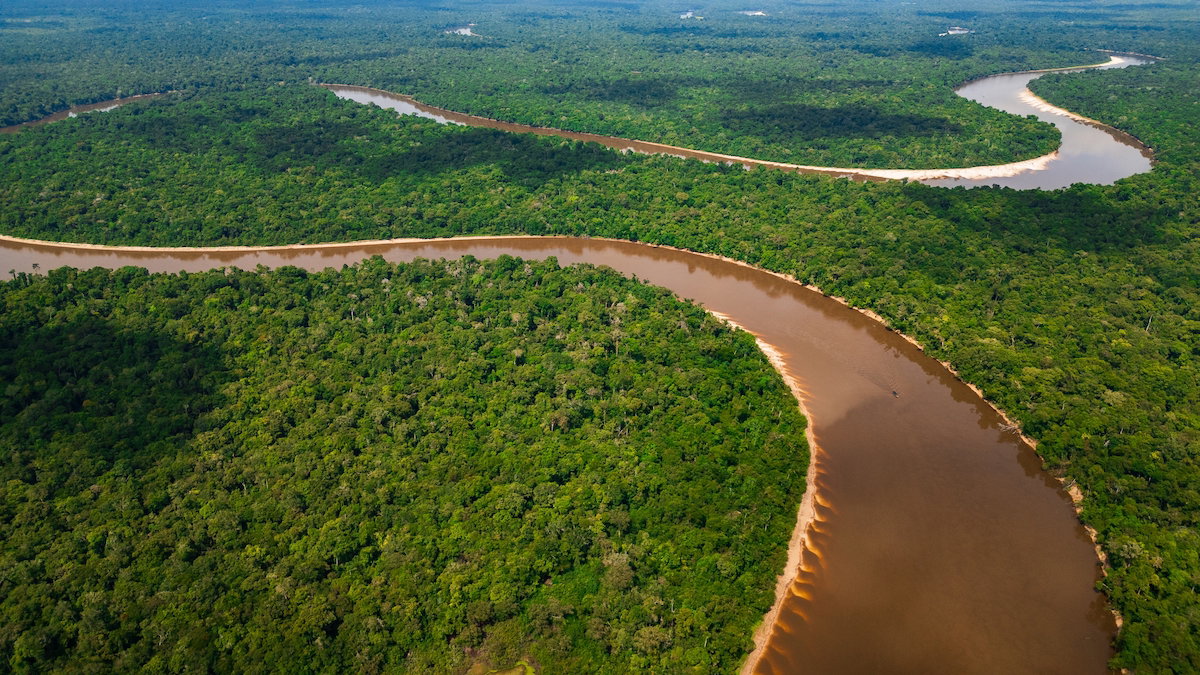
Latin America’s cement industry is exploring a different route to carbon neutrality, combining faster deployment of established emissions reduction measures with nature-based carbon removals. The approach would give forest restoration a larger role in addressing residual emissions, challenging the emphasis on industrial carbon capture in Europe.
Research by SCX Bolsa del Clima de Santiago, Chile, advocates prioritising alternative fuels and clinker reduction, followed by removals through afforestation, reforestation and forest management. Its central argument is economic: Latin America should build its decarbonisation strategy around the options best suited to its resources, infrastructure and access to capital.
The GCCA’s global roadmap assigns around 36 per cent of emissions reductions by 2050 to carbon capture, utilisation and storage (CCUS). However, its pathway also includes alternative fuels, clinker substitution, energy efficiency and more efficient use of concrete. The debate therefore concerns how to address the remaining emissions and finance the transition.
The GCCA recognises that regional pathways will vary, so the proposal challenges the technology mix rather than the overall net-zero objective.
The financial challenge is considerable. Estimates cited in support of the SCX approach put capture costs at US$120/t of CO2, excluding transport and storage, with the complete system potentially reaching US$400/t. Under these assumptions, cement prices could double, increasing construction costs by an estimated 1.5-3 per cent. These are scenario estimates, rather than universal outcomes.
For Latin American producers, the question is whether such investment represents the best use of scarce capital, particularly where dedicated CO2 transport and storage networks for cement remain undeveloped.
SCX argues that alternative fuels should be an immediate priority. Thermal substitution rates of just 12-16 per cent leave considerable scope for progress, provided regulations enable producers to secure, process and co-process suitable waste streams. Supportive policy could accelerate a proven technology while improving waste management.
Reducing the clinker factor offers another substantial opportunity. Volcanic deposits in parts of Latin America provide natural pozzolans that can support greater production of blended cements. Together, clinker substitution and alternative fuels offer practical, comparatively affordable measures to reduce emissions before considering how to balance the residual.
For those remaining emissions, SCX proposes greater use of nature-based removals. The State of Carbon Dioxide Removal reports weighted average prices of US$12-16/t of CO2 for forest management and afforestation/reforestation credits in 2023. These market prices help explain the appeal, although they are not directly equivalent to the cost of capturing and permanently storing industrial CO2.
The region’s restoration potential is substantial. Initiative 20x20 estimates that around 40 per cent of Latin America and the Caribbean’s forests have been deforested or degraded: 350Mha completely deforested and a further 300Mha degraded. Restoring suitable land could remove atmospheric carbon while supporting biodiversity, water resources and rural livelihoods.
The country-led initiative, whose secretariat is the World Resources Institute, provides a framework for mobilising restoration investment. For cement producers, projects near their operations could connect industrial decarbonisation strategies with local environmental improvements and verified carbon removals.
At the FICEM Technical Congress in Mexico City last week, Ricardo Pareja, FICEM’s director of innovation and climate action, confirmed that biocarbon capture sink (BCCS) is under active exploration. He outlined a proposed reforestation target of 3.9Mha, intended to remove 90Mta of CO2 by 2050.
That ambition requires rigorous accounting. Avoiding deforestation prevents emissions; growing additional forest can remove carbon already in the atmosphere. Credits must distinguish these outcomes, demonstrate additional removals and address double counting, land rights and the risk that fire, drought or future clearance releases stored carbon. Forest storage cannot simply be treated as equivalent to permanent geological storage.
This is also a question of sequencing. Restoration can be developed alongside improvements inside the plant, but its availability should not weaken incentives to reduce emissions at source. A credible regional pathway must show how both contributions are measured and maintained over time.
As FICEM Executive Director, María José García, told delegates: “Leadership on decarbonisation is not exclusive to developed countries.”
Latin America has good reason to develop a pathway that reflects its own strengths. The task for FICEM and governments is to establish credible criteria for integrating nature-based removals while maintaining ambitious reductions at the plant. Biocapture deserves serious consideration, with its contribution judged by verified climate benefits as well as cost.
Handpicked stories, in your inbox
Our editors pick the top news delivered to your inbox. Sign-up today!