Nigeria’s cement demand is expected to continue its modest recovery into 2027, supported by public infrastructure investment, concrete road construction and election-related spending, despite continued weakness in private sector demand, according to CardinalStone Partners.
In its latest Cement Sector Update, the financial services firm forecasts Nigerian cement consumption of approximately 33Mt in 2026, up 3.1 per cent from 32Mt in 2025.
Higher cement prices remained the principal driver of revenue growth in the 9M26, with realised prices increasing by 15.1-22.6 per cent YoY, while sales volumes advanced by 4.4 per cent to 24.6Mt. Combined revenues at Nigeria’s three listed cement producers – Dangote Cement, BUA Cement and Lafarge Africa (HBM Nigeria) – increased by 22.7 per cent to NGN4.7trn.
The onset of the dry season is expected to support construction activity in the 4Q26. Meanwhile, Lafarge Africa has completed extensive plant maintenance that constrained production in the third quarter. Improving market conditions were also reflected in the Central Bank of Nigeria’s cement subsector Purchasing Managers’ Index, which rose from 47.7 points in August to 60.2 points in October.
Private sector demand remains subdued
Private sector construction, which accounts for the larger share of Nigerian cement consumption, remains constrained by weak household purchasing power, affordability issues and limited access to financing.
While improving macroeconomic conditions could support a gradual recovery in private construction, public infrastructure investment is expected to remain the principal driver of near-term cement demand. Over the longer term, an expansion of government-backed mortgage schemes could stimulate residential construction and broaden the demand base.
Infrastructure investment to drive demand
With moderating inflation and energy prices expected to limit cement price increases in 2027, revenue growth is likely to become increasingly volume-driven. Lower borrowing costs and the commissioning of additional production capacity by Lafarge Africa in the second quarter of 2027 are also expected to support sales growth.
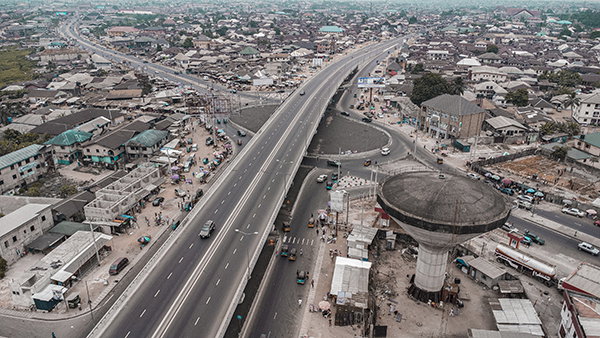
Major infrastructure projects underpinning cement demand include the Lagos-Calabar Coastal Highway, Sokoto-Badagry Superhighway, Trans-Sahara Highway, Akwanga-Jos-Maiduguri road and Enugu-Onitsha Expressway.
Federal capital budget allocations have increased from NGN13.8trn in 2024 to NGN32.3trn in 2026. However, delays in releasing funds and successive budget roll-overs have constrained actual expenditure.
CardinalStone expects contractors to accelerate construction activity ahead of the 1Q27 elections as they seek to utilise outstanding funds from the 2025 capital budget. However, further budget rollovers and potential delays in funding releases following the elections could weaken construction activity in the 2Q-3Q27.
Handpicked stories, in your inbox
Our editors pick the top news delivered to your inbox. Sign-up today!