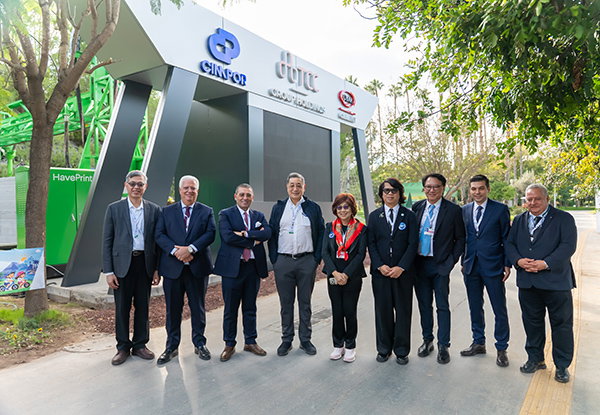
Cimpor and Oyak Çimento, both part of TCC Group Holdings, have issued the Calcined Clay Transition Alliance declaration at COP31 in Antalya, Türkiye, calling for greater international collaboration to accelerate the adoption of low-carbon cements.
Led by TCC Group Holdings Chairman, Nelson An-ping Chang, and Cimpor and Oyak Çimento Chairman, Suat Çalbiyik, the initiative aims to promote technology sharing, validate material performance and develop solutions that can be deployed across international markets.
The alliance advocates a shift from prescriptive cement composition requirements towards performance-based standards, the establishment of a network to share testing data and operational experience, and measures to stimulate demand for low-carbon cements, particularly through public procurement.
“The technology is ready. We need confidence and demand. The alliance must build both,” said Mr Çalbiyik.
Expanding calcined clay capacity
Cimpor continues to expand its calcined clay production capacity, having commissioned its third African calcined clay plant in Ghana in 2026, following earlier investments in Côte d’Ivoire and Cameroon. At its Kribi plant in Cameroon, the combination of locally sourced raw materials, calcined clay, renewable electricity and biomass has enabled the company to achieve a carbon intensity approximately 40 per cent lower than that of conventional cement.
In Portugal, Cimpor is scheduled to commission a new 0.5Mta calcined clay production line in December 2026. Described by the company as the world’s largest calcined clay facility, the investment draws on the group’s operational experience in Africa.
Advancing production technologies
Cimpor’s deOHclay technology is designed to reduce CO2 emissions by up to 90 per cent compared with conventional Portland cement clinker on a material basis, although emissions reductions in the finished cement depend on its composition and production conditions.
The company is also developing its patented X-Clinker technology, a fully electric clinker production process designed to eliminate combustion. The first industrial pilot is expected to start operations in 2027.
Complementing these developments, TCC Group Holdings showcased its EnergyArk battery energy storage system, housed in an ultra-high-performance concrete (UHPC) structure, to support the integration of renewable electricity and the electrification of industrial processes.
International expansion
Against the backdrop of the EU’s Carbon Border Adjustment Mechanism (CBAM), Mr Çalbiyik highlighted the importance of stimulating demand for low-carbon building materials alongside investment in production technologies.
The group is also seeking to extend its low-carbon production expertise to Ukraine, following TCC Group Holdings’ agreement to acquire IFCEM Group. Subject to regulatory approvals and completion of the transaction, the acquisition is expected to increase the group’s global cement production capacity to 117Mta and position it to contribute to Ukraine’s reconstruction.
Handpicked stories, in your inbox
Our editors pick the top news delivered to your inbox. Sign-up today!