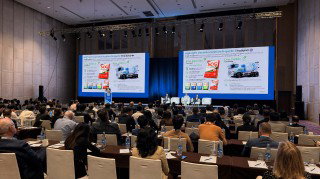
With 12bnt of plastic waste predicted in the environment by 2050, the OPTOCE Regional Forum, held on 27-28 October 2022, discussed tackling plastic waste management in China, India, Myanmar, Thailand and Vietnam. By Dr Kåre Helge Karstensen, Palash Kumar Saha and Anneli Alatalo Paulsen, SINTEF, Norway.
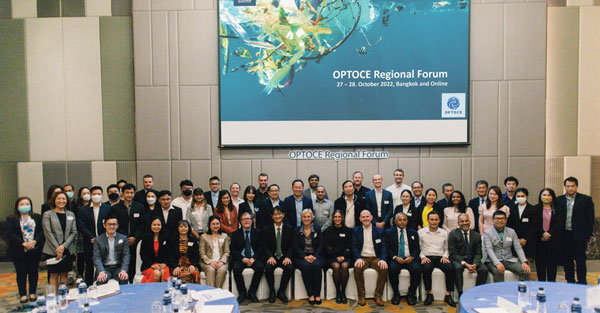
The two-day OPTOCE Regional Forum included more than 80 in-person attendees and 60 online participants
The Norwegian funded project ‘Ocean Plastic Turned into an Opportunity in Circular Economy (OPTOCE)’ is part of the Norwegian development programme on marine littering and microplastics. OPTOCE aims to investigate if and how the cement industry can be involved and increase the treatment capacity for non-recyclable plastic wastes (NRPW) in the five OPTOCE partner countries of China, India, Myanmar, Thailand and Vietnam, thereby contributing to reducing the release of microplastics into the sea.
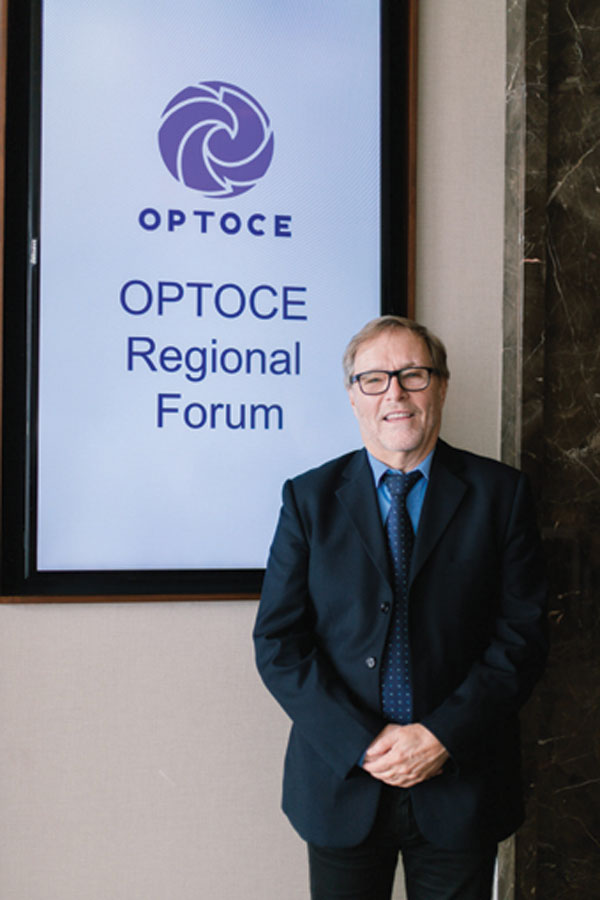
Dr Kåre Helge Karstensen, chief scientist SINTEF
and OPTOCE programme manager
OPTOCE Regional Forum
Organised by SINTEF, the OPTOCE Regional Forum was held in Bangkok, Thailand, on 27-28 October 2022. During the event 20 distinguished speakers from the industry, NGOs, start-ups, academic institutes, government institutions and industry associations from all over southeast Asia spoke under the four thematic focus areas.
Experiences with co-processing of plastic containing wastes
The five OPTOCE partner countries produce an estimated 217,000tpd of plastic waste (79Mta). They have some of the highest release of plastics to the sea with relatively small quantities handled in an environmentally sound way.
These countries also have the highest industrial production of cement, steel and electric power, using fossil fuels such as coal and therefore contributing a large chunk to the world’s CO2 emissions.
The development of thermal substitution rates (TSR) in the Asian cement industry is low (three per cent) compared to the EU (50 per cent) and Norway (75 per cent). Progressive cement companies are investing tens of millions of US dollars to increase waste treatment capacity.
Huaxin Cement, the fifth-largest cement producer in China, has the capacity to treat 4.3Mta of plastic containing municipal solid waste (MSW). Meanwhile, INSEE Ecocycle Vietnam has tripled its waste treatment capacity to 150,000tpa in the last 10 years.
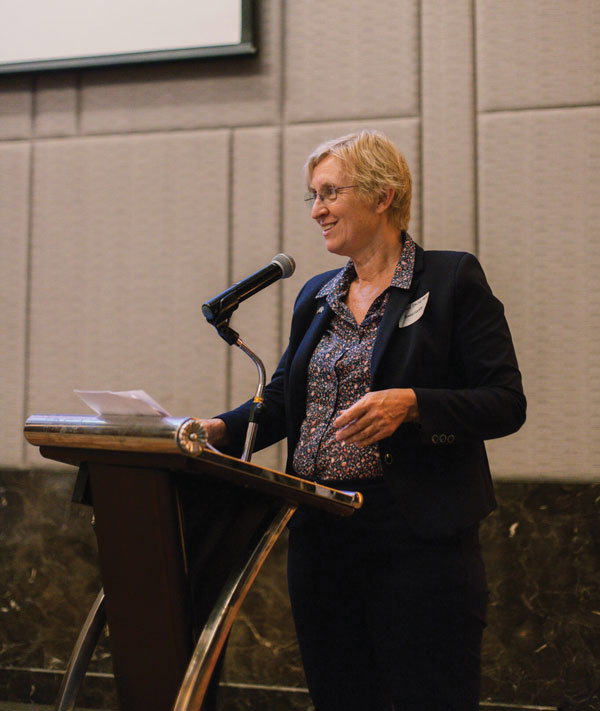
Astrid Emilie Helle, Norwegian ambassador to
Thailand, explained why integrated waste management
solutions such as co-processing are important
to tackle current environmental and energy issues
Academic collaboration and research
Academic collaboration was launched in 2020 with leading universities in the OPTOCE partner countries. The aim is to build capacity, strengthen research, and support science-based policy and decision making. Over the 2020-22 period, parallel MSc-thesis research (10 in total) was conducted in Thailand by the Asian Institute of Technology (AIT), in Vietnam by the Vietnam National University (VNU), and in India by the Jadavpur University. These studies were funded by the OPTOCE project.
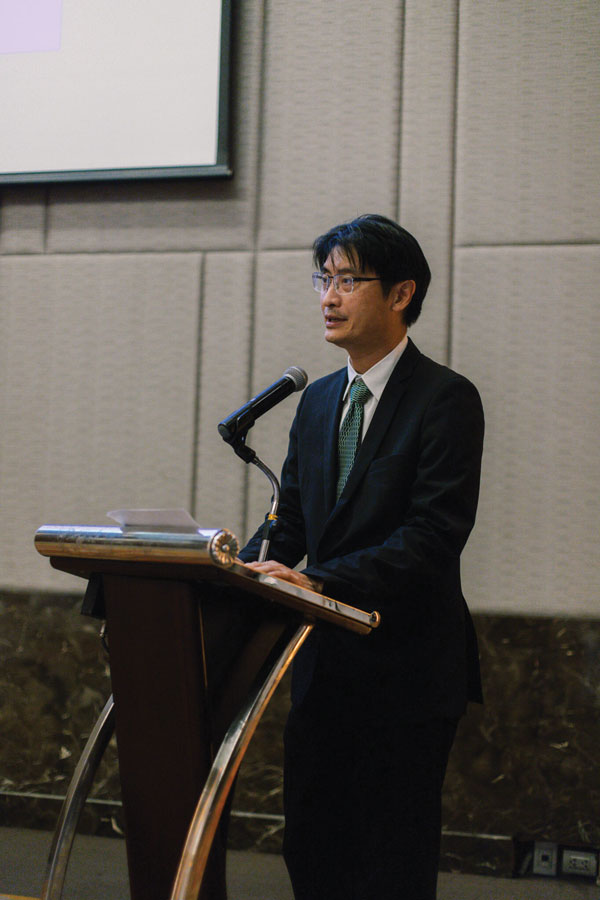
Dr Pinsak Suraswadi, director general of
the Pollution Control Department in the
Ministry of Environment and Natural
Resources in Thailand, explains how
the country has embarked on a life cycle
approach to address plastic waste
management issues
View of stakeholders on co-processing
WWF Vietnam is working on a project to reduce marine litter in the Mekong Delta, which is amongst the most important entry paths for marine litter worldwide. Approximately 12-38 per cent of plastic waste is not collected but instead discarded directly into the environment which can be co-processed. Incinerators in Vietnam are outdated, and air quality cannot be controlled. Mixed wastes also cause operational issues.
Golden Dowa Eco-System, the first and the largest private waste management company in Myanmar, is planning work with the private companies to initiate co-processing and to tackle plastic wastes problems. TONTOTON, a start-up inspired by the OPTOCE project, currently operates in Vietnam and Cambodia. The company creates a market and develops solutions for mismanaged plastic wastes. The company has removed more than 2000t of mismanaged plastic wastes from coastal environments and created 450 jobs.
Dr Sumit Sharma from the United Nations Environment Programme (UNEP) India remarked that co-processing is generally accepted as a better solution than landfilling and incineration, as reflected in several UN, national and international guidelines.
Importance of co-processing – preventing marine littering and cement industry net zero
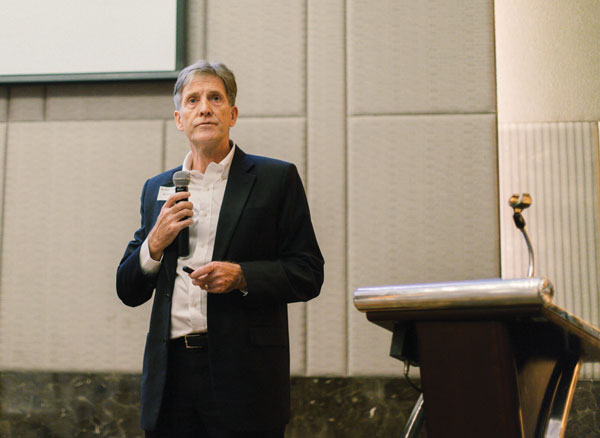
Aidan Lynam, CEO and president of
Siam City Cement, Thailand
Aidan John Lynam, CEO and president, Siam City Cement (Thailand), noted that the company’s Sustainability Ambition 2030 features the circular economy as a key pillar, with increased use of waste-derived materials and byproducts from other industries.
Wang Jiajun of Huaxin Cement remarked that co-processing is one of the most important levers for reducing CO2 emissions with the potential to reduce as much as 285kg CO2/t clinker by 2060. Currently, the TSR in the Chinese cement industry is less than two per cent.
The Thai Cement Manufacturers Association (TCMA), together with 24 alliances (including government agencies and the professional, industrial and academic sectors), announced ‘MISSION 2023’ which highlights the country’s potential to reduce GHG emissions at 1Mt-CO2 in 2023. Currently, the Thai cement industry’s TSR is 15 per cent. It also uses 1.5-2Mta of alternative raw materials.
In Vietnam only a few cement plants have invested in pre-processing and co-processing. The current TSR in the country is 1.5 per cent. Most domestic cement plants are located in the north, away from the major waste generation points. Vietnam generates 25.5Mta of household waste that is currently not segregated or used in cement plants – therefore providing a potential future waste stream.
Nagesh Prabhu Chinivartha, co-founder of Zigma (India), underlined that his company has one of the largest dumpsite reclamation operations in Asia. It has reclaimed more than 200 acres of land, processed more than 6.9Mt of legacy waste in India, and supplied 0.9Mt of RDF from the landfill mining process to major Indian cement companies. India has a total of 3159 dumpsites. The government has earmarked US$18bn for ‘Garbage-free cities’ with a focus on the bio-mining of legacy dumpsites.
Thomas Guillot, CEO and president of the Global Cement and Concrete Association (GCCA), presented on the ‘GCCA 2050 Net Zero Cement and Concrete Roadmap.’ Globally, alternative fuel use is 10x greater compared to 1990, but it needs to increase from the current six per cent to 22 and 43 per cent by 2030 and 2050, respectively. One of the important policy asks is to assign a dedicated code for “co-processing”, R15, in the Basel Convention. The GCCA has been in discussions with SINTEF on extending the OPTOCE project to selected countries in Africa and to link it with the UN High Level Climate Champion ‘Open Waste Burning Africa’ initiative.
Conclusion
Co-processing can serve as a large-scale solution that will reduce the release of plastic waste to the ocean, increase waste treatment capacity and establish sustainable, cost-efficient options in integrated waste management in the five partner nations. The co-processing of NRPW will replace some coal usage, which will directly reduce dependence on fossil fuels and indirectly reduce greenhouse gas emissions by avoiding having to build new incinerators or landfills.
Results of pilot demonstrations conducted in China and Vietnam concluded that cement kilns can manage large volumes of NRPW without a negative impact on the production process, product quality or emissions. Emissions of dioxins are unaffected and are always much below 0.1ng/Nm3 ITEQ. The trials conducted in China and Vietnam can remove 30,000tpa of NRPW, reduce the release of microplastic to the East and South China Sea, and save 30,000tpa of coal.
For full details of the OPTOCE Regional Forum, see: www.optoce.no/regional-forum
This article was first published in International Cement Review in January 2023.
Handpicked stories, in your inbox
Our editors pick the top news delivered to your inbox. Sign-up today!