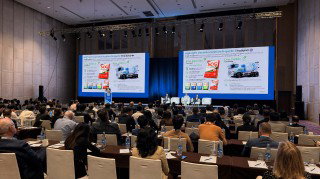
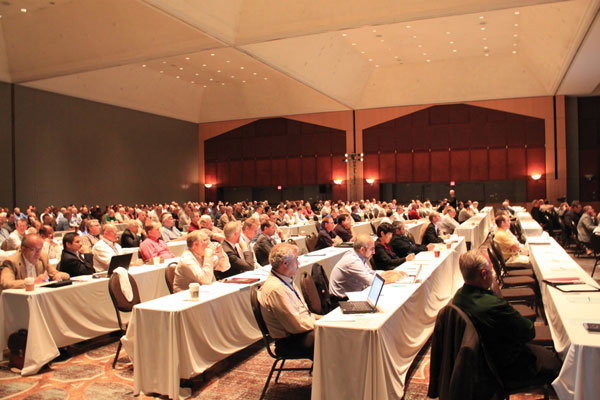
St Louis, Missouri, “Gateway to the West”, was the chosen venue for the IEEE-IAS/PCA 53rd Cement Industry Technical Conference in late May. Over a thousand delegates from across North America and beyond congregated for five busy days of technical presentations, tutorials, exhibition, networking and plant tours. At a time when the industry is facing twin challenges of weak demand and tough new environmental regulations, ICR reports on this important annual event.
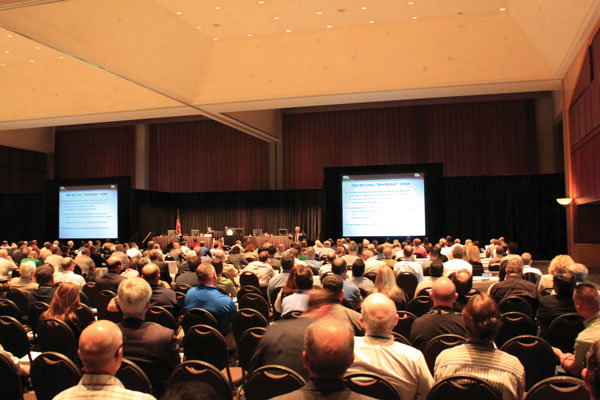
The America’s Center in downtown St Louis provided the ideal venue for North America’s large annual gathering. In his opening address, Jeff Ouhl (Holcim US), chair of the organising committee, welcomed the 1017 delegates who had registered for the conference, amongst which were representatives from over 200 cement producers.
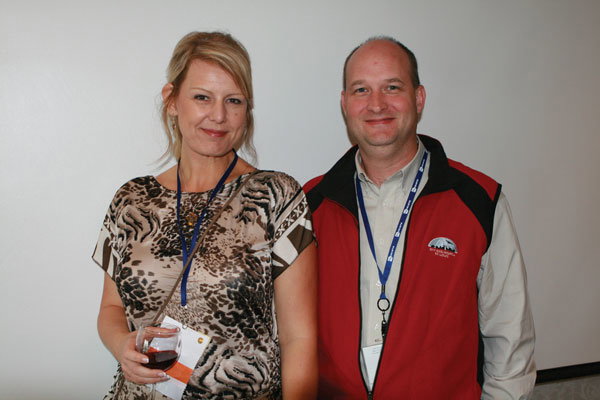
Connie Prince-Fields (GE Energy),
This year, the event took place against the backdrop of natural disasters as melting snow in Canada produced devastating floods along much of the Mississippi River, combined with the tornado season which included the brutal destruction by the Joplin tornado which claimed nearly 150 lives.
In his traditional address to delegates, Ed Sullivan, the PCA’s chief economist, chose instead to focus on man-made disaster of the financial crisis and the ongoing recession that is its legacy.
Setting the context, Sullivan described how the recession had hit at the same time as the US cement industry had completed the most aggressive expansion in its history.
The market had fallen to around 70Mt in 2010 from near-record levels of 128Mt in 2005 – a peak-to-trough fall of nearly 59Mt. While the cement imports absorbed most of this shock, utilisation rates had also fallen to 60 per cent, Mr Sullivan explained, as the market tried to find its balance.
Given this situation, he then presented a cautiously realistic assessment of the current status of the economy. On the positive side, the economy has improved, is poised for growth, but there is clear potential for downside: “We believe the fundamentals for economic growth are in place. They weren’t in place last year…” However, he warned, the future was still “fragile”.
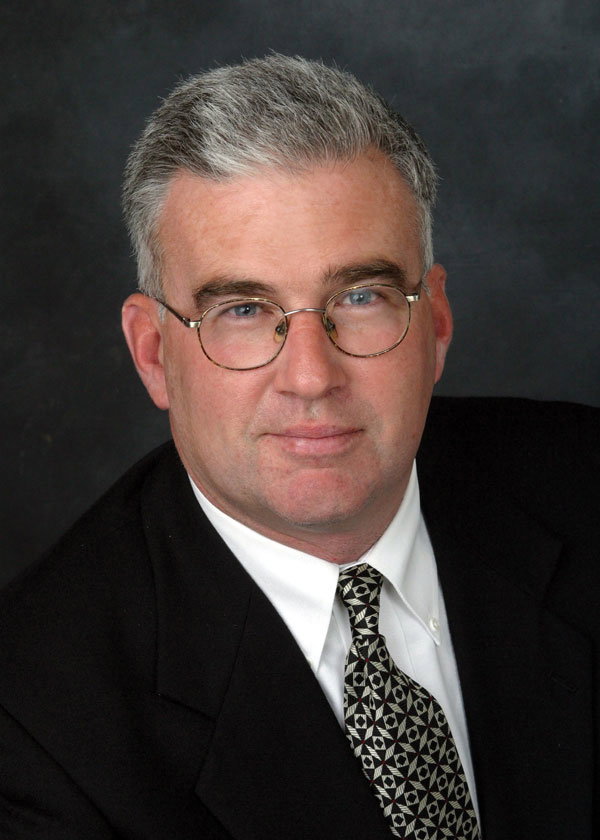
Ed Sullivan, Chief Economist of the PCA
Addressing the concerns of cement producers, Sullivan highlighted the disproportionate impact of the economic crisis on the construction sector, and by extension the cement sector. Indeed, while there were indications of growth, the benefits had yet to reach the cement industry, and would not for another two years: “The economy is recovering from desperate levels, but we have not participated in it – It won’t be until 2013”.
The underlying problems still have to be resolved, argued Sullivan: “The economic fundamentals that caused the crash are still in play – even if at a diminished intensity.
“As long as foreclosures are an issue, how can you see a substantive improvement in residential? You can’t.”
And once the market does recover, he warned, the industry must be prepared for the onset of the forthcoming NESHAP regulations.
Nevertheless, there is some cause for optimism as the recession has resulted in accumulation of a large pent-up demand that will – and it is a question “not of if, but when” says Sullivan – be unleashed in the medium-term. Turning to the long-term fundamental drivers of cement demand, namely population growth, Sullivan pointed out that the US will see 65m new people added by 2030 – a 22 per cent increase – equivalent to 31m new households. This should boost total demand up to 150Mta.
Ed Sullivan on US construction outlook...
• On US housing: “In 2010 there were 2.3m foreclosures and 1.1m repossessions.“ The risks for mortgages will be over by 2012, allowing the residential housing sector to begin a sustainable recovery.
• On non-residential: “No longer a significant drag on construction activity” – but still at an historical low. No office building recovery until 2013, accelerating in 2014-15.
• On public spending: “Any analysis of public spending should focus not just on the stimulus packages and highway programme, but on state deficits, which will see only a small surplus by 2013. However, discretionary state highway expenditure will expand by 2013-14 as fiscal conditions improve. A significant amount of pent up demand has been generated, which will be released in 2014-15”.
• ARRA spending, which contributed 2.95Mt and 2.31Mt cement consumption in 2010 and 2011, respectively, will disappear in 2012.
Technical papers
The conference’s impressive technical programme consisted of 35 papers delivered under six technical themes, covering all aspects of cement manufacturing technology.
The Environmental, Energy and Sustainability session saw presentations on the potential of AFR co-processing, use of the Organic Rankine Cycle- based power plants to utilise low-grade waste heat sources and pollutant dust suppression. The session also featured the conference's award-winning presentation by Steven Miller (FLSmidth) on the new gas suspension absorber (GSA), installed at HeidelbergCement’s Norcem Brevik plant in Norway. The GSA was installed as an alternative to a more costly wet scrubber, and since being commissioned has enabled the Brevik plant to meet its target of reducing sulphur dioxide, hydrochloric acid and hydrofluoric acid by over 95 per cent. Of particular interest for US producers, in terms of NESHAP regulations, the plant is also well-positioned to reduce mercury emissions in the future, by up to 80 per cent, or indeed 90 per cent with the aid of activated carbon injection.
 Another highly commended presentation was delivered by Dr Ronald Landreth (Albemarle Corp) who described an alternative method of mercury and total hydrocarbon (THC) control, whereby existing kiln particulate control devices can be used in conjunction with specially- formulated sorbent to provide a sink for these pollutants. In a technique that is unique to the cement industry, CKD material removed from the system can be reused in cement products rather than disposed in a landfill. A timely innovation that will be of particular interest to those kilns which are threatened with closure by the new MACT standards (See also ICR June 2010).
The Power session focussed in detail on health and safety topics including arc flash protection and standards for electrical safety in the workplace. On a more operational approach, Fabio Mielli (Schneider Electric) provided a high-level overview of strategies and technologies for achieving greater energy efficiency in the cement industry. Conventional interventions such as setting up an energy task force and conducting plant assessments were combined with more futuristic ideas such as the ‘virtual control room’, capable of monitoring several cement plants in distant locations from a single site. It could even be possible to outsource this ‘remote monitoring’ function to an energy management technology supplier who would manage the users information and historic data in virtual servers.
A dedicated session on Automation included Gerry Feldmeier (Eaton Corp) who presented a fascinating survey of industrial networks and made the case for modern systems which offer standardised troubleshooting and predictive diagnostics. Kenny Martin (Holcim US) described some of the teething problems experienced at the Holcim St Genevieve plant, and how flaws in networks security led to the three-day shutdown of the control room when a dormant virus became active. Mr Martin concluded that up-to-date training of automation engineers and a strong network backbone are vital to ensure control room security.
The Maintenance and Safety session focussed on the practical aspects of plant maintenance and safety. Klaus Holz (Fuchs Lubritech) took delegates through lubrication for key machines, including open gears, roller bearings on VRMs, riding rings on kilns, and offered numerous tips, such as “never start a kiln without lubrication, otherwise in 3-5 years you will see pitting”. C Conklin (Buzzi Unicem USA) described the application of a proactive maintenance approach with predictive maintenance technologies, which enabled a reduction in the failure rate of all bearing types throughout his plant, saving US$96,000 in replacement bearings over a four-year period. Larry Goldbeck (Martin Engineering) used his presentation to highlight the risks associated with operating belt conveyors, and presented some compelling evidence that proper belt selection and operator training are essential for eliminating fatalities.
An extended session on General Practices saw a variety of topics covered. William Jurado (Cementos Argos) presented a methodology for clinker kiln optimisation, intriguingly sub-titled “Pushing your equipment to the limit”. Performing a mass and energy balance is central to the methodology that was show to have been successfully applied in several situations. Jonathan Forinton (A Tec America) revealed the way in which the preheaters of older plants could be successfully upgraded to compete effectively in the modern industry. J Bond (Lafarge Canada) showcased an innovative application of PGNA online analysis for raw materials at Lafarge’s Davenport plant in Buffalo, Iowa, which resulted in an improved kiln-feed uniformity, in C3S variance terms, by a factor of one-half. Claude Brule (Lafarge Canada) described how a new silo floor aeration design used at the Richmond plant enabled the company to reduce power consumption by a factor of over 10 times.
The session on Drives was notable for the presentation made by Ken Walden (Holcim US), who won third best conference presentation for his paper entitled: “The use and proper selection of variable speed drives (VSD) for reduced environmental footprint, sustainability and increased plant reliability”. He explained that if a motor is operated below or above its designed load, its efficiency drops, resulting in a high-ratio electrical power to create mechanical power (kW to hp), thereby increasing the amount of carbon from fossil fuels needed to produce the required horse power. Walden argued that the use of variable frequency drives in cement plants can reduce the negative impact on motor efficiency of running below design capacity and quickly generate the internal rates of return required by most companies, while reducing the carbon footprint. In a recent project, 15 fixed-speed fans running at less than full load were equipped with variable frequency drives reducing power demand throughput efficiency by 144,000 kWh/t.
Tutorials and workshops
This year, an extensive programme of tutorials provided delegates with the opportunity to engage at a deeper level in key technical subjects, namely: wireless technology for cement plant applications; variable speed drives – types, sizing, selection and project implementation; refractory solutions for improved plant reliability; and an analysis of electrical power system design.
In addition, two well-attended environmental workshops were held, providing an invaluable forum for delegates to review and examine industry responses to the latest phase of regulatory standards. Andy Edwards, senior process engineer, Ash Grove Cement Company, led the way with a users perspective of CEMs requirements for Portland Cement NESHAP, and Karsten Brink-Floor of FLSmidth turned the spotlight on gas sampling and analysis for NESHAP compliance.
A second workshop, led by the charismatic Fred Schoeneborn (FCS Consulting Service) moderated a knowledgeable panel of experts that explored how energy efficiency strategies from other industries could provide important lessons for the cement industry.
Walt Brockway, Global Energy Efficiency for Alcoa, the world’s leading producer of aluminium, argued that companies can achieve superior energy management – and the financial returns it will deliver – by genuinely prioritising energy efficiency within their organisations. Brad Runda, energy manager for Saint-Gobain, described a successful energy programme which was implemented in the wake of the economic downturn. He highlighted the importance of changing corporate culture to embrace energy efficiency, the use of energy ‘kaizens’ – or specially appointed personnel to lead energy efficiency initiatives, and the importance of performing energy reviews of exiting capital projects.
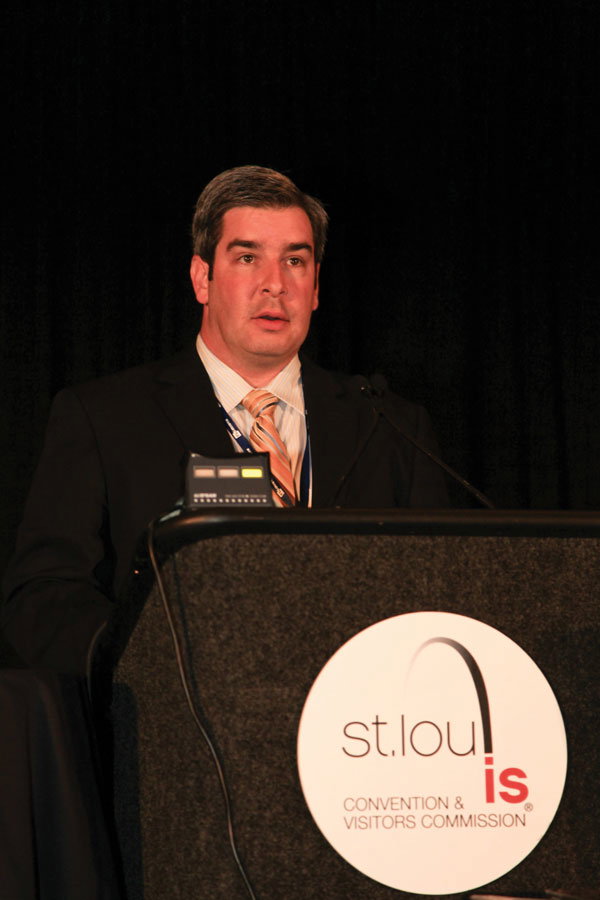
Rick Jacobs, CalPortland Cement
The session was concluded by Rick Jacobs at CalPortland who spoke on the theme of reducing overhead energy costs in cement plants during times of depressed market. He described how compressed air systems are often inefficient yet typically dominate overheads in cement plants – even more so in times of market downturn. The solution is to switch from a manual to automated management systems, thereby reducing wasteful volatility and securing valuable savings.
The panel accepted that while saving money through energy efficiency programmes is a noble aim, it often requires additional expenditure that is extremely difficult to secure in the current economic malaise. However, these timely presentations underline that ultimately, such properly-conducted energy management programmes will deliver a handsome return on investment, and should be pursued.
Delegates were left with the thought-provoking statistic that Toyota achieves an eight per cent reduction in energy intensity each year. Food for thought indeed!
Launch of second edition of ‘Innovations in Portland Cement Manufacturing’
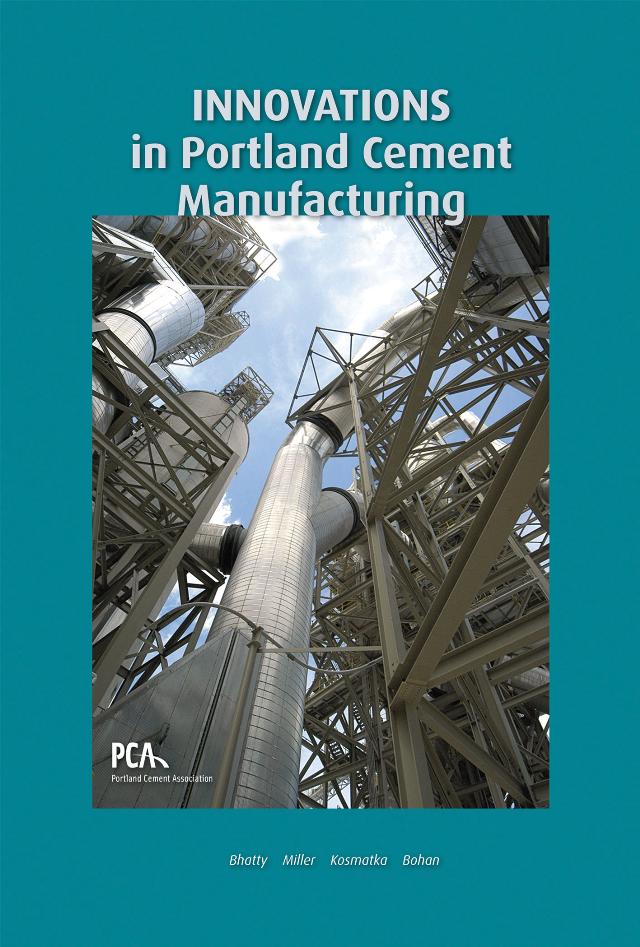
New edition: ‘Innovations
in Portland Cement'
During the event, Rick Bohan, PCA’s Director of Manufacturing Technology, introduced the publication of the second edition of ‘Innovations in Portland Cement Manufacturing’ during a special press event.
First published in 2004, the PCA has now published the second edition of its seminal work, “Innovations in Portland Cement Manufacturing”. This two-volume set represents an important contribution to the knowledge base of modern Portland cement manufacturing. It draws on the considerable expertise of the PCA and of leading experts throughout the world, providing a definitive resource on all aspects of cement manufacturing.
While the entire end-to-end cement manufacturing process is discussed, new chapters in this edition include: finish grinding using vertical roller mills, oxygen enrichment, inlet gas analysis, and acoustic pyrometry. A new chapter on sustainable cement manufacturing reflects the wider trends in the industry worldwide, and health and safety issues are dealt with in depth.
Exhibition
IEEE exhibition area
Delegates were able to meet around 140 leading equipment and service suppliers, all under one roof, in one of the most comprehensive exhibitions in the annual conference calendar.
All aspects of cement manufacturing technology were represented, giving visitors the chance to explore new product innovations with the support of some of the industry’s most knowledgeable experts.
As is the custom, as the evening approached, delegates moved from the exhibition to the hospitality suites to continue discussions, network and enjoy the more social side of the meeting, for which IEEE is renowned. Host companies included: Schneider Electric, Process Barron, Loesche America, Rockwell Automation, KHD Humbolt Wedag and many others.
Awards dinner
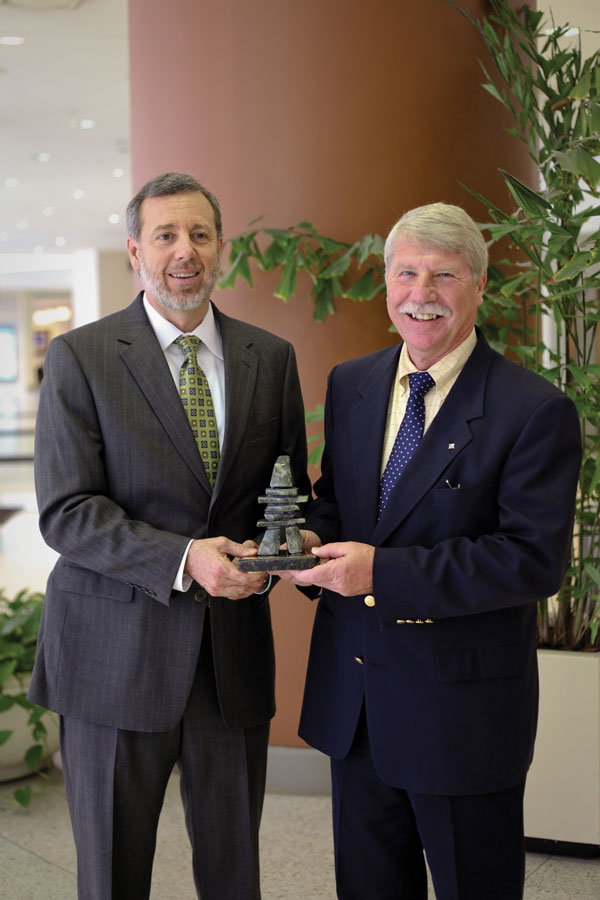
Ed Buehler (right) receives
Meritorious Service Award
Closing the conference, delegates congregated for the Awards Banquet, a lively event and the perfect setting to thank the many individuals who contributed to the success of the event, as well as honour those who have served the industry. Congratulations to Ed Buehler (Houston Cement) who received the Meritorious Service Award, and to Steven Miller (FLSmidth Inc) for grabbing top honours for best technical presentation with his paper on the gas suspension absorber at Norcem’s Brevik plant in Norway.
Plant tour
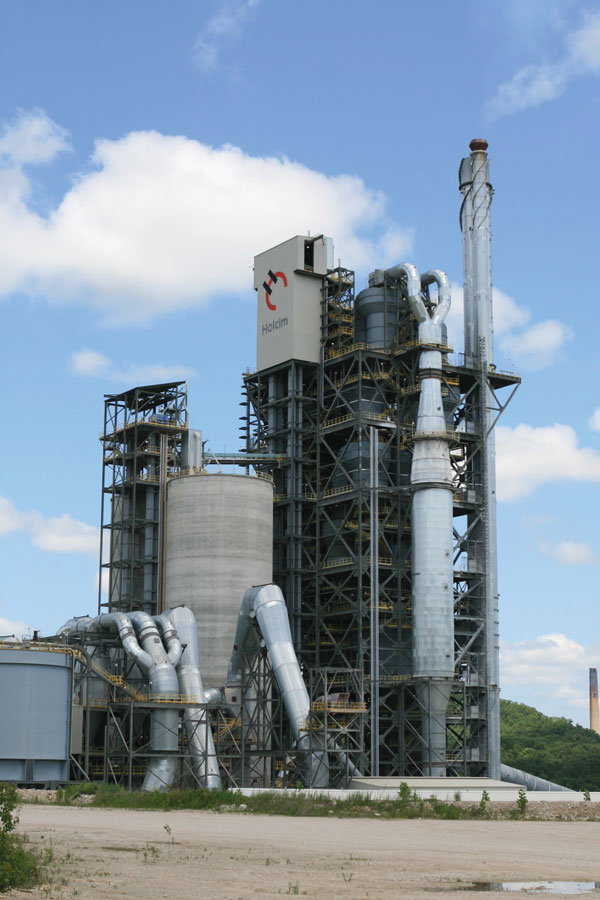
Plant tour: St Genevieve, Holcim
Plant tours to two of the most modern plants in the US were also part of the programme. Holcim’s St Genevieve greenfield plant offered delegates to see a truly remarkable production facility, one of the largest cement production facilities worldwide that represents an investment of over US$1bn (See also ICR May 2008). Built on a turnkey basis by FLSmidth, the plant features a 12,000tpd kiln line and can produce up to 4Mtpa.
The economies of scale mean that it can produce cement at nearly half the average cash cost of the US industry as a whole. Strategically located on the banks of the Mississippi, the plant services a vast area extending all the way north to St Paul, Minnesota, and south to Houston, Texas.
Buzzi Unicem USA’s 7000tpd Festus plant, situated in Selma, was the destination for the second plant tour. Also strategically-located on the banks of the Mississippi, this plant was recently modernised with the installation of a new kiln line (See ICR May 2011).
In contrast to St Genevieve, this project represents the antithesis of the turnkey approach, where each individual piece of equipment was selected for its superior design and engineering. In practice, this presented the operations team with a challenging task of coordinating multiple equipment manufacturers – a task that was successfully achieved!
ICR looks forward to next year’s event which will be hosted in San Antonio, Texas. But first, why not get involved with the 2011 West Coast IEEE Cement Industry Conference to be held at Northridge Country Club in Texarkana, Texas on 13-14 October.
Handpicked stories, in your inbox
Our editors pick the top news delivered to your inbox. Sign-up today!