Earlier this week, the Polish Cement Association (SPC) highlighted the influx of cement imported into Poland from outside the European Union, principally from Ukraine but also in significant volumes from Algeria,Turkey and Egypt, among others.
While similar concerns are being voiced across western Europe, the SPC is keen for for Poland's situation to be viewed in a broader geopolitical context. After enjoying stable production of around 19Mta between 2018 and 2022, Polish cement production fell by 14 per cent in 2023, dropping steeply to 16.8Mt, according to the SPC. At the same time, Ukrainian producers, struggling with reduced domestic consumption following the Russian invasion, quickly identified their Polish neighbours as a key export market. Ukrainian cement imports to Poland increased significantly from 32,463t in 2021 to 659,755t in 2024, according to the latest customs data.
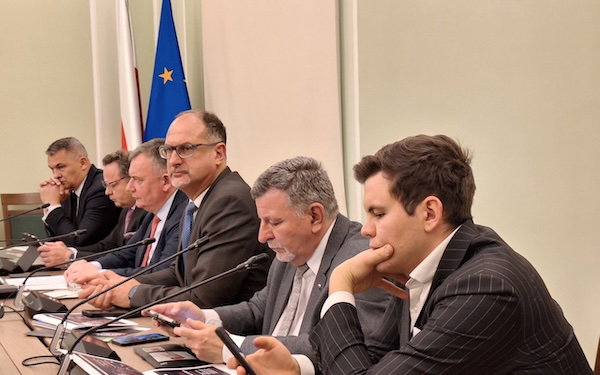
“Cement imports are growing dynamically. We estimate that this year they will be in the range of 1.7-1.8Mt, most of it from Ukraine," noted Wlodzimierz Choluj, member of the management board of SPC and president of the management board of Cemex Polska, referring to overall Ukrainian cement exports to the EU, during a meeting of the Parliamentary Committee for the Development of the Cement Industry in Poland.
Data published by Cement Europe (formerly CEMBUREAU) confirm the scale of these import flows, with the association reporting that some 1.64Mt arrived from Ukraine in 2024. Turkish imports to the EU were even higher at 4.41Mt. In total, non-EU cement imports to the EU have more than quadrupled in the last decade from 2.4Mt in 2016 to 11.3Mt in 2024. The hope is that the EU’s Carbon Border Adjustment Mechanism (CBAM) will restore some competitive balance by ensuring imported cement is adequately taxed, but significant uncertainty remains over its effectiveness and implementation.
Eastern Shield
One can hardly blame Poland for feeling anxiety, not just about the danger to its cement industry, but its own national sovereignty, with reports of territorial incursions by Russian aircraft being a regular occurrence. The risk of Russian aggression led to the development of the so-called Eastern Shield defence initiative, announced in 2024, which aims to fortify the country’s eastern borders with Belarus and Kaliningrad through an array of shelters, bunkers and refuges.
With an estimated cost of PLN10bn (US$2.55bn), the programme represents a massive infrastructure investment. Cement demand associated with the project is expected to reach 3Mt over the next decade.
Which may go some way to explaining why Poland is keen for the project to be undertaken with domestically produced materials, including Polish cement. A precedent already exists with the Belarus-Poland border wall, constructed in 2022. One argument is that relying on domestic supply minimises the risk of supply chain disruption during times of crisis, which is understood to be crucial for the continuity of defence investments.
Moreover, Poland also wants the materials used in defence construction excluded from the EU Emissions Trading System (EU ETS). Under its proposal half of the cost of emission allowances should be “removed” from cement producers and the other half compensated to their customers, namely the defence sector.
It is an argument that has been gaining traction in Poland for several months. In September, the Polish Ministry of Climate and Environment (ENVI) voiced the country’s objections to the European Commission over the EU’s target of a 90 per cent reduction in GHG emissions by 2040, with defence-related exemptions forming a central part of its argument.
Free emission allowances are due to begin phasing out from 1 January 2026. Meanwhile, the European Commission is not expected to submit formal revision proposals before the second half of next year. Should defence be excluded from EU ETS obligations, then the question of which types of infrastructure deemed eligible for exclusion could become a major point of contention.
Handpicked stories, in your inbox
Our editors pick the top news delivered to your inbox. Sign-up today!