Nigeria already has the largest cement capacity in Africa, and it is about to add even more. This week, the Edo State Government agreed on a new 10Mta cement plant with a Chinese company. The project is said to align with Edo State’s broader strategy to become a manufacturing and industrial hub.
The proposed facility, once constructed, will raise the number of cement producers in Edo State to three, alongside BUA Cement and Dangote Cement, both of which operate near Okpella in Etsako East Local Government Area.
But building new plants in Nigeria is no easy task. Investors will be aware of how difficult it can be for new entrants to compete with the cement titans BUA Cement, Dangote Cement and Lafarge Africa, which is now owned by China’s Huaxin Cement. In fact, the only company to successfully establish itself in this market, beyond the long-term incumbents, was Mangal Industries, with its new plant in Kogi State in 2024.
There are also reminders that Edo State can be a graveyard for new plant projects. AVA Cement’s factory, which started construction in 2007 in Eigbegere, Ikpeshi, was eventually abandoned.
But the risks seem worth it when the country is known to hold an estimated 2.3trn tonnes of limestone resources, with at least 568Mt of proven reserves spread across the states of Kogi, Ogun, Edo, Sokoto and Benue. The country’s current cement demand is approximately 33.9Mt, up 8.5 per cent YoY, according to Global Cement Report 16 (GCR16). Nigeria’s cement market was valued at about US$1.4bn in 2025 and is projected to reach nearly US$2bn by 2029, according to Business Daily Nigeria. It has been a private sector success story, despite the risks, with investments exceeding US$6bn, turning an import-dependent sector into a regional cement production hub.
Demand drivers
While domestic demand is accelerating, Nigeria is still a low-income country with an underdeveloped housing and infrastructure base. Per capita consumption remains low at 129kg compared to the world average of around 550kg. At that level, and with Nigeria’s population of 237.5m, annual demand would be in excess of 130Mt. Given this untapped potential, it is easy to see why new entrants are eager to set up capacity in what will, sooner or later, become a leading global market.
New capacity tap keeps flowing
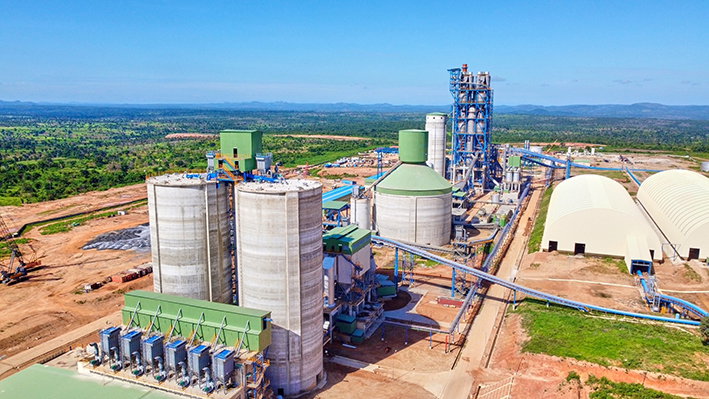
So new projects keep coming. Ibeto Group is an interesting addition, transforming from an export company into a domestic producer, with three plants under construction with a combined capacity of 6.2Mta. A year ago, Bauchi State Government announced a partnership with Resident Cement Factory Ltd, which similarly plans to build a 10Mta cement plant in Diji village, Gwana district, in Alkaleri. The plant will cost US$1.5bn. Only last month, BUA Cement announced plans to build two new cement plants: a 3Mta greenfield plant in Ososo, Edo State, which is set to begin operations in December 2027, and a brownfield plant in Sokoto State, scheduled for December 2028. Not to be outdone, Dangote Cement Plc (DCP) signed a US$1bn agreement with China’s Sinoma International Engineering last month, which includes brownfield expansions at existing Nigerian plants in Itori, Apapa, Lekki, Port Harcourt and Onne. The industry leader is nearing the completion of its 6Mta Itori integrated cement plant in Ogun State. The new plant will bring Dangote Cement’s domestic capacity to 41.25Mta, while enhancing Nigeria’s export capacity. It will have two 6000tpd clinker lines and its own captive power plant.
Current cement capacity in Nigeria is estimated at 70Mta, but at the current pace, it could exceed 100Mta within a decade.
Competition hotting up
As supply increases, the consumer will ultimately win, as producers compete to deliver cement at the lowest possible price. Cement prices have increased from NGN8500 per 50kg bag at the end of 2025 to NGN11,500 in early 2026, with spot prices as high as NGN15,000 in April 2026.
Meanwhile, BUA Cement announced a cumulative NGN4.5bn (US$2.7m) reward for distributors of its cement products in Nigeria. The loyalty and performance of distributors are key in a market where new cement capacity is rapidly building. “Their role goes beyond selling cement. They are key contributors to socio-economic development across the country,” said Abdul Samad Rabiu, Chairman of BUA Cement.
Nigeria is building its future
Nigeria is building infrastructure and housing stock as the country transitions from a low- to middle-income economy. A massive, growing population and an increasingly dynamic economy will combine to drive further consumption growth, drawing new investment into the cement industry. The future looks bright.
Handpicked stories, in your inbox
Our editors pick the top news delivered to your inbox. Sign-up today!