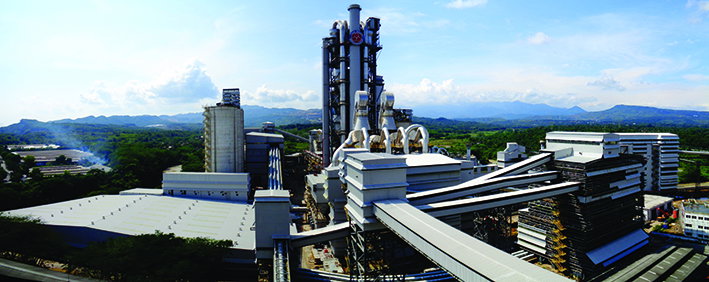
Heidelberg Materials’ Indonesian subsidiary, PT Indocement Tunggal Prakarsa (Indocement), faces mounting scrutiny over its planned greenfield cement facility and limestone quarry in Central Java’s Kendeng Mountains.
The project has prompted a landmark legal challenge in Germany under the country’s Supply Chain Due Diligence Act. It is the first complaint using Germany’s supply chain law to challenge an international project, setting an important precedent as the European Union prepares to introduce similar rules by 2028.
Cross-border court action
The Kendeng cement plant case is attracting significant international attention because this will be the first case to apply Germany’s supply chain legislation to an Indonesian project. Moreover, the case comes just as comparable due diligence rules are due to be introduced across the European Union in the coming years.
Heidelberg Materials' Indocement has found itself under pressure to keep its plans on track for the new limestone quarry and greenfield cement plant, after local criticism of its environmental due diligence. Protecting local environments and habitats is becoming more vital with the decline in biodiversity and the need to put the brakes on climate change. Greenfield projects, like this, could well come under stricter planning controls in countries that were previously more anxious to see rapid urban development.
Issues with Kendeng cement plant
Indocement’s new plant project is in the Kendeng mountains of Central Java. The area is of sensitivity, because the indigenous Sedelur Sikep community live in this region and has important social and cultural links to the land, as well as providing a developed ecosystem. The agricultural practices are of utmost importance for the Sedulur Sikep people as the Karst mountains have the capacity to hold water back in the rainy season, preventing floods and providing water during the dry season. The rice harvests could be affected by changes in water levels. In Java, an estimated 3.1m ha of land is used for rice production, and 1.7m of it is harvested in Central Java, around the Kendeng mountains. Water quality, water availability, air emissions and biodiversity are all assessed in the Environmental, Social Impact Assessment.
While an environmental permit for a cement plant was granted in 2014 and upheld in 2017, a resolution still appears far from emerging. Katharina Plonsker, senior sustainability communication manager for Heidelberg Materials said so far, “no decision on the implementation of the project has been taken.”
It is estimated that Heidelberg could mine as much as 4.1Mta of limestone in the location, according to the Community of Salam Institute. However, critics argue, the need for another cement plant in Indonesia is questionable and not supported by market demand.
Java market dynamics
Domestic cement demand is estimated at 64.9Mt in 2025, according to Indonesian Cement Association (ASPERSSI), while capacity utilisation is running at just 54 per cent, with Indonesia's total cement capacity at 119.9Mta. Indocement claims that it has a domestic market share of approximately 29.3 per cent.
The cement market of Central Java is being targeted by Indocement due to its high level of cement demand growth, which the company reports is over 10 per cent YoY. The market is situated within the larger regional market of Java, which accounts for around 50 per cent of Indonesia’s cement sales.
The driving force for domestic cement demand is housing. Some three million houses, designated as a National Strategic Project (2025-29), represent a strategic effort to expand housing access and strengthen the national economy. The policy is anchored in a presidential regulation on the national medium-term development plan (2025-29), which is expected to generate direct benefits across 110 economic sectors and indirect effects on 75 others. Moreover, Finance Minister Purbaya Yudhi Sadewa projects that Indonesia’s economic growth could reach 5.6-5.7 per cent if the housing programmes achieve their targets.
It is the pressure to meet these needs that encourages Indocement and others to try to be in the best position they can be to win house construction supply projects. Modern and efficient cement plants can supply markets more efficiently and at a lower cost than older facilities.
A leading industry case study
The Indocement project remains on the table and will serve as a vital case study for project managers, as similar compliance laws are rolled out across the European Union, having far wider overseas consequences. The domestic market saturation of Indonesia, as well as organised local protesters, has already resulted in the Kendeng Mountain cement plant's initial environmental permit being put on hold. Further legal delays could well make the project less viable from Heidelberg Materials’ view.
Handpicked stories, in your inbox
Our editors pick the top news delivered to your inbox. Sign-up today!