
Non-EU cement imports into the UK have reached their highest level since records began in 2000, according to Mineral Products Association (MPA) analysis of HMRC figures. The association says the trend suggests trade diversion following the introduction of the EU’s Carbon Border Adjustment Mechanism (CBAM) in January 2026.
Supplies from outside the EU accounted for 29.3 per cent of UK cement imports in January–September 2026, compared with 17.1 per cent a year earlier. The analysis covers clinker and non-white Portland cement.
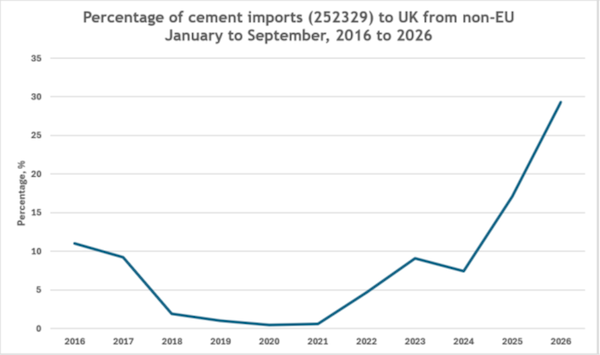
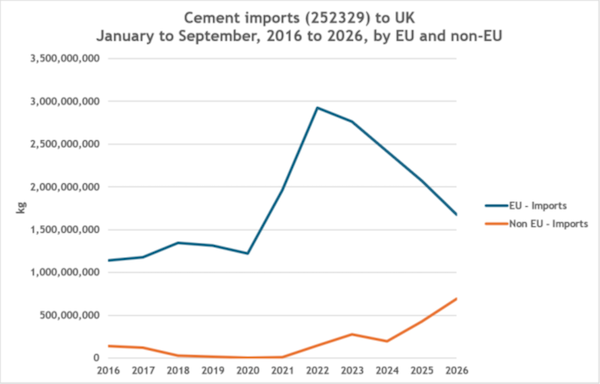
The MPA warned that differences in carbon costs could undermine British producers’ competitiveness and decarbonisation investment. Although the data used does not provide a country-by-country breakdown, it highlighted terminal operators’ supply agreements with Turkish producers as potential additional routes for non-EU imports.
The UK’s own CBAM is due to begin on 1 January 2027. However, the association expressed concern that the government’s illustrative charges are lower than the EU’s and that country-specific default emissions values will not be introduced until 2029.
“The introduction of the UK CBAM will help but only if it is watertight,” said Martin Casey, MPA senior director for cement and lime.
Ahead of the EU–UK summit on 20 November, the association urged closer alignment of the two carbon-border regimes and progress towards linking emissions trading systems.
Handpicked stories, in your inbox
Our editors pick the top news delivered to your inbox. Sign-up today!