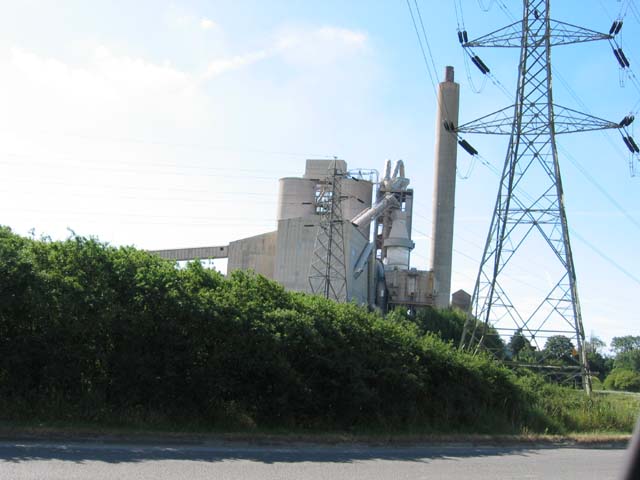
With the UK–EU summit on 20 November expected to deliver an emissions-trading agreement and, in due course, reciprocal CBAM exemptions, announcements from Breedon, Ibstock and the Mineral Products Association (MPA) this week illustrate the pressures shaping British cement investment.
MPA’s latest survey doesn't offer much reassurance about the prospects for recovery. Ready-mixed concrete sales fell 7.1 per cent in January–September and mortar declined 4.5 per cent. Private new housing output fell 4.7 per cent quarter on quarter in July–September, according to the Office for National Statistics. Energy, transport and water projects sustain regional demand, but have not offset housebuilding weakness. The housing downturn compounds a longer decline in domestic cement production. UK output fell to 7.3Mt in 2024, its lowest level since 1950.
Meanwhile, Breedon’s 19 November update highlights the pressure on suppliers. Ten-month group revenue increased seven per cent, or five per cent like-for-like, but additional energy-led inflation proved difficult to recover through pricing. Underlying EBITDA is expected at the lower end of market forecasts. The company anticipates challenging housing markets and continuing energy inflation into 2027.
These conditions give Britain’s energy debate particular relevance for cement. The debate over the Rosebank oil field raises a wider question for cement producers. As Britain changes its energy mix, when will investment in new generating capacity translate into reliable, competitively priced power for industry?
Grid connections, network charges, balancing costs and long-term contracts all influence the delivered price. The cement industry needs relief before new generating capacity arrives, while future SCM processing and carbon capture will require additional electricity. Domestic oil and gas production would not automatically deliver cheaper energy, given international pricing, but the windfall taxes which they would generate could be used to support domestic industry.
UK cement producers have already reduced their reliance on fossil fuels. Waste-derived fuels supplied 58 per cent of cement plants’ thermal energy in 2024, according to evidence MPA submitted to Parliament last year. Further substitution requires dependable supplies and investment in preparation and handling, while leaving electricity requirements and limestone-process emissions to address.
High production costs put British plants under pressure, while high UK selling prices make the market attractive to overseas suppliers. Imports already supply approximately a third of Britain’s cement market. Within that supply, non-EU producers are gaining ground: their share of cement and clinker imports increased from 17.1 to 29.3 per cent in January–September. MPA attributes this shift to trade diversion following EU CBAM’s introduction and points to Turkish supply agreements as potential additional import routes.
The UK CBAM begins on 1 January 2027. Linking emissions trading schemes could simplify UK–EU trade, but would not automatically align their treatment of third-country imports. Domestic investment needs a mechanism that credibly reflects overseas emissions and takes into account the carbon costs British producers bear.
Ibstock’s GBP50.1m (US$66m) sale of the Redhurst quarry is one area where investors see potential in British cement. The buyer, an unnamed global building materials group, has paid a substantial sum for a technically assessed clay resource with potential for clinker substitution. Although processing capacity and development plans remain undisclosed, the transaction suggests that Britain’s changing cement requirements can create investment opportunities even in a difficult market.
Other initiatives illustrate the range of potential domestic constituents. Hepworth’s HepCem calcined clay has secured certification. Drax and Power Minerals’ legacy fly-ash project and TITAN’s planned processing at Fiddlers Ferry seek to recover material from stockpiles. Holcim UK’s recycled-concrete-fines trials extend the possibilities into construction waste.
Britain has the raw materials to produce more low-clinker cement. Whether producers invest in processing them will depend partly on what they pay for electricity. The government can strengthen the case for investment by reducing the network charges borne by industrial users and improving access to competitively priced, long-term power contracts.
A watertight UK CBAM is equally important. The government must enforce emissions reporting rules and verify claims for carbon costs paid overseas, so that imported cement and clinker face a carbon cost comparable to that borne by UK plants. Together, competitive power prices and fair carbon pricing would give British producers the confidence to invest now and supply more of the cement the country will need when construction recovers.
Handpicked stories, in your inbox
Our editors pick the top news delivered to your inbox. Sign-up today!