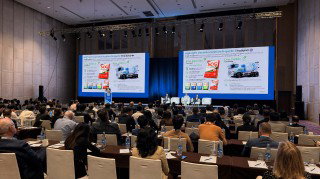
Industry professionals from over 30 countries gathered for the 13th Cemtech Middle East & Africa 2018 conference and exhibition, held between 17-20 February at the JW Marriott Marquis hotel in Dubai, UAE.
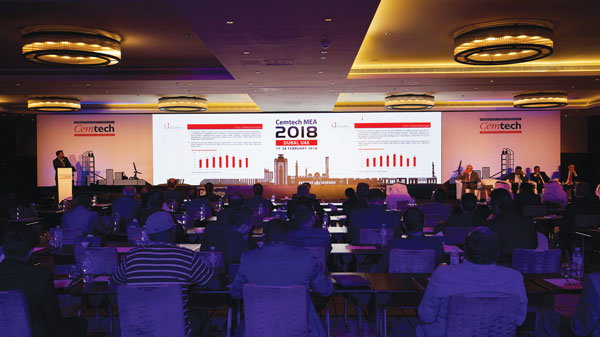
Cemtech MEA 2018 opened to over 200 delegates
Opening this year’s Cemtech MEA conference, Thomas Armstrong, managing editor of International Cement Review, welcomed over 200 delegates to Dubai. In his presentation, he observed how global overcapacity is driving competition between producers by encouraging smart investment in cost-reducing technology and optimisation initiatives. Alongside this, he noted how the programme for the event would address important developmental issues in the industry such as the significance of alternative fuels (AFs) and raw materials.
Positive market growth ahead
The first morning continued with a series of reports analysing the markets of the Gulf Cooperation Council (GCC) countries. Hettish Karmani of Ubhar Capital (Oman) presented an outlook for the coming year, forecasting that the region is about to enter a positive growth period. Despite the economic slowdown in 2017 due to the cut in hydrocarbon use, expansionary national budgets have been established to assist economic diversification strategies. Other factors such as the Qatar World Cup, the Dubai Expo 2020 and Neom, the US$500bn planned city in Saudi Arabia, should provide a boost in cement demand.
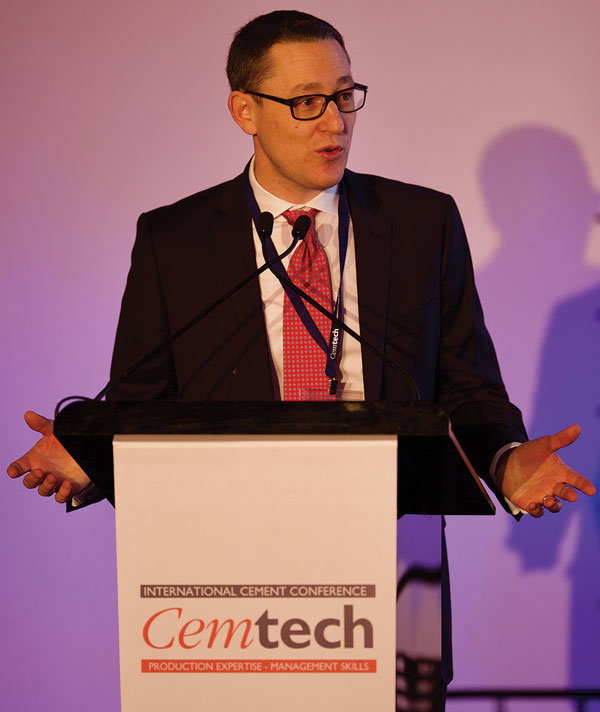
Thomas Armstrong of International Cement Review
inaugurated the conference
Santhosh Balakrishnan, Riyad Capital (Saudi Arabia), delivered an update on the country’s cement industry and addressed key concerns such as demand falling by 14 per cent in 2017, surplus inventory amounting to 35.6Mt and competitive cement prices of approximately US$50/t. Despite these issues, the country is expected to see a revival in 2018.
HBS Global’s Syed Hasan delivered an analysis of the supply and demand structure of the UAE. The country has the second-largest capacity in the GCC, but demand is currently falling far below capacity. Instead, exports to neighbouring markets such as Oman are offsetting the pressure on the local market.
Africa expert and former Dangote Cement CEO, Tony Hadley, examined how sub-Saharan Africa could become the next growth market. While the region requires investment and leadership, it is likely to become highly profitable in the long term.
UK-based independent consultant Peter Hoddinott presented some strategic considerations for cement professionals looking to enter the cement industry. Whilst the industry has several high entry barriers for newcomers, such as securing a steady supply of raw materials and funding, many of these issues can be overcome with careful planning.
Adib El Hachem of Cimenterie Nationale (Lebanon) explored the latest market developments in the Levant region (Syria, Iraq and Lebanon). In both Syria and Iraq, post-war reconstruction would require 20Mta, which both countries cannot currently supply, with Syria producing approximately 3Mta. Therefore, Cimenterie Nationale announced reinforced operations in Lebanon, including plans to install a new clinker line to serve these markets.
Alternative fuels
The second day began with a series of presentations dedicated to alternative fuel use. Jim O’Brien started the session with an overview of how to turn sustainability into profitability in the Middle East. The use of alternative fuels and raw materials in the Middle East is low in comparison to industry leaders like India and Europe, partly due to regional availability of materials but also because of a lack of sufficient economic drivers.
Nijat Orujov, VDZ (Germany), spoke about the optimisation of the clinker burning process when using alternative fuels. Due to the uniform burn-out conditions and destruction of organic pollutants, kilns provide an ideal opportunity for the environmentally-safe utilisation of AFs. VDZ offers customised solutions to overcome issues that may arise from the introduction of alternative fuel into the cement production process, such as a customised training scheme for plant operators.
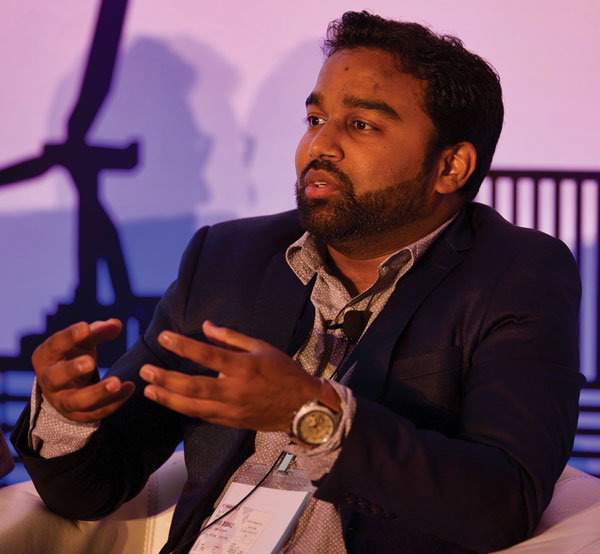
Speakers fielded questions from the audience
at the conclusion of their presentations
Juliano Arantes of ABB (Switzerland) delivered a speech on the advanced process control systems that the company offers and how it can maximise AF usage in a plant. Through the application of its ABB Ability™ Expert Optimizer, customers can benefit from an increase in alternative fuel usage of up to 50 per cent.
Luc Reibel, Walter Materials Handling/ ATS Group (France), highlighted several successful projects where his company has assisted with the storage, extraction, dosing and feeding of AFs into the production process. In the UAE the company supplied a Toploader storage management system and a chain belt conveyor, amongst other equipment, to handle shredded wood chips.
Robert Krist, FLSmidth Pfister (Germany), considered how the increase of oil and gas prices has forced manufacturers to look at alternative fuel as a viable substitute. For example, National Cement Co, UAE, decided to begin using carbon and tobacco dust in 2015. Consequently, the company installed a Pfister DRW 4.10 rotor weighfeeder for carbon dust dosing and a TRW-D 4.14 for tobacco dust dosing. The manufacturer now saves substantial amounts of coal and as a result expects an ROI in less than three years.
Technical presentations
The second day of the event concluded with a collection of presentations illuminating specific technical advances in the industry. Dr Michael Enders, thyssenkrupp Industrial Solutions AG (Germany), began by exploring quality control for smooth kiln operation and good clinker quality. The presentation analysed the volatilisation of critical species during the clinkering process and looked at technology, such as quantitative X-ray diffraction, which can facilitate a better understanding of the reactions in the kiln.
Nazih Ziadé of Thermo Fisher Scientific (Switzerland) looked at the many stages of the cement production process where analytical equipment can be used. The presentation included a case study of an Indian cement producer who obtained clinker with an extremely poor strength. After analysis with software included within the Thermo Fisher ARL 9900, it became apparent that the clinker had an abundance of y-C2S instead of the required C3S, and therefore had no hydraulic properties. Since a build-up of y-C2S occurs when clinker cooling is too slow, usage of the Rietveld XRD software can assist in the control of the clinker cooler.
Oliver Kurtnacker, Axians Industrial Applications & Services (Germany), looked at the importance of IT security and network safety within cement plants. Axians offers a process-orientated software solution, VAS, which allows the operator to control the security within the plant. This is achieved through both hardware solutions such as entry and exit webcams to monitor drivers and vehicles, and digital security.
Andreas Filipiak of AMF Bruns (Germany) spoke about smooth conveyor operation through sensor integration. The implementation of Sensohub technology along with smart bearings enables the detection of bearing and shaft failures, and results in increased machine availability due to preventative maintenance.
Steffen Nyman, CC Jensen (Denmark), presented the benefits of oil contamination control within a cement plant. While dirty oil can lead to unscheduled breakdowns, best-practice handling and storage can reduce this risk.
Pioneer Cement plant tour |
|
This year’s Dubai conference featured a tour of Pioneer Cement Industries’ plant in Ras Al-Khaimah, UAE. The 1.5Mta facility was commissioned in 2006 and produces both OPC and SRC depending on market demand. A subsidiary of Oman-based Raysut Cement Company, the company is recognised as one of the leading cement producers in the country. 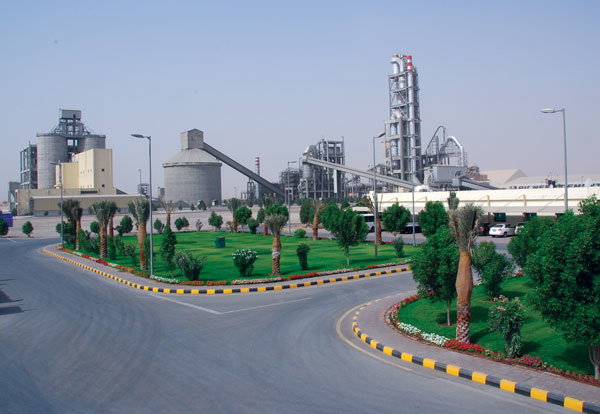
Pioneer Cement Industries’ 1.5Mta plant in Ras Al-Khaimah, UAE FLSmidth is the main supplier for the plant, and as such has provided manufacturing technology for the entire production process. For example, two FLSmidth Tirax Unidan mills grind the raw material to meet the required kiln feed of 262tph. The facility’s pyroprocessing system consists of a six-stage, low-NOx preheater, a FLSmidth in-line calciner, a 3.95x62m rotary kiln with three supports, a Pillard NovaFlam® burner and an IKN Pendulum Cooler®. Elsewhere, the packaging plant has undergone multiple stages of optimisation to increase its capacity. In 2015 the addition of a 2600bags/h Haver Roto Classic advanced the bagged cement capacity to 6000bags/h. An FLSmidth Ventomatic palletiser was then commissioned in November 2017, adding a further 2600bags/h of capacity. Furthermore, bulk loading was improved from 1200tph to 1500tph, with the construction of a bulk loading spout underneath a new 12,000t silo. Automated truck loading is estimated at 5000bags/h and manual loading reaches 1000bags/h. As part of a wave of new green energy initiatives, the company is expecting to implement the first phase of a waste heat recovery system, which is expected to achieve a net power generation of 2800kW/h. To meet regulatory guidelines issued by the Ministry of Environment and Water, a selective non-catalytic reduction project is also under progress to bring NOx levels down to 300mg/Nm3. Finally, since the existing kiln inlet and outlet seals have gaps around their circumference, the company plans to replace them with graphite plate technology to improve specific heat consumption. |
Cemtech workshops
This year featured a dual programme for the technical workshop, with two courses taking place consecutively over one-and-a-half days each.
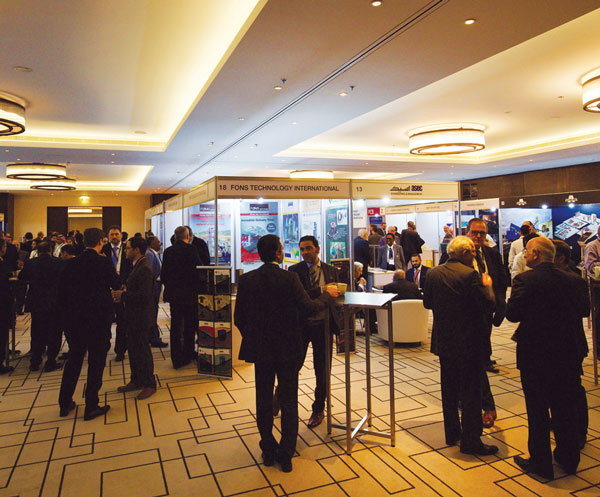
Industry professionals used the opportunity to
meet with equipment suppliers
The new format gave industry expert, Dr Michael Clark, an opportunity to provide a deeper analysis of specific aspects of cement production. The first session explored fuels, combustion and emissions within the industry, while the second looked at grinding technology and product development.
Extended programme
Cemtech MEA featured a special seminar led by Thierry Bogaert (France), who introduced the concept of industrial architecture to participants.
Alongside the conference programme, a 26-stand exhibition was held to enable delegates to meet and discuss solutions with a range of equipment suppliers. Elsewhere, the gala dinner provided the opportunity to enjoy an evening of entertainment at the conclusion of a comprehensive presentation schedule.
Next Cemtech
The next conference is Cemtech Asia 2018, to be held on 24-27 June at the Meliá Hotel in Hanoi, Vietnam.
This article was first published in International Cement Review in April 2018.
Handpicked stories, in your inbox
Our editors pick the top news delivered to your inbox. Sign-up today!