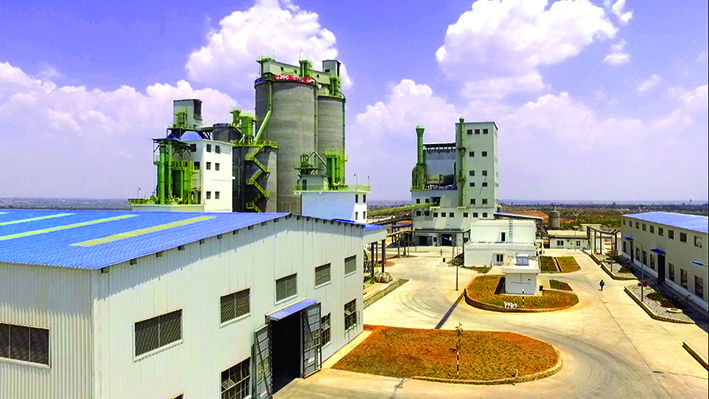
Chinese firm, Shungai Investment, is setting up a US$70m cement plant in Chegutu, Zimbabwe. The plant is expected to start full production next year, with a projected cement output of 0.8Mta.
Shuntai Investments (Pvt) Ltd Administration Manager, Yan Bo, confirmed that his firm is seeking a Special Economic Zone status to operate competitively.
“We are installing technologically-advanced machines and making use of locally available resources, so this means we are going to have minimum production cost, which translates to reduced retail price of a bag of cement. So far, we have already employed 300 local youths from Chegutu, and across all our operations, we are looking at about 4000 people in total. For the Chegutu plant, we have set up January of next year as our completion target.”
The Chinese have made a large impact in Zimbabwe's cement market. Huaxin Zimbabwe Industries (Pvt) Ltd and Sino-Zimbabwe Cement Co are well established, while the new plants are increasing domestic cement capacity and taking the country closer to self-sufficiency.
In addition, another Chinese investor, WhiZim International, a subsidiary of Yaobai International, operating under West China Cement Ltd, is setting up a US$1bn cement plant in Magunje, Hurungwe, where over 2000 people will be employed. Construction works are set to be completed this month and 60 local staff have already been employed at the plant.
The opportunity to create local jobs with these new facilities is welcomed by the government. Chegutu District Development Coordinator, Mark Kadaira, is impressed with the localised industrialisation drive, especially in driving youth empowerment. “This investment dovetails with the President’s mantra of leaving no one and no place behind. As a district, we are going to benefit a lot, especially in youth employment and the cheap availability of cement, which obviously plays a part in infrastructure development.”
The Minister of Industry and Commerce, Mangaliso Ndlovu, said the government’s target is to improve the contribution of the manufacturing sector to the country’s GDP.
“Again, clearly a testimony that our manufacturing sector is on a firm recovery bound. Those who might have heard that the recent statistics indicate that the manufacturing sector is, in fact, the biggest contributor to GDP at 14.5 per cent. Our target is to get to 22 per cent of GDP, which is where we were during the first decade of our independence. And it is through these investments that we accelerate the path to that target,” said Mr Ndlovu.
Handpicked stories, in your inbox
Our editors pick the top news delivered to your inbox. Sign-up today!