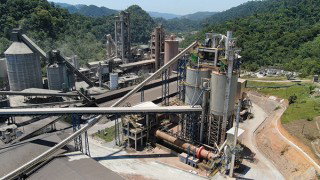
Kenya’s cement industry registered its fastest half-year expansion since 2023, with production rising 17.3 per cent in 1H25, official data shows. Output climbed to 4.85Mt from 4.14Mt a year earlier, buoyed by steady demand in housing, infrastructure and commercial construction.
Monthly production consistently exceeded 800,000t between March and June, the longest such streak since mid-2023. May emerged as the peak month, with factories turning out 845,017t.
Consumption mirrored the surge, growing 22.1 per cent year-on-year to 4.76Mt in the first half of 2025, compared with 3.90Mt in the YoY period of 2024. May again led the trend, with usage hitting 829,570t — the highest since August 2023. Analysts note the rise reflects recovery from last year’s slump rather than an outright boom, as retail prices remain elevated at KES780–855 (US$6.04-6.62) per 50kg bag.
The sector is also undergoing significant restructuring. Holcim’s exit in late 2024 paved the way for Tanzania’s Amsons Group to take control of Bamburi Cement, which was briefly suspended from trading on the Nairobi Securities Exchange during a shareholder squeeze-out. Amsons has pledged fresh capital, including a planned clinker plant in Kwale.
Separately, Amsons-linked Kalahari Cement secured regulatory clearance in August to acquire nearly 30 per cent of East African Portland Cement, while Savannah Cement was rescued the same month through a KSh 3.8 billion deal by local millers.
Despite the upturn, high energy costs remain a drag, prompting major producers to invest in solar and captive power solutions.
Handpicked stories, in your inbox
Our editors pick the top news delivered to your inbox. Sign-up today!