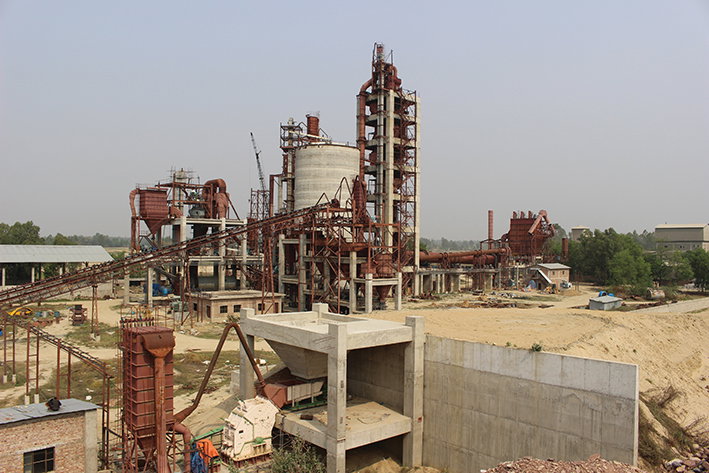
Nepal’s Supreme Court has ordered the relocation of industries surrounding Lumbini, the birthplace of Gautam Buddha, in a landmark ruling aimed at protecting the UNESCO World Heritage Site. The mandate, issued by Justices Kumar Regmi and Sunil Kumar Pokharel, gives companies two years to move or shut down operations.
Cement plants, along with brick kilns, steel factories, and other carbon-emitting industries, are the most affected. More than 60 industries in Rupandehi district—including several large cement producers—must relocate, while new carbon-emitting industries are now banned within 15 kilometers of Lumbini’s boundaries and along the Lumbini-Bhairahawa corridor.
Cement factories located in or area the Lumbini region include; Hongshi-Shivam Cement (in Nawalparasi district), the Ghorahi Cement Laxmipur Cement plant (in Lumbini), Balaji Cement Chandrauta Cement plant (in Chandrauta, Lumbini), and Arghakhanchi Cement (in Rupandehi district).
The ruling responds to a petition by Senior Advocate Prakash Mani Sharma, who argued that unchecked industrialisation threatens the religious, cultural, and ecological integrity of the region. UNESCO had previously warned that Lumbini could lose its World Heritage status if pollution was not curbed.
Industry investors have voiced concern over the feasibility and risks of relocating multiple plants at once, especially capital-intensive cement factories. The ruling also eliminates the option of merely installing pollution-control systems, requiring complete relocation instead.
The court has, however, permitted tourism and entertainment-related ventures in relocated areas, signalling a shift in development priorities around the sacred site.
Handpicked stories, in your inbox
Our editors pick the top news delivered to your inbox. Sign-up today!