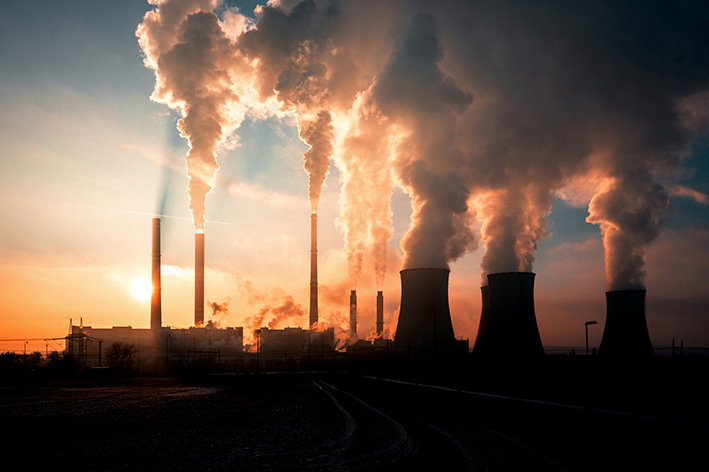
The European carbon market has entered a decisive phase in 2025, with price volatility, shifting emissions patterns, and new policy interventions all shaping the short- and medium-term outlook. A recent webinar hosted by market analysts Veyt and emissions monitoring specialist Kayrros provided an in-depth update on the EU Emissions Trading System (EU ETS), highlighting the key drivers influencing market behaviour and emissions trends this year.
Price trends and market sentiment
The EUA market opened on a bullish note at the end of 2024, with prices rising steadily into December. Optimism was fuelled by the December options expiry and the prospect of a tighter market, which initially pushed prices toward levels last seen in 2022 and 2023.
However, political shocks unsettled the momentum. The inauguration of President Trump in January and his subsequent tariff threats caused the market to correct sharply, with EU ETS prices falling before stabilising at around EUR60/t. As tariff implementation in the US was repeatedly delayed, prices recovered, climbing back to the EUR70–75/t range between June and August. By September, sentiment was bullish again.
Emissions developments in 1H25
Kayrros data showed that emissions in the 1H25 were broadly in line with 2024, with notable variations across sectors. Domestic aviation emissions rose 4.7 per cent, power-sector emissions increased 1.1 per cent, while industrial emissions fell 1.2 per cent. The most dramatic shift came from shipping, which reported a 61.3 per cent rise due to tighter regulation: in 2024 only 40 per cent of shipping emissions were covered, but in 2025 the figure jumped to 70 per cent.
Overall, EU ETS emissions in 1H25 were 2.6 per cent above pre-COVID levels. Difficult weather conditions weighed on renewable generation, forcing a greater reliance on coal.
Breaking the numbers down quarterly, the EU emitted 310.5Mt of emissions in 1Q25, up 6.8 per cent YoY. By 2Q25, emissions fell to 241.5Mt, down 2.3 per cent YoY. The 3Q25 results were more encouraging, with emissions at 174.5Mt — a 3.9 per cent decline YoY. Despite progress, cumulative emissions by September were still higher than in the same period of 2024.
Power sector under scrutiny
The power sector has been identified as the main driver of rising emissions. Using satellite heat detection, electricity data, and transport tracking, Kayrros confirmed that weak renewable generation in 1Q25 forced higher coal and gas consumption.
Germany was a case in point. Between January and April, power-sector emissions rose 12.1 per cent. Wind output dropped 13 per cent, hydro 20 per cent, and nuclear also fell, resulting in an overall nine per cent decline in renewables. This shortfall was offset by a two per cent increase in coal use, seven per cent more gas, and a 16 per cent rise in solar generation.
Shifts in the energy mix
The composition of the EU energy mix is undergoing significant change. In 2024, renewables accounted for 48.5 per cent of electricity generation, but by 2025 this had fallen to 41.6 per cent. Coal rose from 22 to 27.4 per cent, and gas from 12.4 to 16 per cent. Biomass remained steady at around eight per cent, while other sources declined.
The landmark moment came in May–June 2025, when solar power became the EU’s single largest power source for the first time. In June, solar contributed 22.1 per cent of generation, surpassing nuclear (21.8 per cent), wind (15.8 per cent), gas (14.4 per cent), hydro (12.8 per cent), coal (6.1 per cent), biomass (3.3 per cent), and other sources (3.1 per cent). This shift coincided with a sharp 19.9 per cent drop in regulated power emissions in June, followed by a 17.2 per cent decline in August–September, driven by strong wind and solar output.
Industry emission trends
Industrial emissions are showing steady declines, with global output falling 6.3 per cent YtD. The steel sector has been central to this trend. In Duisburg, Europe’s largest steel mill, production has fallen 30 per cent as the plant undergoes a EUR3bn transition to hydrogen-based green steel. The Dunkirk steelworks in France reported a 35 per cent drop in emissions following a two-week shutdown linked to a EUR1.2bn investment in green steel.
Shipping and geopolitical shifts
Shipping remains a wildcard. While tighter regulation has increased reported emissions within the EU ETS, overall shipping emissions are down eight per cent YtD. This decline reflects the easing of disruptions caused by the 2024 Houthi conflict, which forced ships onto longer routes around the Cape of Good Hope. These diversions increased emissions by around 30 per cent compared to the shorter Suez Canal passage.
Fuel switching and winter outlook
Looking ahead to the winter months, analysts expect fuel switching to reduce coal and lignite use in favour of gas, thanks to ample supply. Gas is forecast at EUR39/t compared with coal at EUR50/t, suggesting a cost-driven preference for gas in power generation.
REPowerEU funding
The EU’s REPowerEU plan continues to reshape the allowance supply. The initiative aims to raise EUR20bn by front-loading emissions allowances originally earmarked for 2027 onwards. By end-2025, 73 per cent of the target is expected to be met or injected into the marketplace, with the remainder monetised by mid-2026.
Between July 2025 and July 2026, up to 93Mt of allowances may be released via common auctions, held three times per week. If all volumes enter the market, the average EUA price would be around EUR58.6/t. Current prices stand at EUR71/t, but uncertainty remains, with estimates ranging from EUR71/t to as high as EUR90/t depending on auction timing.
Outlook: policy and competitiveness
The coming months will be crucial for EU climate policy. Leaders are preparing for a major review of the EU ETS Directive in view of 2040 emission targets, balancing the bloc’s climate leadership ambitions with industrial competitiveness. Flexibility around international credits and carbon removals will be key themes. With prices volatile, emissions uneven, and policy in flux, the EU carbon market is entering a critical period that will determine whether it can stay aligned with its 1.5°C trajectory.
Handpicked stories, in your inbox
Our editors pick the top news delivered to your inbox. Sign-up today!