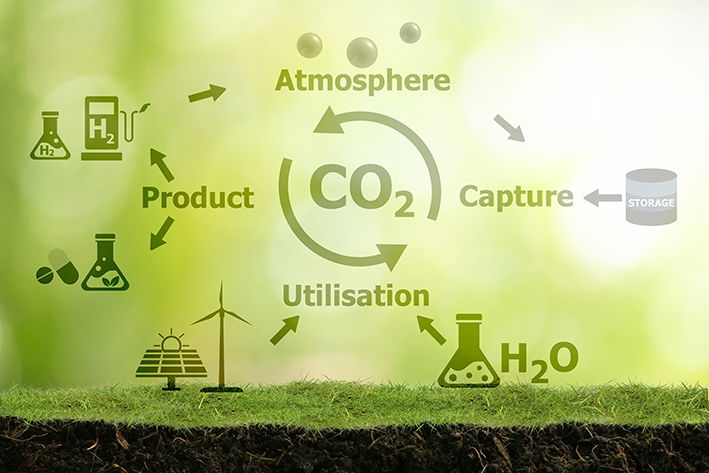
Germany has launched a EUR6bn (US$7bn) funding program to decarbonise its heavy industry sectors, marking the first time carbon capture and storage (CCS) will be built into its climate protection contracts.
The initiative, announced by Economy Minister Katherina Reiche, targets energy-intensive industries such as steel, chemicals, cement and glass. Companies will have until 1 December to register qualifying projects for the 2026 bidding round. Under the scheme, the government will offer 15-year contracts to subsidise companies transitioning to cleaner production methods, shielding them from volatile energy and carbon prices. Contracts will be awarded by competitive auction, with preference given to projects that deliver the greatest CO2 reductions per euro of subsidy.
A key innovation is the inclusion of CCS technology - which captures CO2 emissions and stores them underground - within the programme’s framework. Previously, Germany’s industrial decarbonisation efforts focused on electrification, hydrogen, and energy efficiency, but did not explicitly incorporate CCS at scale. Industry groups have welcomed the flexible, technology-neutral approach, noting it balances the urgency of emissions reductions with the economic pressures facing German manufacturers.
The government expects bidding to begin in mid-2026, pending parliamentary approval of the budget and clearance under EU state aid rules.
Handpicked stories, in your inbox
Our editors pick the top news delivered to your inbox. Sign-up today!