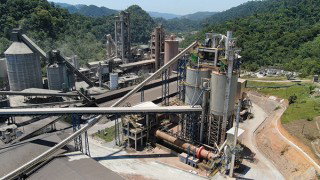
India has introduced its first legally binding carbon intensity limits for heavy industry, a move expected to reshape the country’s cement sector and its competitiveness in export markets.
Under the Greenhouse Gases Emission Intensity Target Rules, 2025, notified on 8 October, 282 industrial units across cement, aluminium, pulp & paper, and chlor-alkali will have to reduce CO2 emissions per unit of output against a 2023–24 baseline.
The first compliance cycle, covering 2025–26 to 2026–27, will be modest in ambition: cement producers must cut emissions intensity by about 3.4 per cent over the two-year period. Companies that beat their targets will earn tradable carbon credits, while those that miss them must buy credits or pay penalties set at twice the average carbon price for the year.
Among the major firms included are UltraTech Cement, Shree Cement, ACC, and JK Cement. The new regime builds on India’s long-running Perform, Achieve and Trade (PAT) scheme but shifts the focus from energy efficiency to direct carbon limits, marking the first step toward a national carbon market.
The move will push Indian producers to quantify and manage carbon costs more rigorously—an essential step as exporters face scrutiny under the EU Carbon Border Adjustment Mechanism (CBAM).
Handpicked stories, in your inbox
Our editors pick the top news delivered to your inbox. Sign-up today!