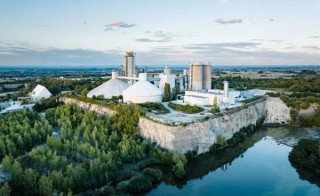
Japan’s Renewable Energy Institute (REI) has published a new report: "The Decarbonization Pathway for Japan’s Cement Industry: Take Urgent Actions to Align with the 1.5°C Target."
Cement is the third-largest industrial emitter in Japan, after the steel and chemical industries. Its 28 cement plants has a total production capacity of 50Mta, 70 per cent of which is ordinary Portland cement (OPC), with blast furnace slag cement accounting for a further 20 per cent.
The report notes the growing use of SCMs in Japanese cement production but says that decarbonisation of cement and concrete requires addressing both energy-related and process-related emissions, including electricity consumption.
In 2022, the Japan Cement Association (JCA) published its “Long-term Vision for Carbon Neutrality in the Cement Industry,” setting interim targets for 2030 and presenting an outlook for achieving carbon neutrality by 2050. However, the REI report notes differences with the targets set by the Global Cement and Concrete Association (GCCA).
Whereas the GCCA sets intensity-based reduction targets with the aim of promoting the use of blended cements, the JCA only specifies an aggregate CO2 reduction target. Moreover, the GCCA projects clinker factors of 0.58 in 2030 and 0.52 in 2050, whereas the JCA assumes 0.825 and 0.80, figures the report criticises as “conservative”.
The report concludes that compared to other countries and leading international cement producers there has been a delay among Japanese producers in the adoption of blended cement, a continued dependence on coal, and a slow uptake of renewable electricity.
“To achieve the 1.5°C target and avoid excessive reliance on CCUS, Japan’s cement industry must accelerate efforts toward 2030 and 2035. In particular, the strategic adoption and expansion of low-carbon blended cements is now imperative, and ensuring their business viability and long-term market penetration is of critical importance,” it states.
Handpicked stories, in your inbox
Our editors pick the top news delivered to your inbox. Sign-up today!