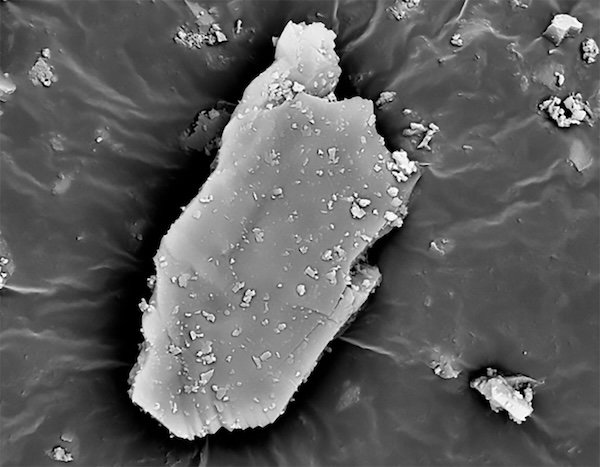
Researchers at Wuzhou University and Guangzhou University, China, have reported promising results from research into the use of silicon carbide as supplementary cementitious material (SCM) to reduce CO2 emissions.
Silicon carbide, an inert substance used as a grit in the gemstone industry, produces large amounts of waste. In a paper published in the journal AIP Advances the researchers explain how they tested chemical reactions at the molecular level, as well as microscale characteristics, such as microcracks and pore size, and macroscale outcomes, such as material strength and thermal and conductive properties.
“The most interesting part was the multiscale integration — seeing how nanoscale ion interactions directly influenced macroscale properties like conductivity,” said Xiaowei Ouyang, the paper’s co-author.
“What surprised us most was that gemstone polishing waste significantly enhances thermal conductivity up to 159 per cent and reduces electrical resistivity by up to 94 per cent in cement, revealing an unexpected potential for ‘smart’ materials.”
Silicon carbide-enhanced “smart” materials could include energy-efficient panels for walls or floors or floors that conduct heat for passive heating and cooling, or embedded sensors in bridges that indicate damage by detecting changes in the structure’s conductivity.
The study also measured the ability of gemstone waste particles to attract calcium ions, which are key to the cement hardening process. By quantifying the particles’ weak affinity for the ions most essential to hardening they are able to optimise and create targeted solutions to create stronger cement.
Further research into optimising the cement blends, field testing for long-term durability and the potential application of the process to other wastes is planned.
Handpicked stories, in your inbox
Our editors pick the top news delivered to your inbox. Sign-up today!