Only four MPs attended an adjournment debate in the House of Commons on 23 October, focussed on the decarbonisation of the cement industry.
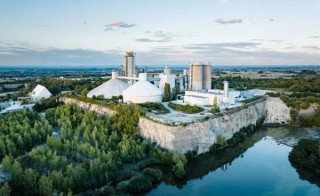
The debate was initiated by Labour MP for Derbyshire Dales, John Whitby, whose constituency includes the UK’s largest cement works – Breedon’s Hope Works. Whitby urged the government to accelerate support for the sector’s transition to low-carbon production, particularly backing the Peak Cluster cement decarbonisation project.
The Peak Cluster initiative proposes a carbon dioxide transport pipeline network linking carbon capture sites across Derbyshire, Staffordshire, and Cheshire to a carbon storage facility on the Wirral.
Whitby called on ministers “to establish a clear route to market for industrial carbon capture projects beyond track 1 and track 2,” arguing that such clarity would give investors confidence that final investment decisions for projects like Peak Cluster and Morecambe Net Zero could be reached within this Parliament. “The sooner that is done,” he said, “the sooner businesses will have the certainty needed to invest, and the sooner all of us will benefit from the growth that such investments will deliver.”
He also pressed for legislation requiring all developments to report on the carbon released through the production and use of construction materials. “Mandatory embodied carbon reporting is needed to drive down emissions from construction,” he said. “It would bring consistency to the industry, which currently faces a patchwork of local regulations, and help create demand for low-carbon building materials. Only sufficient demand will enable these technologies to develop at scale.”
Responding for the government was Chris McDonald, the recently appointed parliamentary under-secretary of state and minister for industry in the Department for Energy Security & Net Zero (DESNZ) and the Department for Business & Trade (DBT). McDonald, elected MP for Stockton North in 2024, previously served as chief executive of the Materials Processing Institute and led its divestment from Tata Steel, giving him direct experience in industrial decarbonisation.
Despite the importance of the topic, attendance at the debate was sparse, with only three MPs and the deputy speaker present to hear the discussion.
Handpicked stories, in your inbox
Our editors pick the top news delivered to your inbox. Sign-up today!