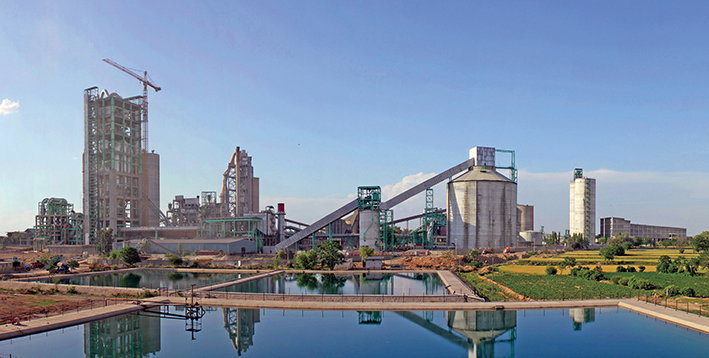
The State Bank of Pakistan, in its latest annual report on the country’s economy for FY24–25, provided an overview of the cement and construction industries, noting a contrasting performance between domestic and export markets.
According to the report, cement exports maintained steady momentum during the financial year, primarily supported by higher demand for clinker from Afghanistan. Export competitiveness also improved following a decline in international coal prices. Facing a sharp 37 per cent drop in domestic sales, the industry began diversifying into new export destinations such as Gabon and Yemen to mitigate the local market downturn.
The central bank noted that cement and steel production fell during most of FY24–25 due to weak demand. However, monthly data indicated a late-year recovery, with output rising in the final two months of the fiscal year, supported by increased provincial development spending in the fourth quarter.
Weak local demand for cement was attributed to a subdued private construction sector, dampened by higher property transaction taxes and rising cement prices following an increase in the Federal Excise Duty (FED) rate. The growth in exports, however, helped cushion the impact of lower domestic consumption.
A similar trend was observed in the steel industry, where production contracted due to reduced demand from construction, household appliances, electrical equipment, and heavy machinery sectors. The availability of cheaper Chinese flat steel imports also weighed on domestic output.
The State Bank further observed that, historically, construction-related industries had benefited from government support measures such as tax incentives, amnesty schemes, and concessionary loans. In recent years, however, these incentives have been rolled back under fiscal consolidation policies, reducing the level of assistance available to the sector.
By Abdul Rab Siddiqi, Pakistan
Handpicked stories, in your inbox
Our editors pick the top news delivered to your inbox. Sign-up today!