Scientists at Kaunas University of Technology (KTU) in Lithuania have reported that textile-derived ash could serve as a high-performance, lower-carbon partial substitute for cement, following the publication of their findings in the journal Construction and Building Materials.
The research addresses two major environmental pressures: the growing volume of textile waste—millions of tonnes of which are landfilled or incinerated every year—and the need to reduce CO2-intensive clinker in cement production. According to the KTU team, controlled thermal treatment of textile waste produces an ash whose chemical composition and fineness enable it to act as a supplementary cementitious material (SCM).
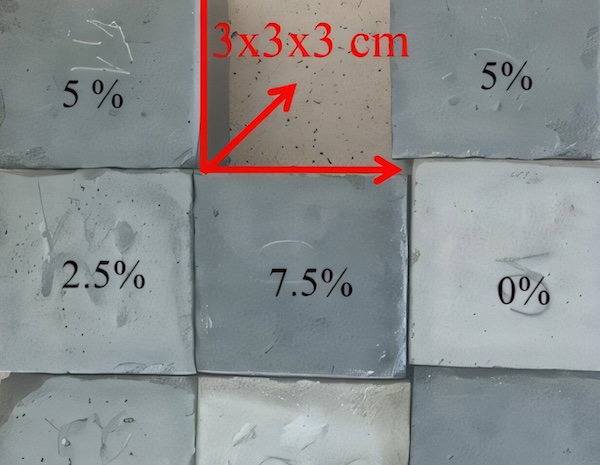
Laboratory tests showed that replacing up to 7.5 per cent of Portland cement with textile waste ash resulted in mixes that were up to 16 per cent stronger than standard concrete under equivalent curing conditions. The researchers attribute this to improved particle packing and enhanced pozzolanic behaviour when the ash is properly processed.
The study also examined the use of recycled polyester fibres recovered from discarded clothing. When incorporated at around 1.5 per cent of mix weight, the fibres increased compressive strength by 15–20 per cent, while also improving freeze–thaw resistance and reducing microcracking. The dual use of ash and fibres, the researchers say, allows both chemical andmechanical improvements to the cement matrix.
The authors argue that the approach could support circular-economy goals by diverting textile waste streams into construction materials, reducing landfill and cutting emissions associated with both clinker production and waste incineration. Textile-ash SCMs could be produced at regional scale using locally generated waste, offering a potentially lower-cost, low-carbon alternative to conventional additives.
While the research remains at laboratory stage, KTU notes that industrial feasibility studies are now required, including ash-quality standardisation, supply-chain analysis and full-scale durability testing. The team believes that with further optimisation, textile waste could become a commercially viable ingredient in lower-carbon cement formulations.
As cement producers increasingly seek scalable SCM options—including calcined clays, fly ash replacements and industry by-products—the emergence of textile waste as a potential resource adds a new dimension to circular-economy innovation in the sector.
Handpicked stories, in your inbox
Our editors pick the top news delivered to your inbox. Sign-up today!