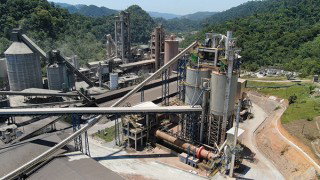
The Cement Manufacturers Association of the Philippines, Inc. (CeMAP) expects weaker cement sales to continue into early 2026 as the government’s anti-corruption investigation into public works projects disrupts infrastructure spending.
CeMAP President John Reinier H Dizon said demand began softening after President Ferdinand R Marcos Jr publicly exposed corruption in flood-control projects in July. Government infrastructure traditionally accounts for 30–40 per cent of total cement consumption in the Philippines.
“What we have witnessed since they unraveled this issue is that there's been a bit of a slowdown, and the impact within that 40 per cent is anywhere from a five to 10 per cent reduction,” Dizon said.
He warned the 1Q26 will likely remain subdued as the Department of Public Works and Highways (DPWH) continues to “normalise” operations and refill vacant positions.
“In the worst-case scenario, probably five per cent [down] in the first quarter next year… in the best-case scenario, it’s flat. But I don’t think we can see any growth immediately,” he said.
Compounding the slowdown is the suspension of Philippine Contractors Accreditation Board (PCAB) licence issuance, following the resignation of several commissioners. These licences are required for contractors to undertake government projects. “It is crucial to reconstitute the PCAB… They need to normalise that part,” he added.
Despite the slump in public construction, Dizon said residential demand—representing 40–50 per cent of total cement consumption—remains strong, supported by demographics and a housing deficit of around 10m units. Commercial construction is expected to remain dependent on broader business confidence.
CeMAP anticipates infrastructure activity will resume once investigations are resolved and key government positions are filled, but warns that meaningful growth is unlikely before 2Q26.
Handpicked stories, in your inbox
Our editors pick the top news delivered to your inbox. Sign-up today!