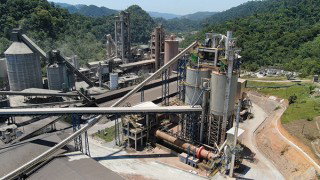
Holcim Mexico has marked the 30th anniversary of its Centro de Innovación Tecnológica para la Construcción (CiTeC), one of Latin America’s most advanced materials research centres, by announcing a strengthened collaboration agenda with government, academia and industry bodies to accelerate low-carbon construction nationwide.
At an event in Mexico City, Andrea Genoveva Solano Rendón, Head of the Regulatory, Competitiveness and Competition Unit at the Ministry of Economy, emphasised CiTeC’s strategic role in enabling sustainable infrastructure development. She highlighted the need for a modern, transparent regulatory framework aligned with global best practice.
“The research developed here has resulted in more than a dozen innovative products that are already transforming how we build,” she said. “These solutions reduce emissions, optimise resources and enhance durability. This is not just innovation—it is a commitment to future generations.”
Holcim presented key technologies developed at CiTeC that are supporting the shift to low-carbon construction, including cement products capable of cutting CO2 emissions by up to 65 per cent, now accounting for more than 56 per cent of Holcim’s sales in Mexico. Circular-economy innovations—such as Geocycle’s waste coprocessing solutions and the ECOCycle system for reclaiming construction and demolition materials—were also showcased.
Other notable advances include I-DRACRETO concrete, which has saved over 180m litres of water, and Airium mineral foam insulation, which can reduce building energy consumption by up to 30 per cent.
Holcim Mexico CEO Christian Dedeu described CiTeC as “a living ecosystem where science and engineering come together to solve the industry’s most pressing challenges,” calling for deeper cooperation to accelerate standards for sustainability, circularity and energy efficiency.
Four priority areas were identified for multisector collaboration: modernising standards to support low-CO2 materials and EPDs; harmonising regulation for CDM reuse; expanding alternative fuels and energy technologies; and establishing updated regulatory frameworks to enhance competitiveness.
The Ministry of Economy reiterated its commitment to enabling innovation and clean technologies through regulatory reform.
Holcim said CiTeC will continue to serve as a national hub for applied science and sustainable construction solutions.
Handpicked stories, in your inbox
Our editors pick the top news delivered to your inbox. Sign-up today!