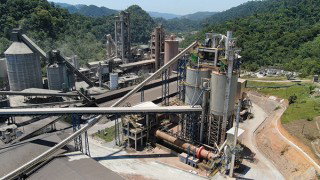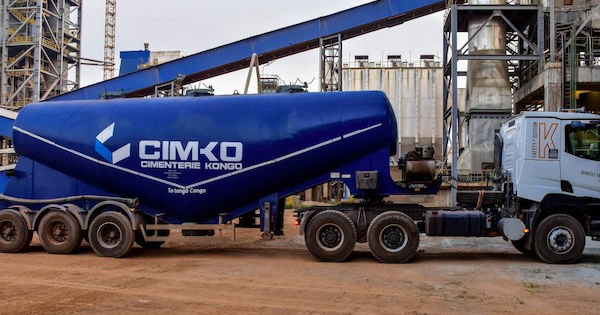
Cimenterie Kongo (CIMKO) has announced plans to invest more than US$300m to double its cement production capacity in the Democratic Republic of Congo (DRC) to 3Mta by 2027, up from its current 1.4Mta. The expansion programme marks one of the largest investments in Congo’s cement industry in recent years, reflecting sustained growth in construction and government infrastructure spending.
CIMKO — a joint venture between the Rawji Group and Pakistan’s Lucky Cement — has operated its integrated plant at Songololo in Kongo-Central since 2018. The company has not disclosed the financing structure for the new investment; its initial project was supported by the African Development Bank and the International Finance Corporation.
“As part of this expansion, CIMKO continues to invest in modern, environmentally friendly technologies to reduce our carbon footprint and improve energy efficiency,” the company said. It added that the project will generate new direct and indirect jobs and support community development initiatives in the surrounding region.
Growing demand, tight supply
Congo’s cement consumption is rising rapidly. According to the Central Bank of the Congo, the country consumed 2.55Mt in 2023, while domestic producers supplied around 2.3Mt, leaving a gap filled by imports. CIMKO says its expansion will help stabilise prices and reduce the country’s dependence on foreign cement.
Other manufacturers are also scaling up. China’s WIH Cement plans to expand to 2.2Mta by 2027, while the Avic-Conch consortium has partnered with the government to restart the National Cement Plant in Kimpese.
To protect domestic production, Kinshasa banned grey cement and clinker imports in several regions in July 2024. However, in October 2025, Trade Minister Julien Paluku called for an investigation into ongoing illegal imports from Nigeria’s Dangote Cement, with consumers noting retail prices in some areas have risen from US$8 to US$15 per bag
Handpicked stories, in your inbox
Our editors pick the top news delivered to your inbox. Sign-up today!