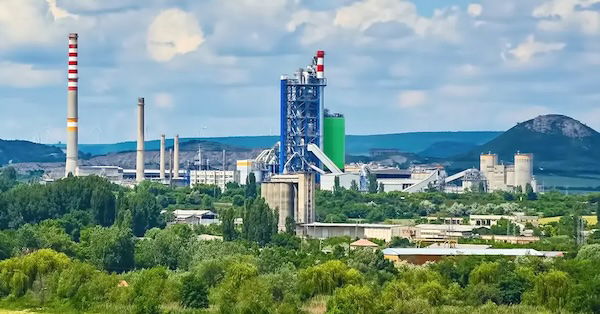
Greek carbon-storage firm EnEarth has inked a term sheet with Bulgarian cement producer Heidelberg Materials Devnya to negotiate exclusive agreements covering the transport and permanent storage segment of Devnya’s planned CO2 capture scheme. The collaboration was announced on 9 December.
The Devnya project, part of a broader carbon capture, utilisation, and storage (CCUS) effort by parent company Heidelberg Materials, aims to capture, transport and store up to 800,000t of CO2 annually from the cement plant in Devnya, in Bulgaria’s Varna region.
The European Union has awarded the project a EUR190m (US$221m) grant — EUR38 million of which is destined specifically for the underground storage site infrastructure. EnEarth and Heidelberg Materials have said they believe successful implementation of the Devnya CO2 initiative will deliver environmental benefits while generating business value and supporting local communities.
EnEarth—part of UK-based energy group Energean—plans to repurpose depleted oil and gas fields into sustainable carbon storage hubs, a model it hopes to replicate as CCUS demand grows. Heidelberg Materials operates across the globe, with multiple assets in Bulgaria that include the Devnya cement plant, a grinding centre, cement terminals and a concrete batching operation.
The partners expect the Devnya project to reach operational status before 2030, marking a major step toward decarbonising cement production in Eastern Europe.
Handpicked stories, in your inbox
Our editors pick the top news delivered to your inbox. Sign-up today!