The cement market in the Democratic Republic of Congo (DR Congo) is entering a decisive transition phase. Despite a relatively modest installed cement capacity of around 4.64Mta, the market is seeing an unusually high level of ownership changes, expansion announcements and new upstream investments. For cement producers, the country is fast evolving from a supply-constrained market into one facing intensifying competition and future capacity pressure, driven largely by Chinese-backed players.
West China Cement targets rapid scale-up
Heidelberg Materials has been advised to divest its 91 per cent stake in Cimenterie de Lukala SA (CILU), held via its Scandinavian subsidiaries, to West China Cement. The Chinese producer also intends to acquire the remaining shares held by the International Finance Corporation (IFC).
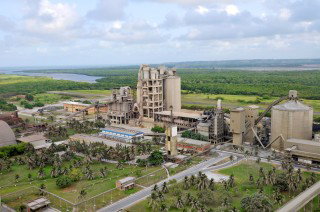
CILU currently operates a 0.36Mta integrated plant at Lukala, making it a relatively small player. However, local media reported in December 2025 that West China Cement plans to expand capacity to 2.2Mta by 2027, transforming the asset into a national-scale producer.
This transaction forms part of West China Cement’s broader African expansion strategy. The company has recently signalled interest in acquiring AfriSam in South Africa and is assembling a China–Africa cement portfolio now spanning DR Congo, Ethiopia, Mozambique, Rwanda, Uganda and Zimbabwe, with South Africa potentially next. In scale and geographic reach, its African footprint is now second only to Huaxin Cement among Chinese producers.
Competitive landscape: incumbents defend market share
Groupe Rawji currently leads the DR Congo market through Cimenterie de Kongo (CIMKO), which operates a 1.4Mta integrated plant in Songololo. CIMKO, a joint venture between Rawji Group and Lucky Cement of Pakistan, has announced plans to expand capacity from 1.31Mta to 2.91Mta by 2027, supported by an estimated US$300m investment.
The company has emphasised that the expansion will include modern, environmentally efficient technologies aimed at reducing carbon intensity and improving energy performance. For producers, this signals a growing emphasis on cost efficiency and ESG positioning as competitive differentiators in the Congolese market.
Another major producer is PPC Barnet RDC, which operates a 1.2Mta integrated plant in Zamba. The project, a joint venture between PPC (69 per cent), Barnet Group (21 per cent) and the IFC (10 per cent), was capital intensive, with total project costs of around US$300m and significant IFC debt involvement.
In late 2025, PPC Barnet RDC launched Project Albatros in Lubudi, Lualaba province. In partnership with Ciments du Katanga (Cimentkat), the project targets extraction of 0.6Mta of high-grade limestone, with downstream production of limestone powder and lime. This upstream move improves long-term raw material security and cost control.
Grande Cimenterie du Katanga also remains a significant player, operating a 1.2Mta plant in Kakontwe, which has been in operation since October 2020. Smaller producers, including Zijin Mining Group and Interlacs Sarl (Heidelberg Materials Group), complete the current production landscape.
Pricing volatility highlights supply sensitivity
Cement pricing in DR Congo remains highly sensitive to supply availability and logistics disruption. In summer 2025, a strike by transport drivers sharply constrained distribution. Following government intervention and the resolution of the strike, cement prices in Kinshasa fell by 52.3 per cent, dropping from US$21 to US$11 per bag.
For producers, this underlines the importance of logistics resilience, fleet access and route control in protecting margins, particularly in urban markets.
Housing demand creates long-term volume potential
Despite near-term competitive pressure, structural demand drivers remain compelling. Severe flooding in 2023 and 2024 significantly damaged housing stock, displacing over 120,000 people. Studies suggest that 12,000 people per year could lose their homes in the coming decade due to land instability and gully erosion.
Kinshasa, already home to 17m people, is projected to become Africa’s largest megacity by 2030. According to New York University research, 75 per cent of the city’s population lives in informal settlements, and the capital requires more than 263,000 new housing units annually.
For cement producers, this points to sustained long-term demand growth, particularly in bagged cement for residential construction, even as short-term competition intensifies.
Handpicked stories, in your inbox
Our editors pick the top news delivered to your inbox. Sign-up today!