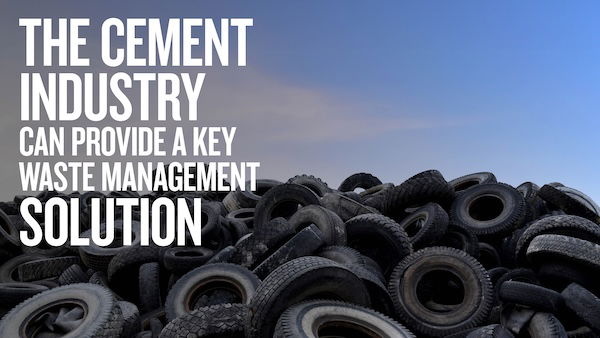
Leading international industry organisations have called for wider adoption of cement industry co-processing, arguing that it can play a significant role in addressing the growing global challenge of non-recyclable and non-reusable waste.
In a joint statement issued on 13 January 2026, the Global Cement and Concrete Association (GCCA), together with organisations including the European Composites Industry Association (EuCIA), the International Solid Waste Association – Africa, the Mission Possible Partnership and the Global Waste-to-Energy Research and Technology Council (WtERT®), urged policymakers to provide stronger regulatory and fiscal support for co-processing.
Co-processing involves the use of suitable waste materials to replace fossil fuels in cement kilns, with any residual ash incorporated into the cement itself. This enables simultaneous energy recovery and material recycling, creating what the signatories describe as a “zero-waste” solution. The process is primarily applied to waste streams that cannot be recycled or are contaminated, complementing conventional recycling systems rather than competing with them.
The organisations noted that co-processing is already recognised as an environmentally sound waste management practice in regions including Europe, India, Latin America and North America, operating under strict regulatory frameworks to ensure emissions control and safety. However, uptake remains uneven, with some kilns achieving fuel substitution rates above 90 per cent, while other regions have little or no co-processing infrastructure.
GCCA chief executive Thomas Guillot said wider deployment depends on supportive policy frameworks. He highlighted the need for recognition of co-processing within waste legislation, streamlined permitting, incentives for waste collection and pre-treatment, and acknowledgement of recycled ash contributions toward national recycling targets.
The statement comes amid rising global concern over waste generation, estimated at 11.2bn tonnes per annum and the environmental impacts of landfilling and uncontrolled disposal. The signatories argue that, with appropriate policy support, cement kiln co-processing could help divert waste from landfills, reduce fossil fuel use and contribute to lower greenhouse gas emissions worldwide.
Handpicked stories, in your inbox
Our editors pick the top news delivered to your inbox. Sign-up today!