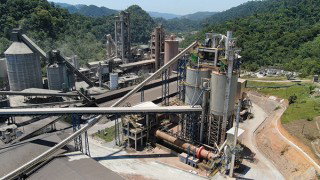
The Philippines’ cement industry plans to present its Sustainability Roadmap to leaders of the Association of Southeast Asian Nations (ASEAN) at meetings later this year, as part of efforts to address climate change and reduce carbon emissions.
Reinier Dizon, president of the Cement Manufacturers Association of the Philippines (CeMAP), said the roadmap is close to completion and has been developed in cooperation with the United Nations Industrial Development Organization (UNIDO).
“We want to decarbonise the cement industry or push for less carbon emissions. We are working with UNIDO (United Nations Industrial Development Organisation). The Roadmap is 95 per cent done and will probably be finished before the end of next month,” Dizon said.
“The Roadmap is for the Philippine cement industry alone, and we would love to present this to the ASEAN meet. We are the second in Asia to do this, next to Thailand,” he added.
The roadmap development process was formally launched in October 2025 by UNIDO and the Philippines’ Department of Trade and Industry (DTI). It comes at a time when cement demand in the country is expected to rise on the back of major infrastructure programmes and renewed private construction activity. In 2024, the Philippine cement industry produced more than 27Mt, with installed capacity of around 53Mt.
Dizon said increasing the use of alternative fuels would be a central pillar of the roadmap. “Because in cement production, we use a lot of fuel, typically coal, which is fossil based that emits carbon dioxide,” he said, adding that waste-derived fuels, including single-use plastics, could also play a role.
“Our target is until 2050 to attain the net zero carbon emission. It’s a step-by-step process,” Dizon said, noting that the roadmap represents a long-term commitment by domestic cement producers to improve sustainability.
Handpicked stories, in your inbox
Our editors pick the top news delivered to your inbox. Sign-up today!