The Uruguayan government is exploring measures to support the struggling Portland cement business of state-owned energy company Administración Nacional de Combustibles, Alcohol y Pórtland (ANCAP), including a proposal for local governments to prioritise the purchase of its cement for public works.
The initiative was raised by Fernanda Cardona, Uruguay’s Minister of Industry, Energy and Mining, during a meeting in Montevideo with Nicolás Olivera, mayor of Paysandú and president of the Congress of Mayors. The proposal would encourage departmental governments to favour ANCAP-produced Portland cement in infrastructure projects in order to strengthen domestic demand and improve the economic outlook for the company’s cement operations.
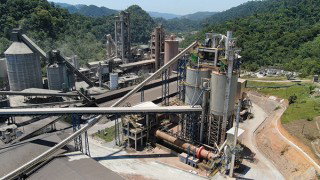
The discussion comes amid growing political debate over the future of ANCAP’s Paysandú cement plant, where restructuring options are under review. One scenario being examined would involve shutting down the facility’s kiln and converting the site into a logistics hub focused on bagging and distributing cement produced at ANCAP’s Minas plant in Lavalleja.
According to ANCAP president Cecilia San Román, the state company currently holds roughly one-third of Uruguay’s cement market, equivalent to around 280,000tpa. While the Paysandú plant can produce about 200,000tpa, the newer Minas facility—commissioned in 2014—has the capacity to supply the entire domestic market.
Operational and logistical advantages also favour the Minas plant, which is linked by rail to the Manga distribution facility in Montevideo, reducing transport costs and improving access to the country’s main consumption centre.
However, the potential restructuring has raised concerns in Paysandú, where around 190 people are currently employed at the plant. Under the proposed logistics-centre model, employment could fall to approximately 60 workers, prompting calls from local authorities for measures to mitigate the economic impact.
Handpicked stories, in your inbox
Our editors pick the top news delivered to your inbox. Sign-up today!