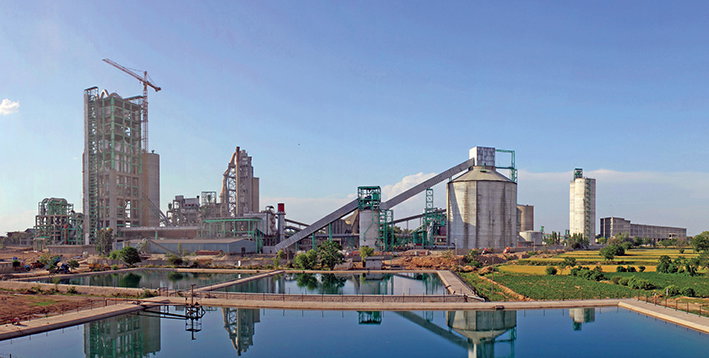
Pakistan’s listed cement sector continues to demonstrate steady growth and attractive valuations, according to a recent comparative analysis of major producers by Topline Pakistan Research. The industry, with a combined market capitalisation of nearly US$5bn (US$17.88m) and total production capacity of over 85Mt, has recorded a three-year sales compound annual growth rate (CAGR) of 16 per cent and a profit CAGR of 35 per cent, reflecting improved margins and operational efficiency across the sector.
Among the leading companies, Bestway Cement Ltd and Lucky Cement Ltd remain dominant players, with market shares of approximately 17.7 per cent and 16.3 per cent, respectively. Fauji Cement Co Ltd follows with a projected market share of around 13.2 per cent. Together, these three companies account for nearly half of the industry’s cement sales, highlighting the sector’s concentration among large producers.
Growth performance varies across companies. Thatta Cement Co Ltd and Flying Cement Co Ltd posted the strongest three-year sales growth rates at around 29 per cent and 28 per cent, respectively, while Power Cement Ltd recorded the highest long-term sales expansion with a 10-year CAGR of about 23 per cent.
Profit growth has also been robust for several firms. Pioneer Cement Ltd reported the fastest three-year profit growth at roughly 67 per cent, followed by DG Khan Cement Co Ltd and Lucky Cement Ltd, which posted profit CAGRs of about 43 per cent and 38 per cent, respectively.
Despite the strong growth trends, valuation multiples across the sector remain relatively low. Companies such as Maple Leaf Cement Factory Ltd and Lucky Cement Ltd trade at price-to-earnings ratios below 5x based on FY25 estimates, compared with the sector average of around 5.9x. Analysts say these subdued valuations may reflect macroeconomic pressures but could also signal potential value opportunities for investors.
Industry observers note that cement demand remains closely linked to infrastructure development, construction activity, and energy costs. While challenges such as rising fuel prices and economic uncertainty persist, the sector’s strong capacity base and improving profitability position it for gradual expansion in the coming years.
By Abdul Rab Siddiqi, Pakistan
Handpicked stories, in your inbox
Our editors pick the top news delivered to your inbox. Sign-up today!