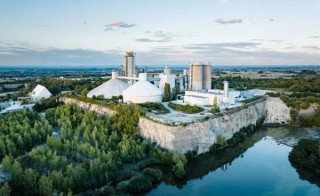
European Commissioners Jessika Roswall and Wopke Hoekstra recently led a sectoral dialogue to accelerate the cement industry’s clean transition. The discussion, built on the Clean Industrial Deal and the proposed Industrial Accelerator Act (IAA), focused on maintaining European competitiveness while achieving strategic independence through low-carbon innovation.
A central theme was the need for robust funding. The Industrial Decarbonisation Bank aims to mobilise EUR100bn in public funding, but officials urged Member States to increase their investment of ETS revenues into industrial projects. Participants called for streamlined "one-stop-shop" funding access and de-risking instruments like carbon contracts for difference. To support these efforts, the Commission will soon publish new State aid guidance.
Market demand remains a priority. The IAA will introduce labels for low-carbon concrete and revised public procurement standards to incentivise green building materials. However, industry representatives expressed concerns regarding high energy costs and the urgent need for CO2 infrastructure. Since 60 per cent of cement emissions are inherent to the chemical process, carbon capture, use, and storage (CCUS) is critical. The Net-Zero Industry Act mandates 50Mt of annual CO2 storage by 2030 to address this.
Finally, the dialogue addressed the "Union of Skills" to tackle labour shortages and the necessity of a stable post-2030 ETS framework. By combining effective carbon pricing with a fully operational Carbon Border Adjustment Mechanism (CBAM), the Commission aims to prevent carbon leakage while providing the long-term predictability required for the sector to double down on its journey to net zero.
Companies participating in the meeting included Aalborg Portland, Agora Industry, Bellona Europa, Buzzi SpA, Cement Europe, Cemex, CRH, Ecocem, European Investment Bank, Heidelberg Materials, Holcim, NeoCem, SchwenkZement, Titan Cement, Vrije Universiteit Brussel and Zero Emissions Platform.
Handpicked stories, in your inbox
Our editors pick the top news delivered to your inbox. Sign-up today!