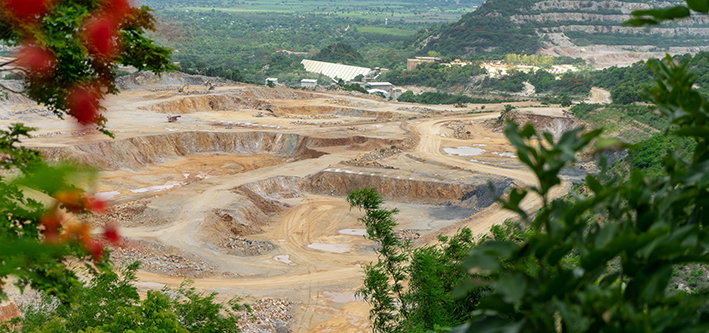
A new international partnership between the University of Regina and the Thai Cement Manufacturers Association is accelerating Thailand’s transition toward lower carbon emissions through the use of Canadian-designed technology. Because cement production accounts for approximately seven per cent of global carbon dioxide emissions, it remains one of the most difficult industrial sectors to decarbonise. To address this challenge, researchers at the University’s Clean Energy Technologies Research Institute designed and constructed a carbon capture pilot unit under an initiative funded by Environment and Climate Change Canada and commissioned by the United Nations Industrial Development Organization.
The pilot unit is scheduled for shipment to Thailand in early April, where it will be used to demonstrate carbon capture, utilisation, and storage technology under real-world conditions. This collaboration supports the Thai cement sector's goal of reaching net zero emissions by 2050. Dr Hussameldin Ibrahim, director of the research institute, noted that the university was selected for the project due to its long-standing expertise in advanced carbon capture solutions. He emphasised that the work highlights how local research is providing climate solutions with a significant global impact.
The project also builds upon a memorandum of understanding signed last year between the Government of Saskatchewan and the Thai Cement Manufacturers Association to strengthen technical expertise and knowledge sharing in the energy sector. University of Regina President Jeff Keshen recently met with representatives in Thailand to highlight the project as a successful example of international research. He stated that the initiative reflects the university’s ability to develop practical, exportable clean energy solutions that benefit both the local province and the international community.
Handpicked stories, in your inbox
Our editors pick the top news delivered to your inbox. Sign-up today!