Plans for a CO2 transshipment terminal in Klaipeda, Lithuania, have advanced to the environmental impact assessment (EIA) stage, with potential implications for cement sector decarbonisation in the Baltic region.
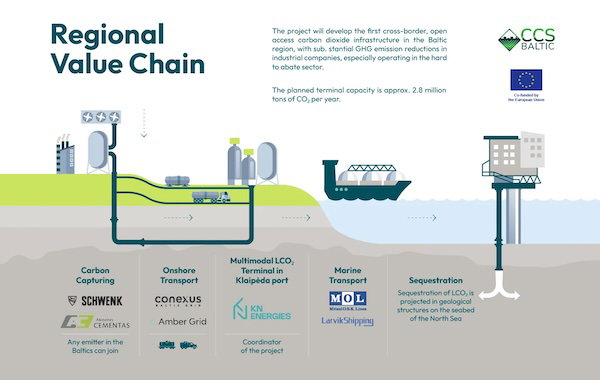
Lithuania’s Environmental Protection Agency has published the EIA programme for the proposed terminal, which will be developed within the territory of KN Energies. The project forms part of the CCS Baltic Consortium, which aims to establish a full carbon capture and storage (CCS) value chain across the region.
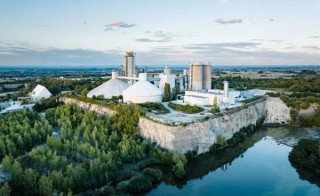
Cement producers are central to the initiative, including Akmenes cementas and Schwenk Latvia. The project will enable the capture of CO2 at cement plants, followed by transportation, liquefaction and shipment via Klaipeda to offshore storage sites beneath the North Sea.
The proposed terminal is intended to provide the missing infrastructure required to scale CCS deployment in the Baltic states, where cement production represents a significant share of industrial emissions. By enabling cross-border CO2 transport and storage, the project is expected to support compliance with EU climate targets and facilitate deeper emissions reductions at plant level.
The EIA process will assess the environmental impact of the planned terminal and includes a public consultation phase, with submissions open until 23 April. The findings will be used to inform a final decision on the project.
The CCS Baltic Consortium, coordinated by KN Energies, also includes partners from the shipping sector to manage CO2 transport. In 2024, the project was designated a Project of Common Interest (PCI) by the European Commission and has received support under the Connecting Europe Facility (CEF) Energy programme.
The Klaipeda CO2 terminal is scheduled for completion by 2030.
Handpicked stories, in your inbox
Our editors pick the top news delivered to your inbox. Sign-up today!