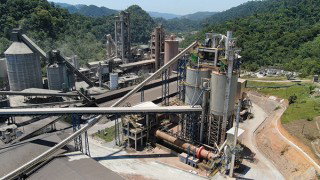
Cement sales in Brazil increased 2.2 per cent in April 2026 to 5.354Mt from 5.239Mt, reports the national cement association, SNIC.
Growth in the cement market is underpinned by several factors, including an economic outlook by a 1Q unemployment rate of 6.1 per cent, the lowest for the period since 2012, which sustains the high level of the wage bill. Combined with income tax exemption, this has resulted in a rise in consumer confidence. In addition, sales and launches in the real estate market continue to increase thanks to the Minha Casa, Minha Vida housing programme, which accounts for 52 per cent of launches.
However, the association warns of downside risks, which include a drop in construction confidence, difficulties in attracting labour and the impact of the Middle East war, which has raised inflation forecasts for the year. In addition, indebtedness of households has reached a record level.
Sales in the southeast, the country’s largest market, advanced 6.1 per cent YoY to 2.502Mt from 2.359Mt, while in the south, demand was up 1.4 per cent YoY to 0.923Mt from 0.910Mt. However, in the northeast, consumption slipped by 0.5 per cent YoY to 1.124Mt from 1.130Mt an in the central-west, there was a 2.2 per cent decrease to 0.578Mt from 0.591Mt. The north, the country’s smallest market, saw a drop of 8.8 per cent YoY to 0.227Mt from 0.249Mt.
Exports were down 16.7 per cent YoY to 5Mt from 6Mt in April 2025.
January-April 2026
In the first four months of 2026 domestic sales saw a 1.9 per cent uptick to 21.287Mt from 20.884Mt in the equivalent period of the previous year.
Growth was strongest in the northeast, where sales improved 7.3 per cent YoY to 4.787Mt from 4.461Mt, while in the north, sales saw a 3.1 per cent YoY increase to 0.994Mt from 0.964Mt. In the south, sales picked up by 2.8 per cent to 3.752Mt from 3.649Mt over the same period while in the central-west they remained stable at 2.247Mt. In the southeast, demand slipped 0.6 per cent YoY to 9.507Mt from 9.563Mt.
Exports contracted by 36.4 per cent from 22,000t in the 4M25 to 14,000t in the 4M26.
“Despite the positive results in cement sales so far, the activity is already feeling the effects of the conflict in the Middle East. We had a strong impact with the readjustment in petroleum coke, a component that is mostly imported, which accounts for about 40 per cent of the production cost. In addition, significant increases in inputs from abroad, such as explosives, ammonia, urea, cement additives and maritime freight itself, have registered a sharp increase. In the domestic market, pressures persist with the readjustments of diesel oil and road freight, a mode that represents about 90 per cent of cement distribution in the country,” said SNIC President, Paulo Camillo Penna.
Handpicked stories, in your inbox
Our editors pick the top news delivered to your inbox. Sign-up today!