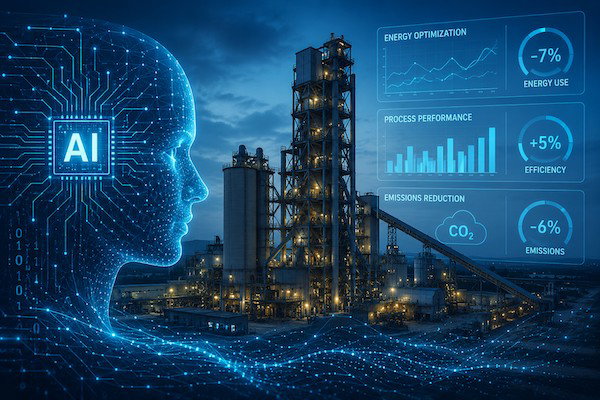
A new report from the International Energy Agency (IEA) has highlighted the potential for artificial intelligence (AI) to improve energy efficiency in energy-intensive industries such as cement, estimating that AI-enabled process optimisation could reduce energy costs by 3-10 percentage points.
The report identifies process optimisation as one of the most immediate and high-impact industrial applications of AI, where energy costs account for a significant proportion of production costs.
Industrial AI specialist Optimitive said the report provides "authoritative, independent validation of the core promise behind its technology," adding that the IEA's estimated savings "sit squarely within the range of real-world results Optimitive already delivers through real-time, closed-loop AI optimisation."
The company said the efficiency gains identified by the IEA are "not a future possibility" but "outcomes Optimitive has been achieving in production environments for years," arguing that the report reinforces the need for greater adoption of AI across energy-intensive industries.
The IEA noted that industrial deployment of AI continues to lag behind investment in AI infrastructure, despite the technology's potential to improve operational efficiency, lower emissions and reduce energy consumption. Optimitive said closing this "deployment gap" represents "not just an environmental imperative, but an immediate economic opportunity."
Handpicked stories, in your inbox
Our editors pick the top news delivered to your inbox. Sign-up today!