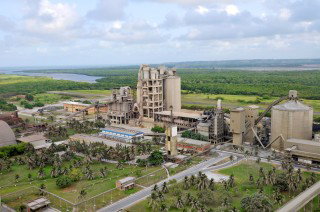
Last weekend’s announcement that Holcim has agreed to sell its controlling stake in Holcim Philippines to Huaxin Building Materials marks another significant step in the Chinese producer's rapid international expansion. Subject to regulatory approval, the acquisition will add one of southeast Asia's leading cement producers to a portfolio that has already grown rapidly through purchases in Nigeria, Zambia, Malawi, South Africa and Oman.
Should Huaxin also emerge as the successful bidder for CSN Cimentos in Brazil by the end of the year it would establish Huaxin as arguably the cement industry's most active acquirer of established operating businesses. Assuming the Philippines deal is completed Huaxin's spending on acquisitions would rise to around US$2.70bn since 2021, while CSN Cimentos is currently being valued at US$2.40bn.
| Huaxin Cement/Huaxin Building Materials acquisitions since 2021 |
||||||||||||
| Year | Company | Country | Announced value (US$m) | Cement capacity at acquisition (Mta) |
||||||||
| 2021 | Lafarge Zambia and Lafarge Cement Malawi (75%) | Zambia and Malawi | 160 | ~1.8 (1.5 + 0.3) | ||||||||
| 2023 | Natal Portland Cement | South Africa | 232 | ~1.6 | ||||||||
| 2023 | Oman Cement (64.66%) | Oman | ~193 | 3.6 | ||||||||
| 2024 | Lafarge Africa (83.81%) | Nigeria | 838 | 10.5 | ||||||||
| 2025 | Embu Aggregates | Brazil | 187 | n/a | ||||||||
| 2026 | Holcim Philippines (initial 67.6%) | Philippines | 527 (plus minimum US$280m for remaining stake) | 10.5 | ||||||||
| 2026 | CSN Cimentos* | Brazil | 2,400-2,500 (reported) | 16.3 | ||||||||
| *Assuming Huaxin is the successful bidder. Sources: ICR Research | ||||||||||||
Between them, the two acquisitions would swell Huaxin's total cement capacity to 180-190Mta, placing it firmly among the world's five largest cement producers, ranking alongside the likes of UltraTech Cement, Heidelberg Materials and Holcim itself. While this would place it some distance behind compatriot companies CNBM and Anhui Conch, it would be no small achievement for a company regarded primarily as a domestic Chinese producer only a few years ago.
Unlike CNBM, whose international influence has been built largely through its engineering subsidiary Sinoma and selected overseas investments, or Anhui Conch, which has focussed principally on greenfield developments and joint ventures, Huaxin has been buying established companies that already possess integrated production assets, recognised brands and established distribution networks.
Despite CSN’s sell-off plans, its cement division is by no means struggling and its availability is rather a consequence of the parent’s company’s debt burden. Brazil is Latin America's largest cement market and one of the principal destinations for Chinese overseas investment. Acquiring CSN would immediately provide Huaxin with a significant presence in one of the few major emerging cement markets where it currently lacks a manufacturing platform.
One need only look towards Africa, and Nigeria in particular, for an indication of Huaxin plans to manage these acquisitions. Following Lafarge Africa’s rebranding as HBM Nigeria in June, the company announced plans for 5.5Mta in capacity expansion, while emphasising its ongoing commitment to affordable housing initiatives and national infrastructure projects. But it also stressed its intention to expand its wider portfolio, including aggregates, ready-mixed concrete and environmental services.
Huaxin’s management has increasingly described overseas expansion as the company's "second growth curve" and has highlighted building a geographically diversified portfolio capable of withstanding economic cycles. The company has repeatedly stressed that acquisitions will be driven by profitability rather than volume alone, with considerable emphasis placed on integrating acquired businesses and improving their operational performance.
China's prolonged property downturn has undoubtedly reinforced this strategy. Huaxin has openly acknowledged the cyclical weakness affecting the domestic construction market, arguing that international diversification provides an important counterbalance to slower domestic growth.
One of the more intriguing aspects of Huaxin's rise is its relationship with Holcim. The Swiss group remains Huaxin's largest shareholder, with a stake of around 42 per cent, and Holcim executives continue to sit on the Chinese company's board. Yet Huaxin appears to enjoy considerable strategic autonomy.
While Huaxin has acquired several businesses divested by Holcim as part of the latter's portfolio reshaping, recent events suggest the relationship is not without tension. Some of the Brazilian cement assets that Huaxin is now reportedly pursuing through its interest in CSN Cimentos were themselves sold by Holcim to CSN in 2021. Bloomberg and Reuters have both reported that Holcim opposed Huaxin's participation in the sale process, suggesting that the Chinese producer is willing to pursue strategic opportunities even where they do not necessarily align with Holcim’s preferences.
Equally noteworthy is where Huaxin has not expanded. While Holcim has identified Peru as a strategic growth market through acquisitions including Cementos Pacasmayo and Cemex's Colombian operations, Huaxin's Latin American ambitions appear focussed firmly on Brazil.
Where Huaxin turns next will depend largely on opportunity rather than geography. Its recent acquisitions suggest a disciplined approach: established integrated producers, strong market positions and sellers motivated by portfolio restructuring or balance-sheet repair rather than operational weakness. If that pattern continues, Huaxin may prove less interested in building new cement plants than in becoming the industry's preferred buyer whenever high-quality assets come onto the market.
Handpicked stories, in your inbox
Our editors pick the top news delivered to your inbox. Sign-up today!