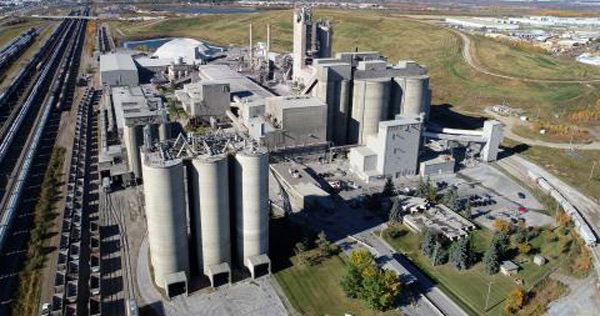
The difficulties facing Heidelberg Materials’ carbon capture project at Edmonton, Canada, expose a wider problem in the cement industry's route to net zero. Announced in 2023 as a CAD1.36bn project capable of capturing up to 1Mta of CO2, it was originally expected to begin capture by late 2026. That timetable has now slipped amid uncertainty over the economics and policy framework required to support the investment.
Carbon pricing was intended to provide the economic pressure necessary to drive industrial decarbonisation, while leaving companies to determine the most efficient technological response. However, in Canada oversupply has driven the value of carbon credits to around CAD40/t (US$28.93), substantially weakening the investment case for Edmonton. Canada and Alberta are consequently introducing measures including price floors and carbon contracts for difference to restore investment certainty.
The cement industry's preference for CCS is understandable. Lower clinker factors, calcined clays, alternative fuels and renewable energy can substantially reduce emissions but cannot eliminate the CO2 released by limestone calcination. CCS offers a means of addressing those emissions while retaining existing quarries, kilns, products and expertise.
It is also considerably less technologically risky than fundamentally reinventing cement production.
Heidelberg Materials' Brevik facility in Norway demonstrates that cement CCS is technically achievable, while its Padeswood project in the UK is targeting near-total CO2 capture from 2029. But the economics remain challenging. The IEA's 2025 Breakthrough Agenda Report estimated that early commercial near-zero cement plants using CCS would face production costs 75-150 per cent above conventional plants.
Other projects have consequently struggled. Heidelberg Materials paused its Slite project in Sweden last November and subsequently withdrew its permit application after the Swedish Energy Agency rejected its co-funding application. In June 2025 the US Department of Energy (DOE) cancelled its funding agreement for Vicat's proposed Lebec Net Zero CCS project in California.
The emerging paradox is that carbon pricing was supposed to encourage companies to finance emissions reductions because emitting carbon became increasingly expensive. Instead, governments are themselves having to assume substantial financial risk to make the industry's preferred solution investable.
Funding the alternatives
There is nothing inherently wrong with governments supporting CCS. Deep decarbonisation of conventional clinker production may be impossible without it. But the scale of that intervention raises questions over the comparatively limited resources devoted to technologies that could eventually eliminate process emissions at source.
Governments have committed substantial long-term funding to de-risk CCS deployment and the transport and storage infrastructure upon which it depends. Public support also exists for industrial energy efficiency, electrification and emerging low-carbon technologies, but there is much less evidence of a comparably ambitious, long-term programme specifically intended to develop fundamentally different methods of cement manufacture.
Potentially more fundamental cement technologies remain much further from commercial maturity.
Research published in Communications Sustainability in May examined obtaining calcium for Portland cement from silicate rocks such as basalt rather than limestone, thereby avoiding carbonate decomposition. Brimstone is attempting to commercialise this approach in the USA, but extracting calcium economically from silicate rock remains unproven at cement-industry scale.
Sublime Systems is developing electrochemical cement production capable of using non-carbonate feedstocks, while University of Cambridge researchers have demonstrated the potential to recycle previously decarbonated cement through electric-arc steelmaking. Alternative clinker chemistries and non-Portland binders offer further possibilities.
None is remotely ready to displace conventional cement at global scale, which is precisely where the investment problem lies. Developing technologies from laboratory and pilot production through first-of-a-kind plants to millions of tonnes of capacity involves risks that individual companies and private investors have limited incentive to assume.
Brimstone and Sublime were awarded up to US$189m and US$87m, respectively, towards commercial-scale demonstrations by the DOE. Both awards were terminated in 2025 following the change of US administration.
A broader strategy
Carbon pricing can incentivise companies to reduce emissions, but it cannot by itself provide an industrial technology strategy. Incumbent producers will rationally favour solutions offering the best combination of cost, technological certainty and compatibility with existing assets. In cement, that naturally favours CCS.
Public investment could perform a different function. Rather than attempting to select a single successor to conventional clinker, governments could fund a portfolio of competing technologies through research, pilot and first-of-a-kind demonstration stages. Continued support would depend on engineering and economic milestones, with unsuccessful approaches abandoned and private capital progressively assuming the cost of technologies that demonstrate commercial viability.
Such an approach would complement rather than replace CCS. Clinker substitution and material efficiency could reduce primary clinker requirements, CCS could address emissions that cannot economically be eliminated, and recycled calcium, silicate-derived cement, electrochemical processes and alternative binders could compete to reduce the amount of carbonate entering cement production in the first place.
There is no reason to assume this would be cheaper. Fundamental alternatives carry enormous technological uncertainty and some will inevitably fail. CCS currently provides a much clearer pathway from today's cement industry to deep emissions reductions.
But governments are already demonstrating through CCS that the scale of the climate challenge justifies using public money to assume risks that private capital will not.
Therefore, the question is not whether governments should intervene, since they already are. It is whether too much of that intervention is being directed towards making the most readily available solution economic, rather than developing the alternatives that might eventually make it unnecessary.
Carbon pricing can create the pressure to decarbonise. It cannot substitute for a strategy for technological change.
Handpicked stories, in your inbox
Our editors pick the top news delivered to your inbox. Sign-up today!