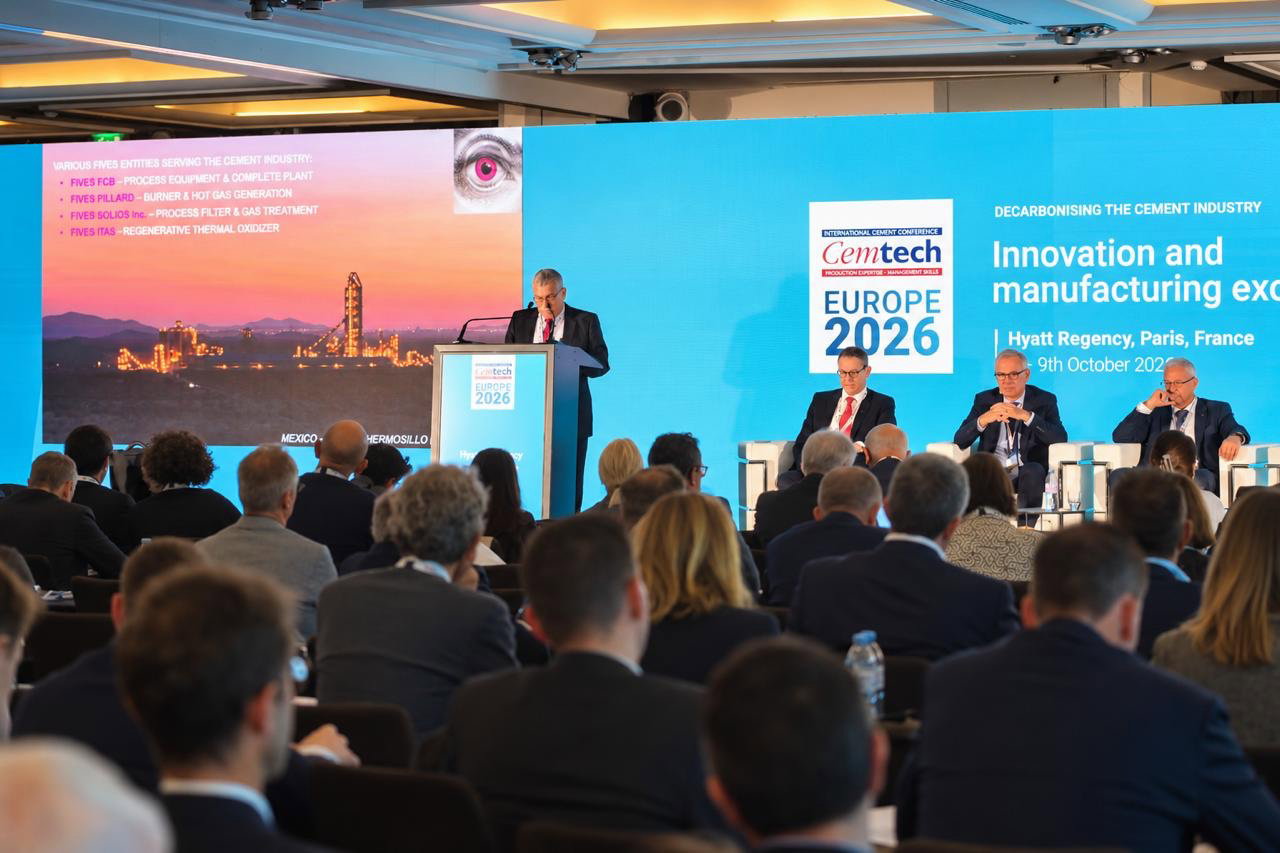
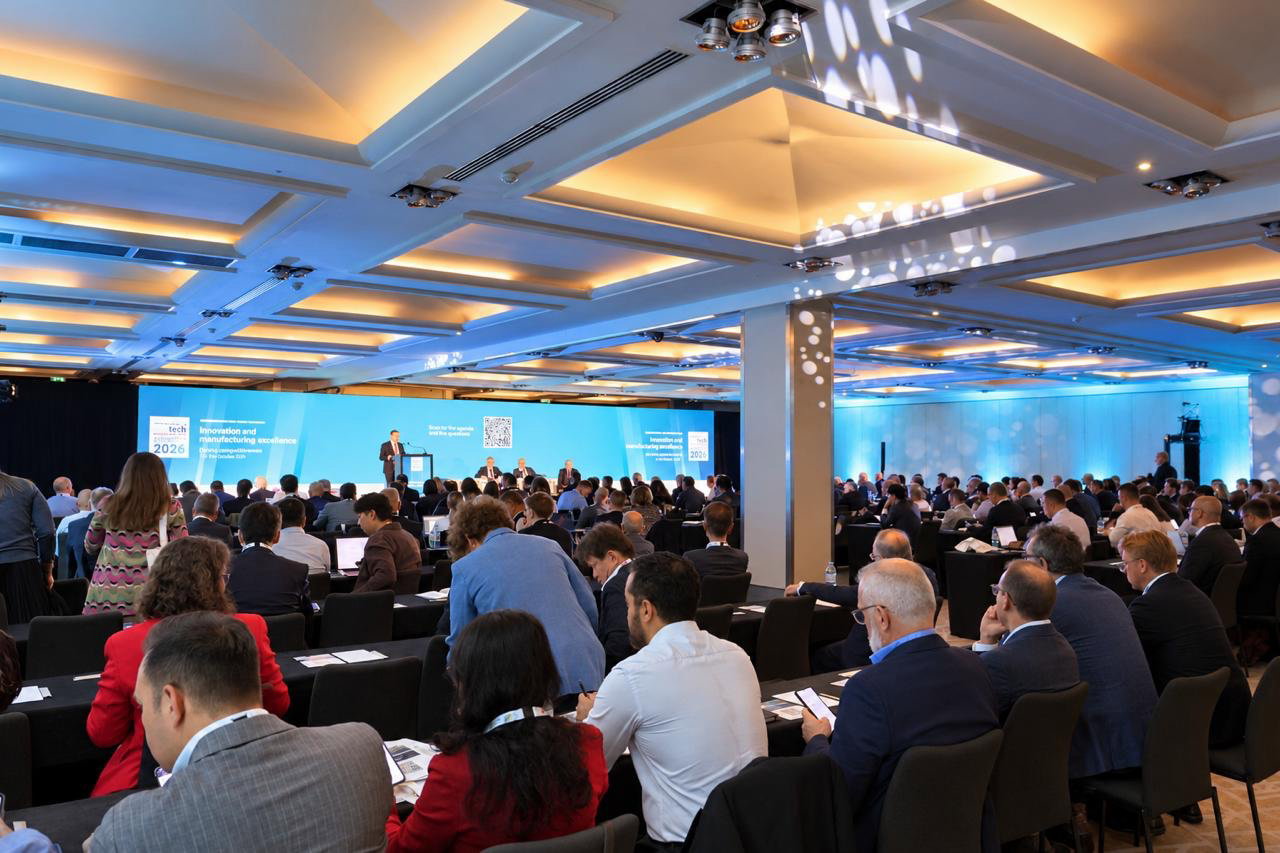
Cemtech Europe 2026 opened in Paris, France, on 8 October, with industry leaders confronting the growing tension between ambitious decarbonisation targets, deteriorating market conditions and the substantial investment required to transform cement production.
Bruno Pillon, CEO of Heidelberg Materials France and president of France Ciment, warned that the French cement industry was unlikely to meet its original roadmap of reducing CO2 emissions by 50 per cent by 2030. Although conventional decarbonisation measures are delivering results, carbon capture projects intended to eliminate 2.5Mt of CO2 annually have yet to reach final investment decision (FID), despite securing public funding.
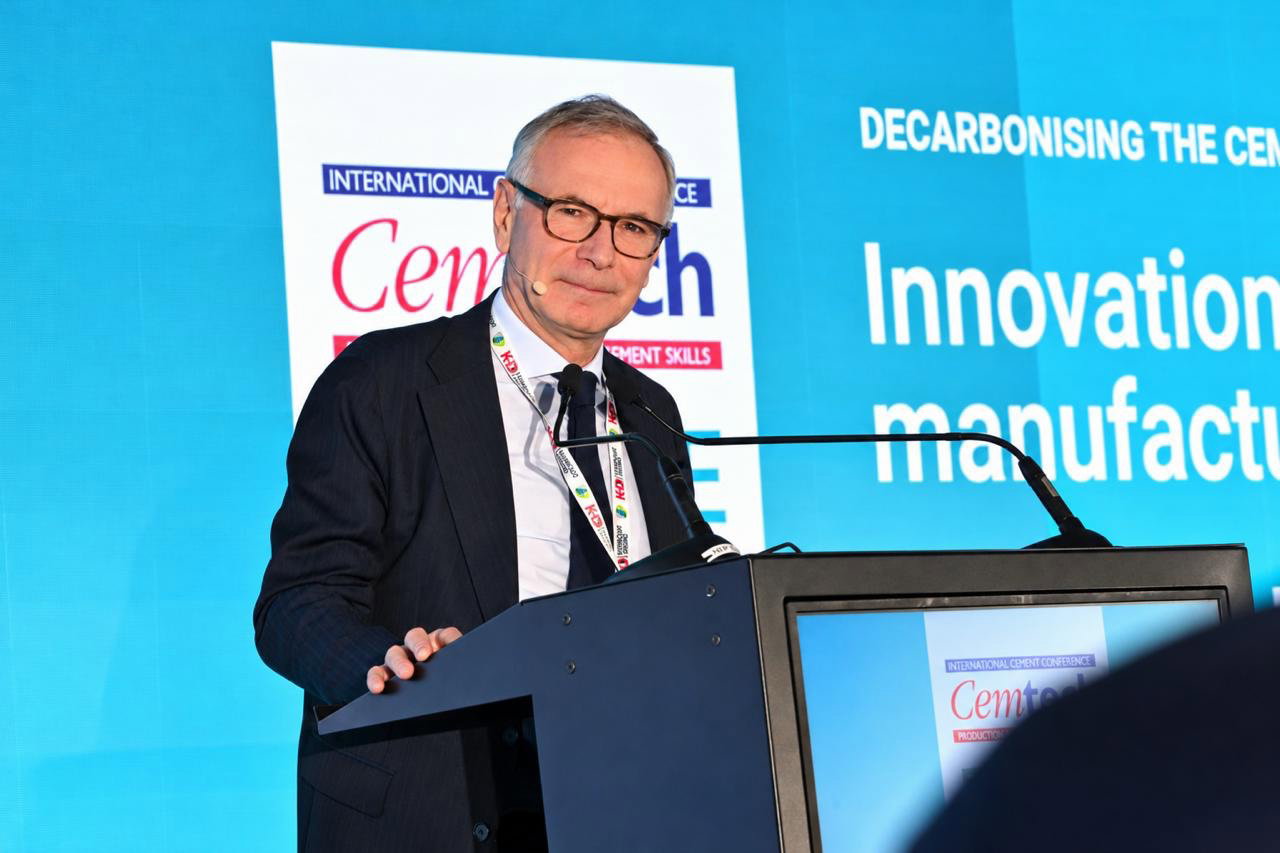
Mr Pillon identified inadequate CO2 transport and storage infrastructure, complex permitting and insufficient financial guarantees as principal obstacles. He called for greater carbon price certainty and stronger demand for low-carbon construction materials, particularly as French cement consumption faces another 2-5 per cent decline in 2026.
Nevertheless, the industry remains on track towards 80 per cent alternative fuel substitution by 2030, while average cement emissions are expected to fall below 540kg CO2/t this year.
Eric Bourdon, deputy CEO of Vicat and chairman of the European Cement Research Academy (ECRA), reinforced the importance of innovation throughout the construction value chain. Alongside alternative fuels and calcined clay, he outlined plans for shared CO2 transport infrastructure centred on Vicat’s Montalieu plant, potentially connecting industrial emitters along a 300km corridor.
The potential for immediate emissions reductions was further illustrated by Alain Cordonnier, CEO of Fives FCB, who highlighted advances in grinding efficiency, calcined clay production and concrete recycling.
Sustainability, markets and CBAM
The second session struck a distinctly sobering note, revealing how slowing decarbonisation progress and weakening European demand are complicating the industry’s investment decisions.
Benchmarking presented by Jim O’Brien, managing director of Jim O’Brien CSR Consulting, showed alternative fuel substitution reaching 25.2 per cent in 2025 among 25 major cement companies. However, annual CO2 emissions reductions slowed to 1.5 per cent, against 2.4 per cent in 2022, raising doubts about progress towards 2030 targets.
The commercial outlook was equally challenging. Independent analyst Jean Christophe Lefèvre-Moulenq warned that European cement markets face continued structural weakness through 2026-27, leaving producers increasingly dependent on price increases to protect margins. He projected cash costs rising by EUR14/t to EUR72/t by 2027.
Meanwhile, Ben Crick, senior economist at Fastmarkets, suggested the EU Carbon Border Adjustment Mechanism (CBAM) could reduce cement imports by up to 50 per cent by 2030 under scenarios using default emissions values. The resulting changes in trade flows were explored by Sylvie Doutres Ghizzo and Sophie Robert of DSG Consultants, who highlighted Europe’s growing dependence on Asian supplementary cementitious materials (SCMs), particularly granulated blastfurnace slag.
New operating models and clinker substitution
The afternoon presentations explored how producers might adapt their operations and product portfolios.
Erkam Kocakerim, global CEO of Limak, described how digitalisation and operational improvements had helped reduce the company’s carbon intensity from 547kg to 409kg CO2/t since 2023.
However, the transition could also accelerate industry restructuring. Harry Forbes, associate partner at McKinsey & Company, suggested as many as 50 European kilns could close over the coming decade as clinker factors decline and SCM demand potentially exceeds 40Mt by 2035. Amr Nader, CEO of A3&Co, similarly advocated prioritising proven, cost-effective emissions reductions ahead of expensive carbon capture investments.
Practical pathways to decarbonisation
The final session returned to implementation, with Samir Cairae, chief technology officer of Titan Group, emphasising alternative cementitious materials, supply chain investment and artificial intelligence as drivers of decarbonisation.
Practical developments included calcined clay production at Lafarge France’s Saint-Pierre-la-Cour and La Malle facilities, presented by Dr Mouloud Behloul, and Holcim and Air Liquide’s CryoCAP carbon capture pilot at Martres. Mathieu Aragones and Richard Dubettier reported over 1000 hours of pilot operation, demonstrating progress towards industrial-scale CO2 purification.
The conference concludes later today.
Handpicked stories, in your inbox
Our editors pick the top news delivered to your inbox. Sign-up today!