Holcim has taken a strategic equity stake in Norwegian carbon capture specialist Capsol Technologies, positioning the investment as a targeted addition to its wider decarbonisation strategy. The deal was announced in January 2026, with Capsol confirming that Holcim has pre-committed to subscribe for approximately NOK30m (US$2.8m) of new shares as part of a wider private placement priced at NOK5.20 per share, raising gross proceeds of NOK33–45m.
Holcim did not disclose the precise size of its investment in its own announcement, but said the transaction was made through its corporate venture capital arm, MAQER Ventures, and was intended to support the deployment of carbon capture solutions capable of producing “near-zero” cement at scale. Capsol said the placement would fund further technology development and commercialisation, with a particular focus on the cement sector.
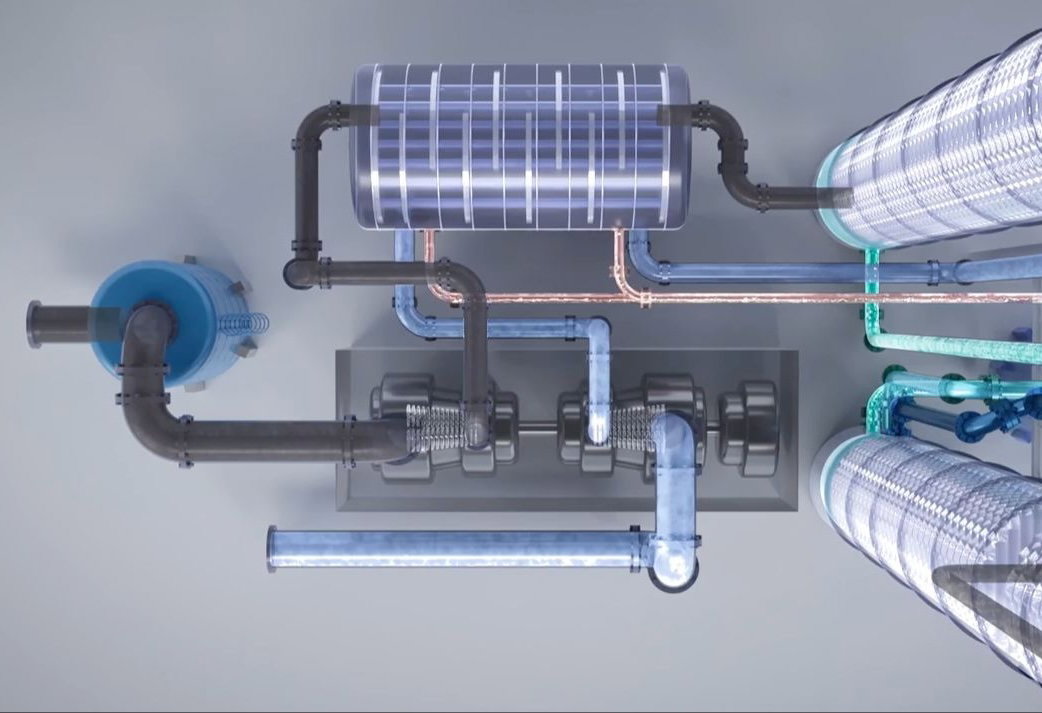
Capsol develops post-combustion carbon capture systems based on hot potassium carbonate (HPC) solvent technology. Unlike conventional amine-based solvents, HPC operates at higher temperatures and is non-volatile. The company positions this as offering improved solvent stability, reduced degradation and lower corrosion risk, all of which are persistent operational challenges in cement-sector carbon capture.
The technology is derived from industrial gas treatment applications, including hydrogen and ammonia production, where potassium carbonate systems have been deployed for decades. Capsol’s approach adapts this chemistry to cement flue gas and combines solvent absorption with an integrated heat recovery concept. The company argues that waste heat from the cement process can be used for solvent regeneration, reducing the additional energy demand associated with capture.
A central feature of Capsol’s commercial model is its CapsolGo® demonstration system. Rather than committing immediately to a permanent installation, cement producers can rent a mobile capture unit and operate it on live flue gas for several months to generate site-specific performance data. Holcim and Capsol carried out such a demonstration campaign at Holcim’s Dotternhausen cement plant in Germany during 2025, focusing on capture performance and heat integration under real operating conditions.
Although post-combustion capture carries a material energy penalty, it remains attractive for cement producers because it can be applied to existing kiln lines without fundamental process redesign. This makes it relevant for a large share of the global cement fleet, particularly where full kiln replacement or oxyfuel conversion is not economically or operationally feasible. Post-combustion systems can also be deployed incrementally, allowing producers to test performance, manage capital risk and align investment with the gradual development of CO2 transport and storage infrastructure.
The exploration of HPC solvent technology in cement is not confined to Holcim alone. Capsol has disclosed pilot-scale CapsolGo demonstration campaigns with Schwenk, including testing at the Broceni cement plant in Latvia and the Akmenes Cementas plant in Lithuania. These campaigns form part of Capsol’s wider programme of feasibility studies and demonstrations with European cement producers, including an announcement that an unnamed company had been signed up for a six-month demonstration project in November last year.
However the technology remains in its relative infancy with no permanently installed HPC-based carbon capture systems in commercial operation at cement plants, indicating that the technology remains at a pre-commercial stage within the sector.
Holcim’s own disclosure regarding the Dotternhausen campaign was high-level. In announcing its equity investment, the group said the deal followed a demonstration project conducted in 2025 and described Capsol’s system as a post-combustion carbon capture and heat recovery solution based on HPC chemistry. Holcim did not release quantitative results from the campaign, such as capture rates, energy consumption, solvent performance or cost metrics.
More detail came from Capsol’s December 2024 announcement, which framed the project as a turnkey demonstration intended to generate site-specific operational data to inform future investment decisions. Capsol said the unit would operate on live flue gas for several months and highlighted design features such as operation without external steam supply and the use of waste heat for solvent regeneration.
Handpicked stories, in your inbox
Our editors pick the top news delivered to your inbox. Sign-up today!