
At the time of writing (early April) a ceasefire between the USA and Iran has been declared, leading to massive falls in the energy complex. The first weekend of talks ended with no agreement. The next few days will show the real impact on the energy flows and whether the ceasefire will lead to a last peace agreement or if there will be a resumption of the conflict. Either way, physical transportation will take time to pick up and revert to the normalised supply of oil and gas.
Reversing the damage caused to several gas and refinery installations in the Middle East will also take time. The energy complex may in this way stay high for a prolonged period – irrespective of a peace deal – but not so high that it will have a lasting long-term impact on the economies.
Fear of the potential inflationary impact of prolonged warfare has raised the fear of central banks considering higher interest rates, which again could slow the economies, leading to lower energy demands and in the worst case, stagflation.
Russian sanctions could still be lifted as the USA has already “allowed” the selling of oil to India. Elsewhere, Venezuela is co-operating with the US administration and energy exports are poised to start. The VIX volatility index has fallen from 28 to 22, indicating lower tensions in the financial markets. The euro has risen to US$1.17, up one per cent and keeping the range of US$1.15-1.20. Brannvoll ApS forecasts a range of US$1.10-1.25 in 2026, with an average of US$1.19.
| PRICES AT A GLANCE - 8 April 2026 | ||
| Brent crude oil – bbl | US$92.00 | |
| Coal API 2 | 3Q26 | US$114.00 |
| Cal 2027 | US$116.00 | |
| Coal API 4 | 3Q26 | US$104.00 |
| Cal 2027 | US$103.00 | |
| Petcoke USGC 4.5 per cent S 40HGI | FOB | US$111.00 |
| CFR ARA | US$114.00 | |
| Petcoke USGC 6.5 per cent S 40HGI | FOB | US$102.00 |
| CFR ARA | US$131.00 | |
Oil
There have been considerable moves in the oil market, dictated by warfare and the continued closure of the Strait of Hormuz. The blockade has led to a physical shortage of oil and refinery products and a sharp backwardation of the Dec 2027 price at US$72 and June 2026 contract at US$92. OPEC+ may increase output, but the current transport problems could still add pressure at the supply end. The LNG and gas market has also seen massive rallies with 30-50 per cent price increases in the short term and now retracement of 20 per cent. Brent oil is down 13 per cent MoM to US$92 and currently in the US$85-120 range. The TTF (Cal27) gas price is down 15 per cent at EUR37.00 and EU gas storage dropped further to 29 per cent.
Brannvoll ApS forecasts a Brent price trading range of US$55-125 and an increased average to US$75 for 2026, adding US$40 on top due to warfare.
Coal
Coal rallied to US$140/t before falling after the ceasefire declaration. Because coal is not affected in the same way as oil facing freight or other blockade issues, the prices were driven up speculatively. With the arrival of spring, prices are coming down and coal is now seen as a cheaper energy source compared to gas, adding to demand.
The API2 3Q26/front quarter (FQ) contract dropped 42.7 per cent MoM to US$114, with a wider than expected range of US$105-125. The API2 Cal27 contract fell 13 per cent to US$116. API4 3Q26/FQ contracts were down by 13 per cent to US$104, seeing a wider short-term range between US$100-125. Brannvoll ApS predicts a FQ contract range of US$85-115 (new maximum of US$150), averaging at US$100 and API4 in a range of US$80-105 (new maximum: US$125) in 2026.
Petcoke
The petcoke market remained high as supply was limited and the explosion in the Port Arthur refinery will take out a substantial amount in the near term. Demand from China and India has been subdued due to high freight rates and short-term deliveries have only been from traders already long.
Due to coal falling sharply the discount has also plunged and petcoke is now in the expensive zone, adding pressure for coal switching. Prices could retract just as quickly when the situation in the Middle East calms. Several cement companies have stepped away from the market, potentially leading to lower rates later in the 2Q26.
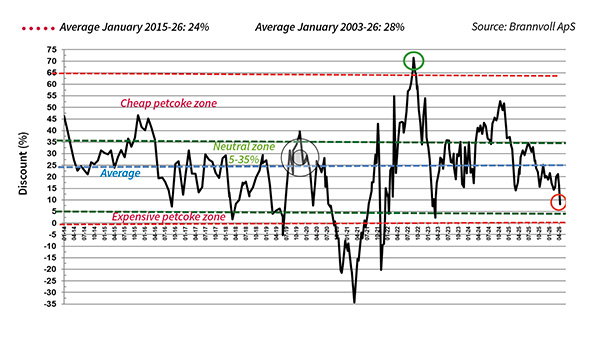
The USGC FOB 6.5 per cent contract is down one per cent MoM to US$102 and the discount to API4 shrank to 22 per cent. The USGC ARA 6.5 per cent contract was down two per cent MoM at US$131, while the discount sharply down to eight per cent. The USGC FOB 4.5 per cent contract rose one per cent MoM to US$111, with the FOB discount to API4 fallen to 15 per cent. The CFR ARA 4.5 per cent contract slipped one per cent at US$140, with the discount down to a mere two per cent.
Prices are now expected to stay high during April but decline rapidly in the 2Q25 if geopolitics calm. Brannvoll ApS maintains a range of US$85-105 (new maximum: US$135) for the ARA 6.5 per cent contract in 2026, with an average of US$95 and a discount of 25 per cent, despite the short-term rally.
by Frank O. Brannvoll, Brannvoll ApS, Denmark
Handpicked stories, in your inbox
Our editors pick the top news delivered to your inbox. Sign-up today!