The USA/Israel-Iran conflict and double blockade of the Strait of Hormuz have dominated the markets, with statements from both sides prolonging volatility in oil and other markets. The Strait of Hormuz closure is slowly increasing the fear of higher inflation and possible reduction in global demand. Equity markets are still expecting a shorter crisis and have seen new highs. Gold is being sold due to the lack of oil income from some states.
The central banks are taking a wait-and- see approach, and both the Federal Reserve (Fed) and European Central Bank (ECB) kept rates unchanged during April/May. However, the ECB is probably closest to raising rates if the energy-driven inflation continues.
A 14-point Iran peace plan is being missed by the USA at the time of time of writing, keeping oil around US$100. The situation will likely be resolved during May and determine the next big moves. The VIX volatility index has fallen from 22 to 17, showing little concern.
The euro remained at US$1.1750, unchanged over the month and still in the range of US$1.15-1.20. Brannvoll ApS forecasts a range of US$1.10-1.25 in 2026, with an average of US$1.19.
| PRICES AT A GLANCE - 7 May 2026 | ||
| Brent crude oil – bbl | US$100.00 | |
| Coal API 2 | 3Q26 | US$115.00 |
| Cal 2027 | US$117.00 | |
| Coal API 4 | 3Q26 | US$112.00 |
| Cal 2027 | US$113.00 | |
| Petcoke USGC 4.5 per cent S 40HGI | FOB | US$114.00 |
| CFR ARA | US$147.00 | |
| Petcoke USGC 6.5 per cent S 40HGI | FOB | US$104.00 |
| CFR ARA | US$137.00 | |
Oil
Oil volatility has been extreme. The continued closure and now double blockade keep the oil price high. The UAE has decided to leave OPEC to be able to produce more oil, while OPEC+ has decided to increase its production to compensate the markets. New ways of transporting oil are being considered and could slowly lead to lower prices but in the short-term no real effect is expected. Venezuelan and Russian production are benefitting from the situation. The physical market is still having a steep backwardation with Dec 27 at US$75 compared to a front month July price of US$101. Brent oil is up nine per cent MoM to US$100 and resides currently in the US$90-125 range. The TTF (Cal27) gas price is unchanged at EUR37 and EU gas storage has increased from 29 to 34 per cent.
Brannvoll ApS forecasts a Brent trading range of US$55-125 and an increased average to US$75 for 2026, adding US$40 to the top due to the current situation.
Coal
Coal fell sharply back last month as it is not affected in the same way as oil by the Strait of Hormuz blockades and does not have the same transport problems. However, coal is still following the overall oil movements dictating gas prices, but going into the shoulder season freight prices remained at higher levels. Venezuela is returning to the coal market – via trading houses with US licenses – and with good potential for export.
The API2 3Q26/front quarter (FQ) contract rose one per cent MoM to US$115, back in the expected range of US$105-125. The API2 Cal27 contract rose one per cent to US$117. API4 3Q26/FQ contracts were up by eight per cent to US$112, seeing a wider short-term range between US$100-120.
Brannvoll ApS predicts a FQ contract range of US$85-130, averaging at US$100 and API4 in a range of US$80-125 in 2026.
Petcoke
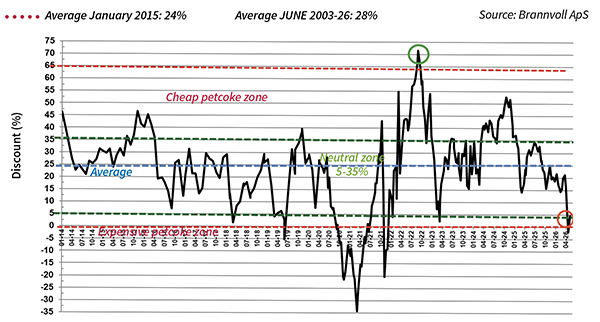
The petcoke market is experiencing reduced supply from the USGC in the aftermath of the explosion in the Port Arthur refinery while maintenance at the Port of Christi during May-June is reducing the export options. This, in combination with less refinery output due to lack of oil supply, keeps the pressure on petcoke prices. However, buyers are increasingly looking towards coal due to the low or even negative discount for petcoke at the moment. The situation will likely continue some months although eventually stocks should build up, leading to sharply lower prices when the situation normalises.
Demand from Türkiye, India and China has been low due to coal switching and an appetite for Russian coal with a discount. These discounts need to rise by 10-15 per cent before petcoke becomes attractive.
The USGC FOB 6.5 per cent contract is up two per cent MoM to US$104, while the discount to API4 rose to 26 per cent. The USGC ARA 6.5 per cent contract increased four per cent MoM at US$137 but the discount fell to five per cent. The USGC FOB 4.5 per cent contract rose three per cent MoM to US$114, with the FOB discount to API4 slightly up at 19 per cent. The USGC ARA 4.5 per cent contract rose five per cent to US$140, turning the discount into a premium of two per cent ie more expensive than coal.
Prices are expected to stay high during Q2 but decline rapidly in the 3Q25 if geopolitics calm. Brannvoll ApS maintains a range of US$85-105 (up to 140) for the ARA 6.5 per cent contract in 2026, with an average of US$95 and a discount of 25 per cent, despite the current rally.
Handpicked stories, in your inbox
Our editors pick the top news delivered to your inbox. Sign-up today!