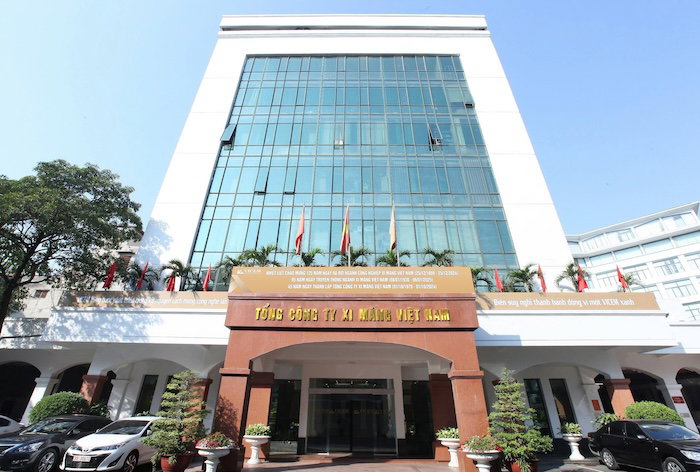
This week, Vietnam's Ministry of Construction unveiled one of the most significant restructurings in the history of Vietnam Cement Industry Corporation (VICEM), signalling a fundamental shift in how the government expects its national cement champion to operate.
Decision No 1075/QD-BXD instructs the state-owned producer to restructure financially distressed subsidiaries, resolve long-standing investment and financial problems, preserve state capital and improve corporate governance. Yet despite chronic industry overcapacity, the Ministry has ruled out plant closures, opting instead for an ambitious programme of management reform that will test whether Vietnam's national cement champion can be revitalised without shrinking its industrial footprint.
The Ministry has instructed VICEM to retain its existing network of 10 cement manufacturing subsidiaries while streamlining its organisational structure, reducing administrative units by at least 30 per cent, accelerating digital transformation and improving energy efficiency. Particular attention will be paid to resolving long-running investment projects, restructuring inefficient subsidiaries and strengthening corporate governance.
The announcement comes despite a marked improvement in VICEM's financial performance during 2025. Consolidated revenue increased eight per cent to VND24.6trn (US$937m) while gross profit rose by 62 per cent. However, the company still recorded a third consecutive net loss of VND158bn, albeit substantially lower than the VND986bn loss reported in 2024. Accumulated losses remain above VND3.4trn.
The financial pressures are concentrated within several subsidiaries. Tam Diep, Song Thao and Ha Long have accumulated combined losses exceeding VND8trn, while their combined current liabilities exceed current assets by approximately VND7.5trn. The Ministry has instructed VICEM to prepare capital restructuring plans for these businesses as part of the wider overhaul.
No closures
For most mature cement markets, persistent losses combined with substantial overcapacity would lead to kiln closures, asset disposals and/or consolidation, but not Vietnam. The Ministry has made clear that VICEM's network of 10 cement producers will remain intact through 2030, with the emphasis placed on improving management, governance, operational efficiency and financial performance rather than reducing production capacity.
Established as the Union of Cement Enterprises in 1979 before being reorganised as VICEM in the 1990s, the company expanded rapidly alongside Vietnam's industrialisation to become the country's largest state-owned cement producer.
But unlike privately owned producers, VICEM operates within Vietnam's industrial policy as well as its commercial economy. Alongside preserving the state capital, it is expected to support national infrastructure development, maintain domestic cement supply and safeguard strategic manufacturing capacity.
Vietnam possesses one of the world's largest cement industries, with installed production capacity approaching 130Mta. Last year, domestic cement consumption reached a record 74Mt, but this still leaves a substantial surplus.
Export issues
Moreover, the export market can no longer be counted upon to absorb that export capacity. Growing protectionism, increasing domestic production in importing countries, softer international prices, and rising freight costs have all eroded export profitability.
The restructuring also comes as Vietnam launches its pilot emissions trading system, which covers 51 cement plants. Although still in its early stages, the scheme adds another commercial pressure to improve efficiency and reduce emissions.
Against this backdrop, the Ministry's emphasis on improving operational efficiency, strengthening governance and streamlining management is understandable. Nevertheless, the company's restructuring also reflects a wider effort to restore confidence after several difficult years.
VICEM has faced repeated scrutiny over governance issues, most notably the infamous long-delayed headquarters project in Hanoi, which resulted in criminal convictions for several former senior executives after investigators concluded that the project had caused significant losses to the state. The company has also been subject to increased financial oversight as authorities seek to improve the performance of state-owned enterprises.
It would be facile to view the latest restructuring solely as a response to weak financial results. Rather, it represents an attempt to address several interconnected challenges simultaneously: restoring profitability, improving governance, modernising management and preparing the VICEM for the challenges of a more competitive, lower-carbon future.
The next few years will test whether a large cement producer can successfully reinvent itself without reducing capacity, a question that may have implications far beyond Vietnam's borders.
Handpicked stories, in your inbox
Our editors pick the top news delivered to your inbox. Sign-up today!