For decades, China’s cement consumption seemed to defy gravity, expanding at a breathtaking pace.
Between 1990 and its 2014 peak, consumption grew at a compound annual rate of 10.8 per cent. By then, the market had reached an extraordinary 2476Mt, accounting for 59 per cent of global consumption, according to The Global Cement Report™.
Per-capita consumption stood at 1808kg, almost four times the global average and exceeded only in a handful of rapidly developing Gulf states.
This extraordinary expansion accompanied China’s reform and opening-up, which lifted hundreds of millions out of poverty and transformed the country into an upper-middle-income economy. Housing construction, infrastructure investment and industrialisation underpinned an unprecedented demand for cement.
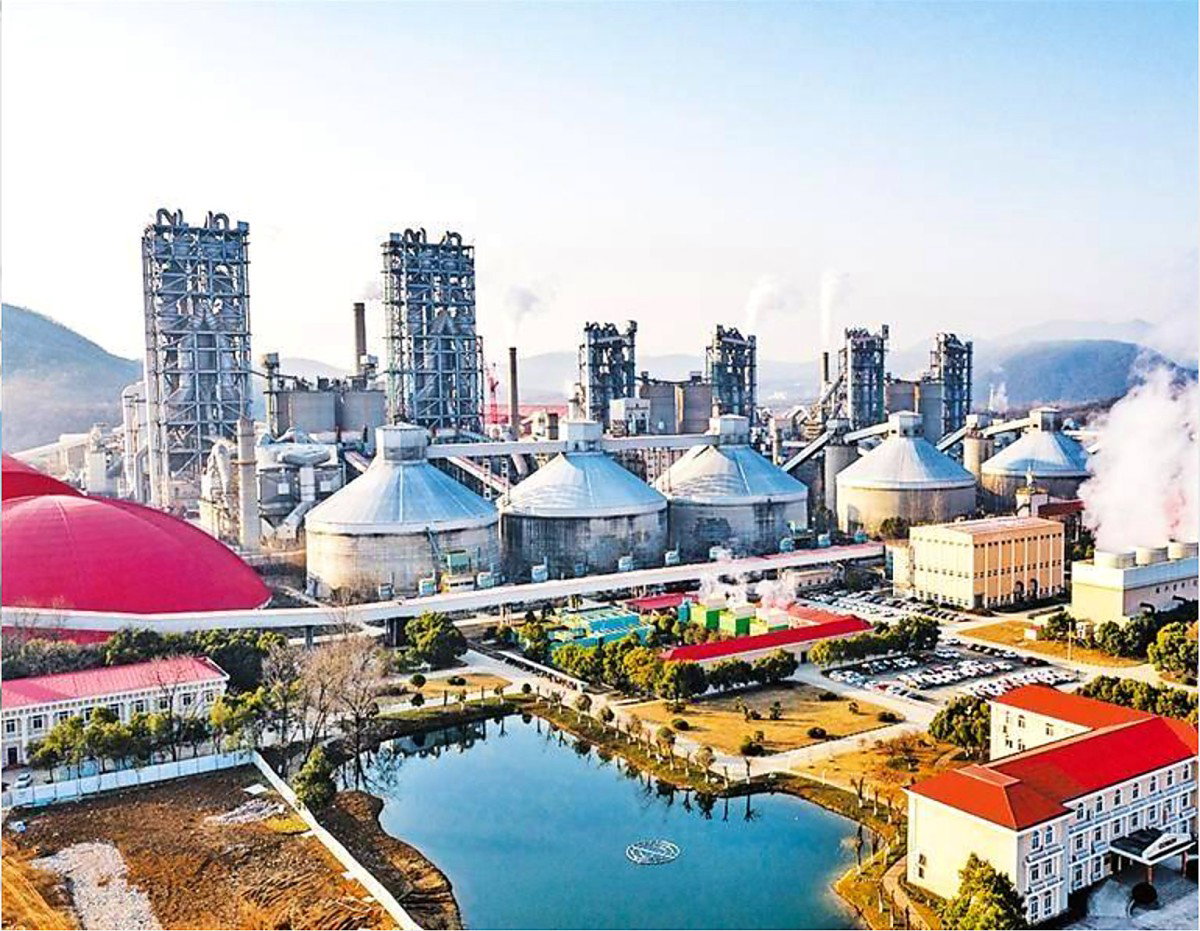
The industry supplying it underwent an equally remarkable transformation. Once dominated by inefficient, highly polluting vertical shaft kilns, China replaced outdated production lines with modern dry-process plants, preheater-precalciner technology and waste heat recovery systems. Kiln capacities of 10,000tpd became a reality, while domestic equipment suppliers mastered the rapid, low-cost delivery of increasingly sophisticated installations.
But the foundations of that growth have changed. As infrastructure networks matured and property development slowed, the scale of construction proved increasingly difficult to sustain. What appeared to be a plateau in demand has become a structural correction.
ICR Research identifies cumulative cement consumption of around 25t per capita as a useful indicator of market maturity, when new construction gradually gives way to maintenance, renewal and selective investment. It is not a fixed threshold, but mature European markets illustrate how consumption can settle at much lower levels, often near 250kg per capita annually.
China passed that cumulative benchmark during the last decade. By 2025, annual demand had contracted by 32 per cent from its 2014 peak, a fall of 783Mt – more than the combined consumption of India, the USA, Türkiye and Vietnam.
Further contraction appears inevitable. Industry assessments suggest demand could approach 1Bnt annually within five years, from approximately 1.5Bnt in 2026. There is little expectation that government stimulus will reverse the underlying trend. In the first nine months of 2026, output was already down 10.2 per cent year on year to 1131Mt.
For perspective, applying global average per-capita consumption to China would imply a market of roughly 650Mt. This is an illustrative benchmark, not a forecast: the eventual level and speed of adjustment will depend on demographics, construction demand and government investment priorities.
The consequences for producers are severe. Capacity utilisation is below 50 per cent in many regions and below 30 per cent in some, undermining prices and profitability. Cement has traded at around CNY200/t (US$30/t) in parts of the market during 2026.
Policy is therefore shifting decisively from expansion towards efficiency, industrial upgrading and orderly capacity reduction. Authorities are enforcing approved production limits and staggered, off-peak production schedules, while encouraging greener manufacturing, digitalisation and improved operating performance.
Market forces play an equally important role. Less competitive plants face closure, while regional mergers and acquisitions should remove redundant capacity and increase concentration. Large mergers among the leading national groups appear less likely than incremental regional consolidation. Although demand will continue falling, effective restructuring could ultimately lift utilisation and restore profitability.
Meanwhile, the contraction is accelerating China's overseas ambitions. Domestic equipment manufacturers and engineering contractors, having honed their skills through decades of investment at home, are already formidable competitors in overseas plant construction. Chinese producers are increasingly assessing foreign manufacturing investments alongside direct cement and clinker exports.
For now, surplus supply and competitive costs are supporting a surge in exports. In January–September 2026, shipments reached 20.96Mt, around 70 per cent of which was clinker, approximately double the volume exported in the whole of 2025. Hong Kong accounted for roughly 40 per cent, with Myanmar and the Philippines important destinations and sales extending to West Africa and Central America.
In the near term, sustained export pressure will intensify competition for regional suppliers, particularly Vietnam, Indonesia and Japan. Chinese cement and clinker exports peaked at 31Mt in 2007, a record that now looks increasingly likely to be surpassed. Unless domestic market conditions improve or government policy intervenes to restrain shipments, exports could soon surpass this historic high.
Handpicked stories, in your inbox
Our editors pick the top news delivered to your inbox. Sign-up today!