The emergence this week of concerns over Ethiopia’s renewable energy incentives for heavy industries such as the cement sector to meet green targets for 50 per cent of energy needs, raises questions about how attractive it is for African cement companies to opt for renewable power solutions.
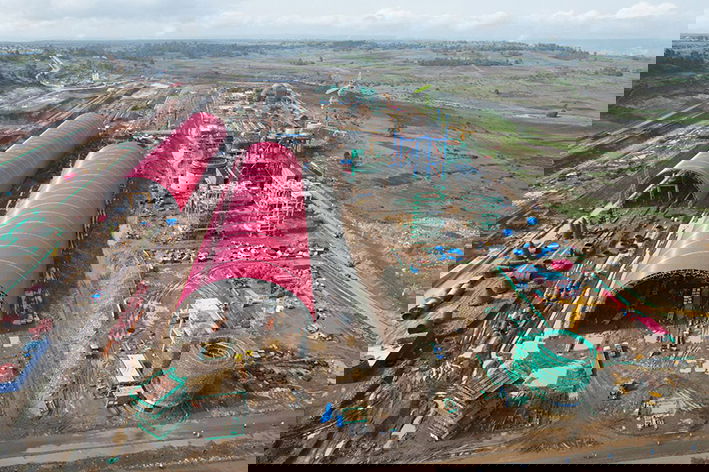
Ethiopia’s cement industry has seen a large expansion in cement capacity in the last 12 months with the inauguration of the greenfield Lemi Cement works. The Lemi Cement plant, with a total clinker capacity of 10,000tpd, has a specially constructed 20MW power supply at a cost of US$25m to support the two production lines.
Meanwhile, Dangote Cement’s Mugher plant, in Ethiopia, is planning a second line. Building a new line will put further strain on the company’s power efficiency. Historically, Mugher Cement has struggled with a reliable grid power supply and last year held a tender for a 750KVA 50Hz diesel generator for emergency electrical power supply back-up.
Ethiopia's Chemical and Construction Inputs Industry Development Institute's (CCIIDI) study on biomass as a source of fuel for the local cement industry recently announced that significant savings could be made by producers switching. There are some 17 cement factories in the country that on aggregate spend US$200m on coal imports, which is a huge foreign currency burden. Samuel Halala, director general of the CCIIDI said, "If we can replace 40 per cent of the coal with the biomass we can save up to US$88m per year."
Sub-Saharan Africa
Ethiopia is just one case in point. Sub-Saharan Africa also has its challenges to make the green transition in a timely manner, and in addition, unlike its northern neighbours, has limited access to natural gas and heavy fuel oil. Grid connection can involve costly transport contracts and can be inconsistent. Cement producers are often opting for independent power producers despite the limited number of providers, while captive power solutions using coal power plants and diesel generators have also been popular.
Renewable energy for cement plants in this part of Africa has seen many case studies as the cost of electricity has fluctuated. Mombasa Cement selected a 36MW power plant in 2023 at its Kilifi cement works in Kenya, supplied by Vestas Wind Systems. Equator Energy also supplied a 10MW solar power plant to Mombasa Cement’s Vipingo cement works in October this year.
Kenyan competitor Devki Cement (Sanghi Group) has likewise chosen renewable energy to supplement its power requirements with a 60MW wind farm for its West Pokot cement plant.
Meanwhile, PPC in South Africa is investing in a 20-year power purchase agreement with Yellow Door Energy for the supply of renewable electricity, transferred from the Eskom grid, for its four South African cement plants – Slurry, Dwaalboom, De Hoek and Riebeeck. Electricity will be produced by a 24.5MWp solar power farm known as Naledi Ya TDE Solar Park comprising 20,000 PV panels in Leeudoringstad, North West. The difficulty of sourcing local, reliable power is emphasised by the project's need to erect a 43km overhead electrical line connecting the solar park to an Eskom substation. The wind farm is expected to be completed in October 2026, when it will be looking to provide 57.5MkWh of clean energy in its first year of operation. Previously, PPC had concluded a 10MW a-piece solar agreement with Sturdee Energy at Slurry and Dwaalboom.
Egyptian renewable projects
In north Africa, cement producers have been increasingly looking at solar power. Egypt is particularly becoming a hub of renewable energy as mounting energy costs and the lack of continued fuel subsidies has encouraged producers to look for alternative solutions. For example, Misr Beni Suef Cement is being supplied a 17.5MWp solar plant by Jinko Solar. The project will use Jinko Solar’s N-type TopCon Tiger neo modules.
Misr Cement in Egypt has also chosen solar power to supplement its power requirements. At the end of 2024, it invested EGP1.5bn (US$31.8m) in a 40MW PV solar power project. The two power plants will generate 48mkWh annually.
In March 2025 Arabian Cement signed a renewable energy agreement with IRSC for a 30-year power purchase agreement. With a total capacity of 17.6MWp, the solar power plant will generate approximately 32.5Gwh annually.
Cemex Egypt has turned to municipal waste to help power its Assiut cement plant. Announced in October 2024, the new system works by converting waste to energy, using heat from the existing process alongside a high-efficiency separator and changes to the calciner. The project reduces carbon emissions by about 32kg of CO2/t of cement, cutting 290,000tpa of CO2. The cement producer will burn approximately 500,000tpa of municipal waste.
Summary
While the trend for renewable energy will grow in Africa to reduce costs and improve energy reliability, as well as meeting environmental goals, the challenges are considerable. The initial capital investment cost often requires long-term loans and international financial support. Infrastructure is lacking to cope with independent solar and wind energy sources, and supply chain issues can arise over sourcing long-term alternative fuels. The shift away from coal, gas and heavy fuel oil has begun, but it may not be as fast as some analysts had predicted.
Handpicked stories, in your inbox
Our editors pick the top news delivered to your inbox. Sign-up today!