Last week Germany secured European Commission approval formally for a revised EUR5bn (US$5.85bn) Carbon Contracts for Difference (CCfD) scheme Klimaschutzverträge, marking the next major phase of a policy that could have significant repercussions for the German cement industry's decarbonisation pathway.
Under the initiative the German government will fund the additional costs of emissions reduction for heavy industry (i.e. cement, steel and chemicals) across a 15-year period, creating a stabilising environment for investment in CCUS projects and other decarbonising technologies. Conversely, if or when emerging technologies make decarbonisation the cheaper option, then producers will pay back the difference.
It’s a concept that has proven highly effective for de-risking investment into the renewable energy sector and Klimaschutzverträge became a flagship policy of the coalition government that took power in Germany in 2021. Cement quickly emerged as a target sector for reasons that will be familiar to anyone familiar with the industry: CCUS is expensive, electrification can’t change the laws of chemistry and SCM upscaling is a formidable challenge.
The underlying problem, both in Germany and the wider European Union, is that volatile and uncertain carbon prices under the EU Emissions Trading System (ETS) undermine the investment case for CCUS, electrification or new process technologies. Coupled with the ongoing concerns about CBAM’s implementation and effectiveness, there is a clear risk that some production could relocate to countries with weaker environmental legislation, as Cement Europe, the European cement association, has forcefully pointed out.
Yet CCfDs are not without detractors. For one thing it risks saddling the German state with decades of subsidy commitments if ETS prices don’t pick up while private companies are afforded significant protection. The ETS market itself risks being distorted by CCfDs. Germany’s interventionism also undermines the level playing field of an EU single market, while also provoking criticism from free-market proponents.
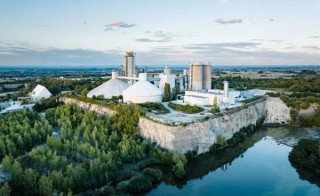
Although it’s too early to definitively identify the beneficiaries of Germany’s CCfD programme, there are several notable cement decarbonisation programmes that would be obvious candidates. Holcim’s Carbon2Business project at the Lägerdorf cement plant in Schleswig-Holstein, which aims to capture more than 1.2Mt of CO2 per year, has already received funding from the EU Innovation Fund and the project’s economics depend heavily upon long-term policy stability.
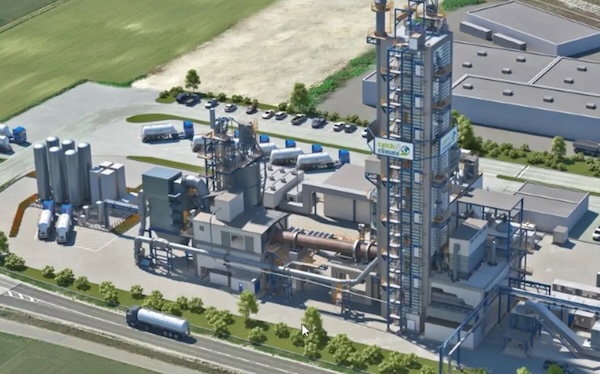
This wider debate is already visible in Germany’s emerging portfolio of cement decarbonisation projects. Others would include the Catch4Climate pilot project taking place at Schwenk Zement’s plant in Mergelstetten, southern Germany. As well as Schwenk themselves the project partners include Heidelberg Materials, Buzzi, Vicat and (as technology provider) thyssenkrupp Polysius. Utilising pure oxyfuel, the EUR120m project aims to demonstrate how kiln behaviour changes and any bearing this may have on materials performance. But air separation remains both energy-intensive and costly. Without carbon transportation infrastructure – requiring billions in investment – the projects run the risk of becoming difficult to scale.
Germany’s approach to CCUS has historically been cautious. The preference is for CCUS only to be used as a last resort for hard-to-abate emissions, in part because of vocal public opposition in Germany to CO2 pipelines and underground storage. There is also recognition that CCUS cannot be treated in isolation from the use of hydrogen for energy and industrial electrification. Meanwhile, Germany’s amended CO2 Storage and Transport Act came into force on 28 November 2025, which does enable industrial-scale CCS infrastructure to move forward. But while there has been some academic modelling of this future infrastructure, there is a long way to go and as yet no definitive vision.
The concern will be that German policymakers, whether implicitly or explicitly, become the advocates for technologies that are either unproven or less deserving of support than better alternatives. That might be favouring CCUS-equipped traditional clinker production over novel binders or enabling larger incumbents and established technology providers to dominate funding allocation at the expense of smaller innovators.
Handpicked stories, in your inbox
Our editors pick the top news delivered to your inbox. Sign-up today!