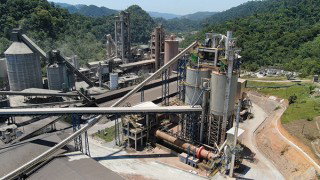
Ambuja Cements’ proposed collaboration with UK-based Leilac on a commercial-scale low-carbon cement project at Sanghipuram, Gujarat, is notable because it points towards the difficult part of cement decarbonisation: the kiln and the chemistry of clinker production. It is also notable because such projects remain rare. Across India, cement producers are investing far more visibly in solar, wind and waste heat recovery (WHR) than in technologies that directly address process emissions.
India is adding cement capacity at the same time as it is being asked to cut industrial emissions. New capacity, higher infrastructure spending and rising cement demand mean that producers are trying to cut emissions while expanding output. In that context, renewable power does two things at once. It lowers the cost of growth, and it makes that growth easier to present as compatible with long-term climate targets.
But the sector’s appetite for self-generation is nothing new. Captive thermal power and WHR became embedded in Indian cement because grid electricity was costly, unevenly priced and sometimes unreliable. The current renewable build-out is an adaptation of that older model, with solar and wind increasingly replacing coal-fired captive power.
UltraTech Cement had installed 1.363GW of renewable energy capacity and 1.08GW of WHR capacity by the end of FY24-25, with a target of sourcing 85 per cent of its electricity requirements from green energy by 2030. Ambuja Cements plans to reach 1GW of renewable energy capacity and more than 370MW of WHR capacity. Shree Cement reported 667MW of renewable capacity, with green power supplying 61 per cent of its electricity requirements during the 4QFY26. Dalmia Bharat aims to source 100 per cent renewable electricity by 2030 and already derives close to half of its power requirements from renewable sources.
Captive and open-access renewable power can cut industrial electricity costs by INR1-4/kWh compared with conventional tariffs. India crossed the 50 per cent mark in non-fossil installed power capacity in June 2025, five years ahead of its 2030 target.
Commercial and industrial consumers also pay above the average cost of supply to subsidise other consumer categories. For cement producers, renewable power reduces costs, improves security of supply and cuts exposure to state tariff structures.
It also deals with the least complicated part of the emissions problem. India’s cement decarbonisation roadmap identifies clinkerisation as the source of around 55 per cent of sector emissions, with a further one-third from kiln fuel combustion. Electricity contributes only around 12 per cent. The industry is therefore making its fastest progress where the technology is proven and the payback is visible, not where most emissions arise.
A producer can remove much of its purchased electricity from the emissions ledger and still leave most of its cement-related CO2 untouched. Renewable power is essential, but it can also flatter the pace of transition. A producer can eliminate much of its purchased electricity, build large renewable assets and still leave the central carbon problem largely intact. Limestone still releases CO2 when it is calcined. Kilns still require intense heat. These are not problems that can be solved simply by adding more solar capacity.
Ambuja’s Leilac and Coolbrook partnerships are important because they begin to connect renewable electricity with process decarbonisation. The Coolbrook project, announced last year, points towards electric process heat. Both suggest that captive green power may eventually become more than a substitute for grid electricity and perhaps a step towards low-carbon clinker.
UltraTech, India's largest cement producer, has described green energy as a key enabler of decarbonisation and has indicated that it does not intend to add further thermal power capacity. Meanwhile, Shree Cement presents itself as not only a cement producer but also a major owner of power-generation assets. But across the sector, renewable power is still advancing faster than carbon capture, hydrogen or electrified kiln systems.
That is commercially rational and may prove strategically important. But it should not be confused with the decarbonisation of cement itself. The real test will be whether India’s renewable cement boom eventually reaches the kiln, or whether it remains concentrated around the parts of production that were easiest to green.
Handpicked stories, in your inbox
Our editors pick the top news delivered to your inbox. Sign-up today!